The Carter Doctrine goes global
Progressive, The, Dec, 2004 by Michael T. Klare
In the first U.S. combat operation of the war in Iraq, Navy commandos stormed an offshore oil-loading platform. "Swooping silently out of the Persian Gulf night, Navy Seals seized two Iraqi oil terminals in bold raids that ended early this morning, overwhelming lightly armed Iraqi guards and claiming a bloodless victory in the battle for Iraq's vast oil empire," wrote an overexcited reporter for The New York Times.
A year and a half later, American soldiers are still struggling to maintain control over these vital facilities--and the fighting is no longer bloodless. On April 24, two American sailors and a Coast Guardsman were killed when a boat they sought to intercept, presumably carrying suicide bombers, exploded near the Khor al-Amaya loading platform. (This was the first Coast Guard combat fatality since the Vietnam War.) Other Americans have come under fire while protecting some of the many installations in Iraq's "oil empire."
George W. Bush's Iraq War, while duplicitous in many respects, is actually the culmination of twenty-five years of U.S. policy to ensure continued domination of the Persian Gulf and its prolific oil fields. In fact, it was a natural expression of the Carter Doctrine. Enunciated by then-President Jimmy Carter in his State of the Union speech in January 1980, the doctrine defines Persian Gulf oil as a "vital interest" of the United States that must be defended "by any means necessary, including military force." Seen in this light, Bush Jr. was merely applying the doctrine when he invaded Iraq in 2003.
He's not the first. President Reagan cited it to justify U.S. intervention in the Iran-Iraq War of 1980-1988 to help ensure the defeat of Iran. President Bush Sr. invoked it to authorize military action against Iraq in 1991, during the first Gulf War. And Bill Clinton, though not explicitly citing the doctrine, adhered to its tenets.

So the use of force to ensure U.S. access to Persian Gulf oil is not a Bush II policy or a Republican policy, but a bipartisan, American policy.
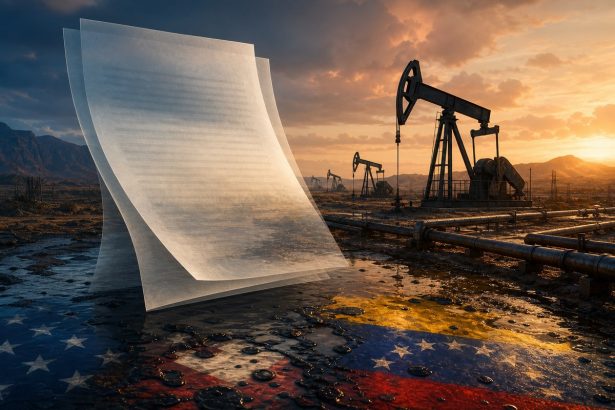
In Iraq, it has exposed American troops to unrelenting danger. The U.S. military is protecting pipelines, refineries, and oil-export facilities throughout Iraq. Although this effort has received far less media attention than the urban warfare in Baghdad and Najaf and Fallujah, and it is no less important: With petroleum constituting the nation's only significant source of income, ensuring uninterrupted oil exports is essential for the economic survival of Iraq's U.S.-installed interim government. (In the first half of 2004 alone, guerrilla attacks on the pipelines crisscrossing Iraq deprived that government of $200 million in lost revenue, interim Prime Minister Iyad Allawi declared in June.)
Most of the U.S. oil-protection effort in Iraq is devoted to protection of the country's onshore pipelines and refineries. Heavily armed Army units patrol the vital pipeline carrying Iraqi petroleum from Kirkuk in the north to the Turkish border, and the equally critical line connecting Kirkuk with Basra in the south. But U.S. Navy and Coast Guard forces also protect the offshore loading platforms that are used to export Iraqi oil by ship through the Persian Gulf. And they keep an eye on the Iranian threat to the Strait of Hormuz--the narrow passageway connecting the Persian Gulf with the Indian Ocean and the world at large.


"In the grand scheme of things," said Captain Kurt Tidd of the U.S. Fifth Fleet in July, "there may be no other place where our armed forces are deployed that has a greater strategic importance."
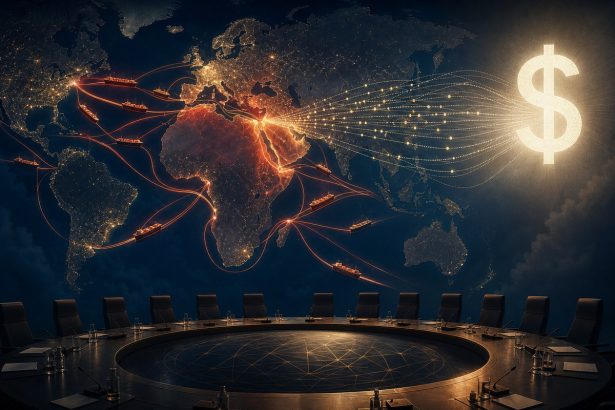
Today, the Carter Doctrine stretches far beyond the Persian Gulf. It is the blueprint for the extension of U.S. military power to the world's other oil-producing regions. Just as existing U.S. policy calls for the use of military force to protect the flow of oil from the Persian Gulf, an extended Carter Doctrine now justifies similar action in the Caspian Sea region, Latin America, and the west coast of Africa. Slowly but surely, the U.S. military is being converted into a global oil-protection service.
This process began in 1980, when, in seeking to implement his doctrine, Carter established the Rapid Deployment Joint Task Force and established a web of U.S. basing arrangements in the greater Gulf region. The process was accelerated in 1983, when Reagan transformed the joint task force into the U.S. Central Command (Centcom), giving it the status of a major unified combat force like the U.S. European Command, the Pacific Command, and the Southern Command. Centcom's principal mission is to protect the flow of oil from the Persian Gulf to the United States and American allies around the world.
This mission is given blunt expression in the testimony given each year by Centcom's top commander to members of Congress. "America's vital interests in the [Gulf] region are longstanding," General J. H. Binford Peay declared in 1997. "With over 65 percent of the world's oil reserves located in the Gulf states of the region--from which the United States imports nearly 20 percent of its needs; Western Europe, 43 percent; and Japan, 68 percent--the international community must have flee and unfettered access to the region's resources."