


Bekim adjusts the cable box for the third time this evening. The Albanian news from Tirana keeps cutting out, pixelating mid-sentence as the anchor discusses developments back home. His teenage daughter watches from the kitchen counter, phone in hand, the same newscast running crystal-clear on her TV shqip app Android. “Baba, just use my phone,” she calls out. But Bekim paid good money for that cable package, specifically for the Albanian programming.
This scene plays out in diaspora households across North America. Families invest in expensive cable subscriptions hoping for reliable access to Albanian content, then find themselves reaching for phones and tablets when the cable box fails to deliver. The gap isn’t really about convenience. It’s about holding onto cultural connections that cable infrastructure was never built to support. For many families, a reliable TV shqip live app has quietly become the main screen, not the backup.
- 1. Cable Boxes Lock You Into Yesterday’s Broadcasting Model
- 2. App Technology Adapts to Your Internet, Cable Boxes Don’t
- 3. App Servers Are Tuned for Albanian Content, Not a Mass-Market Lineup
- 4. Real-Time Problem Resolution vs. Service Call Scheduling
- 5. Investment Protection That Actually Protects
- Final Thoughts
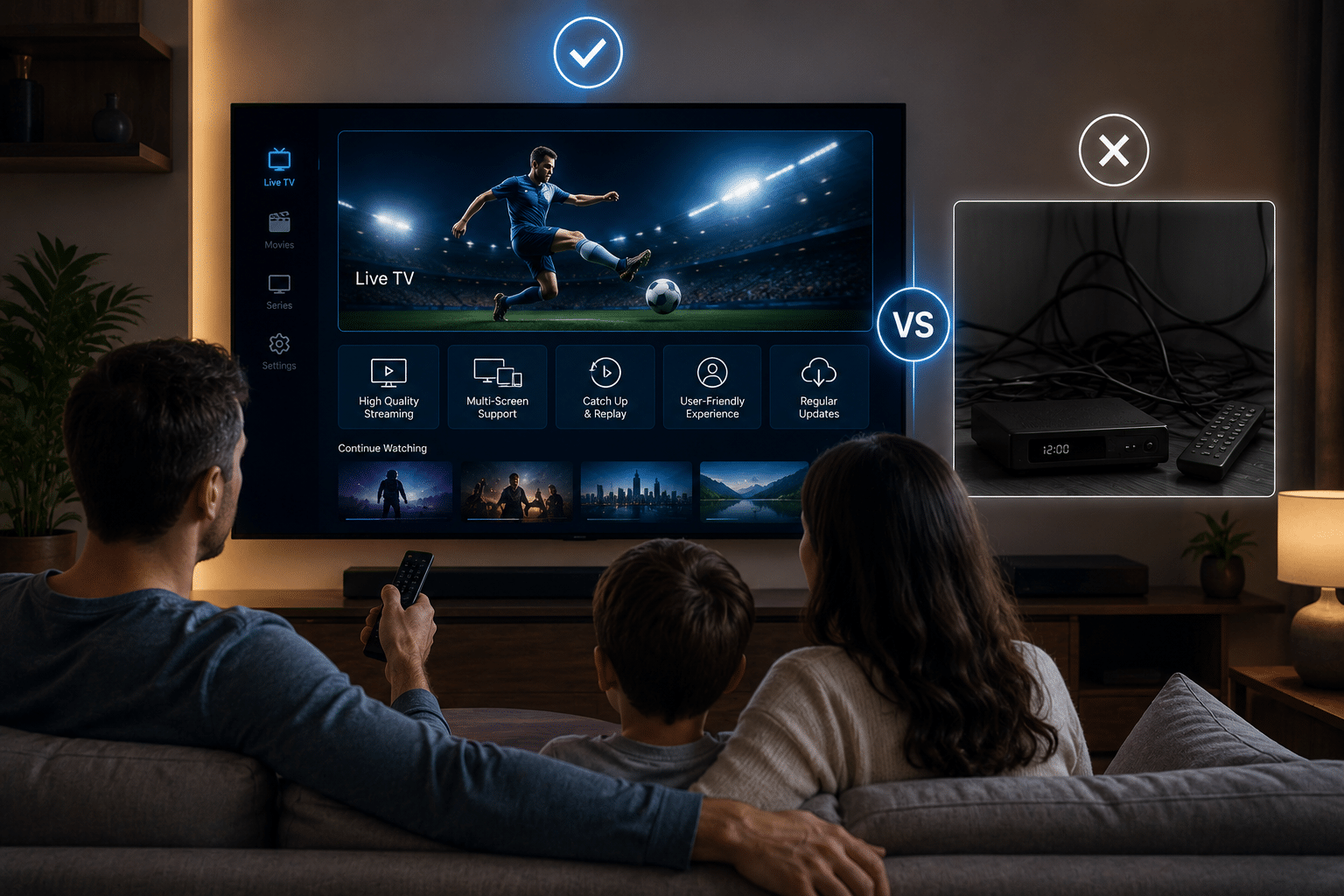
1. Cable Boxes Lock You Into Yesterday’s Broadcasting Model
Cable boxes still run on a schedule that made sense in 1985. Albanian programming sits in fixed time slots, often buried in channel ranges that mean scrolling past hundreds of options nobody in the house watches. A parent working a night shift catches the evening news from Prishtina only if they happen to be free at the exact moment it airs.
A dedicated Albanian TV app removes that constraint. Live channels run as they happen, and 7-day recording means the newscast you missed at 8 PM is still there at 6 AM the next morning. The family watches on its own schedule instead of the broadcaster’s, which for households spread across work shifts and time zones is the part they notice first.
2. App Technology Adapts to Your Internet, Cable Boxes Don’t
One real advantage of an app is that it adjusts to the connection it’s given. When a family upgrades to faster internet, an Albanian TV app can make use of the extra bandwidth right away: sharper picture, cleaner audio, less stalling during the evening news. The better the connection, the better the experience, automatically.
A cable box doesn’t work that way. Its picture quality is set by the cable feed itself, so the money a family spends improving their home internet does nothing for what they see on the cable channel.
3. App Servers Are Tuned for Albanian Content, Not a Mass-Market Lineup
On a cable system, Albanian channels are a handful of entries in a lineup built for everyone, sitting between shopping networks and channels no one in your home has ever opened. Finding what you want means knowing channel numbers and scrolling past most of the package to reach the part you actually subscribed for.
A platform made only for Albanian audiences starts from the opposite place. The channels, the categories, the recordings, and the on-demand library are all Albanian content, organized the way an Albanian family thinks about it: news, variety, regional programming from Kosovo and North Macedonia. Nothing is buried.
4. Real-Time Problem Resolution vs. Service Call Scheduling
When a cable box fails during Albanian programming, and it tends to fail at the worst moments, families land in a customer-service process designed for English-speaking subscribers with mainstream viewing habits. Explaining that you need a specific set of Albanian channels restored often leads to confusion, delays, and a technician visit booked days out.
App problems give you a straight answer. If something’s wrong, you know in seconds, and if it works, it works. There’s no murky middle where the Albanian audio drops in and out or a channel shows an error message in a language you’d rather not have to decode. That clarity counts most during the moments families actually gather for: election coverage from Albania, a holiday broadcast, a result everyone back home is talking about.
5. Investment Protection That Actually Protects
Cable boxes go obsolete on the cable company’s timeline, not the family’s. When a provider changes its infrastructure or satellite arrangements, the expensive box in your living room can stop reaching Albanian programming altogether, and families get pushed into fresh contracts and rental fees for hardware they never asked to replace.
An app moves with your devices instead of against them. The phone your teenager uses today will run Albanian programming for years, getting updates that add to what it does rather than retiring it on a schedule. When the family eventually upgrades a phone or tablet, the Albanian programming comes with it, with no new contract, no equipment fee, and no renegotiating channel packages with someone who doesn’t share your viewing priorities.
This is also where the provider matters. TVALB – the leading provider of Albanian television and entertainment in the United States and Canada builds its apps around exactly these conditions, with 250+ Albanian channels and legal access that diaspora families across North America rely on.
Final Thoughts
For Albanian families abroad, the choice between a cable box and a dedicated app isn’t really a technical preference. It’s about keeping a connection that holds across generations. Cable boxes were built for mass-market American viewing, and Albanian content was never the point. An app made for Albanian programming starts from the opposite assumption, and for most diaspora families, that’s the assumption worth paying for.

