Government Industry
Thermal imaging: much heat but little light - legal aspects of the thermal imager
FBI Law Enforcement Bulletin,The, Dec, 1997 by Thomas D. Colbridge
Criminals quickly adopt advances in technology to pursue ill-gotten gains. Law enforcement officers should just as quickly adopt new technology as weapons against those criminals. However, unlike criminals, police officers must act within the confines of their federal and state constitutions. The use of advanced technology in the "often competitive enterprise of ferreting out crime"(1) raises concerns that individual liberties will be sacrificed in the increasingly complex war on crime. Right or wrong, the specter of Orwell's "Big Brother" looms large in the public's mind whenever a new crime-fighting device is unveiled. The thermal imager, or forward looking infrared device (FLIR), is an example.
Several court decisions illustrate the constitutional arguments for and against police use of thermal imagers without a search warrant. Within certain guidelines, law enforcement can use thermal imagers in compliance with the requirements of the Fourth Amendment of the U.S. Constitution.
THE TECHNOLOGY
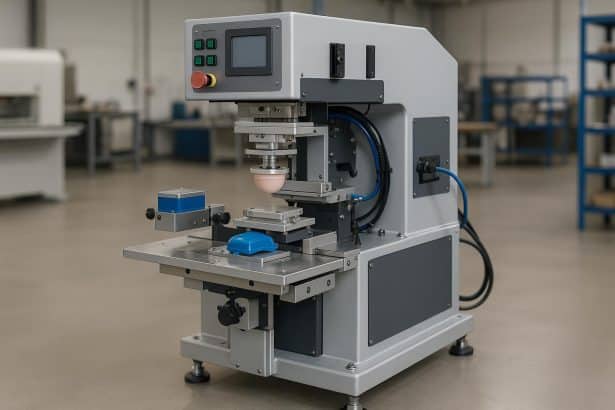
All objects with a temperature above absolute zero emit infrared radiation. The hotter an object gets, the more infrared radiation it emits. These emissions cannot be seen with the naked eye. However, a thermal imager can detect infrared radiation emitted from an object and convert its readings into a two-dimensional, black-and-white picture.

The picture contains various shades of gray, depending upon how much infrared radiation the object is emitting. The hotter areas emit larger amounts of infrared radiation and are lighter in color; the cooler areas appear darker. The device does not measure the actual temperature of its target; it only detects the relative temperatures of different areas of the object. A thermal imager is extremely sensitive and reportedly can detect temperature variations as small as 0.1 degrees centigrade.(2) The images created by the device can be projected onto a small viewing screen or preserved on video- tape or photographs. The thermal imager is small enough to be hand- held, but often is mounted under a helicopter and flown over its target.


The technology is not new. The military has used it for years on the battlefield. Law enforcement has adopted the device only recently, using it in search and rescue operations, fugitive apprehensions, and along the border to detect drug smugglers and illegal border crossings. Moreover, thermal imagers have been particularly helpful, albeit controversial, in the detection of indoor marijuana-growing operations.(3)
FOURTH AMENDMENT BASICS
The Fourth Amendment to the U.S. Constitution prohibits unreasonable searches and seizures by the government.(4) In the now famous case of Katz v. United States,(5) the Supreme Court redefined a search. Recognizing that the Fourth Amendment protects "people, not places,"(6) the Court said that a search occurs whenever the government intrudes into a person's reasonable expectation of privacy.
Justice Harlan, concurring in Katz, formulated a useful, two-pronged test to determine when there is a reasonable expectation of privacy: 1) Does the person have a subjective or actual expectation of privacy? and 2) Is that expectation one that society is willing to accept as reasonable?(7) If the answer to both questions is "yes," any police infringement upon that expectation is considered a search.
If the police action is a search under the Katz definition, the next question is whether the search is reasonable. The Fourth Amendment does not prohibit all searches, only unreasonable ones. The Supreme Court has made this inquiry simple. Any search made without a warrant is per se unreasonable, unless it can be justified by one of several narrowly defined exceptions to the warrant requirement.(8) The Supreme Court prefers the use of search warrants. The application for the warrant takes the issue of the existence of probable cause to search away from the investigating officer and places it before a neutral and detached magistrate, adding an additional measure of protection for the private citizen.(9)
The Supreme Court has not heard a case on whether targeting a residence with a thermal imager is a search requiring a warrant. However, the question has reached several lower federal courts and some state courts. Decisions have gone both ways. Officers using thermal imagers must understand both sides of this argument in order to avoid violating constitutional requirements.
MAJORITY VIEW
Most of the courts have decided that targeting a building with a thermal imager is not a search under the Fourth Amendment.(10) United States v. Penny-Feeney(11) was one of the first cases to consider the matter. The court's reasoning has influenced many other courts on the issue.
The Facts
Officers in Hawaii received information from two anonymous sources that Penny-Feeney had sold marijuana in California before moving to Hawaii and continued to do so. They told police that Penny- Feeney had grown marijuana in her home for 3 years, and plants were being harvested every 6 weeks. They provided a wealth of detail about the operation. Officers obtained a search warrant for a package sent to Penny-Feeney from California. They discovered $2,700 in cash that was detected by a narcotics dog. Officers observed Penny-Feeney pick up the package and take it to her home. Police later contacted a known informant who had visited Penny-Feeney's residence and seen the marijuana- growing operation. He, too, described the operation in great detail. Many of the details provided by the informants were corroborated by the police.