


The real estate market has long been driven by first impressions. A buyer opens a listing – and within seconds decides whether to look further. An empty room with bare walls rarely captivates anyone, even if the layout is perfect.
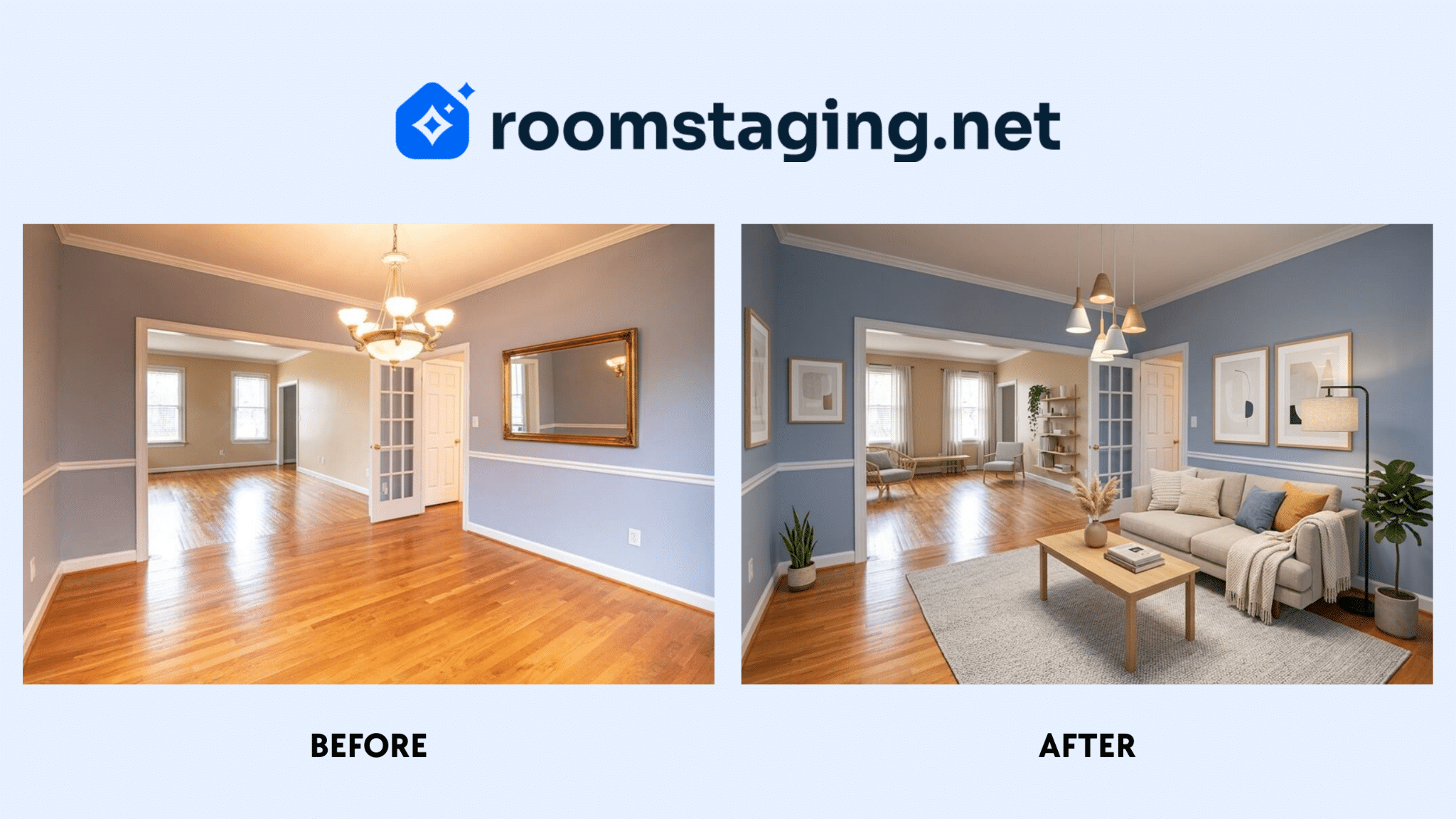
This is where AI virtual home staging comes into play – a technology that transforms an empty space into a fully furnished, living environment in literally seconds. It’s simple: within seconds, you have a professionally staged image ready to present to potential buyers.
Why a photo says it all
According to the NAR’s 2025 report, 83% of buyer’s agents say that staging helps clients envision themselves in the home. This has a direct impact on buyers’ purchasing decisions. People don’t buy square footage; they buy a vision of their future life.
The problem with the traditional approach is obvious: physical staging costs between $20 and $150 per photo, takes two to five business days, and depends on the availability of props. For an agent with a dozen listings, this translates into a significant expense and constant delays.
An alternative emerged with the development of neural networks. A modern AI-powered real estate tool analyzes the room’s geometry, lighting conditions, and architectural features, then places furniture where it naturally belongs.
How AI-powered design works in practice
The process is simpler than it seems. The algorithm doesn’t just “superimpose” images of furniture onto a photo – it calculates perspective, shadows, and reflections so that the result looks like a real photograph of a designer interior.
Key steps for using the AI tool:
- Upload a photo of the room – whether it’s empty, cluttered, or has outdated decor
- Select a design style from a catalog of over 50 options
- Automatic generation of the result – usually takes 15-30 seconds
- Download the finished image in high resolution
The advantage of this approach is its flexibility. If you’re not satisfied with the result, you can immediately generate a variation or change the style at no extra cost. No waiting in line, no need to coordinate with a designer.
What’s more, modern algorithms can do more than just arrange furniture. They remove unnecessary objects from the frame, update floor coverings, change wall colors, and even simulate renovations – all within a single uploaded photo.
What types of spaces can be virtually staged?
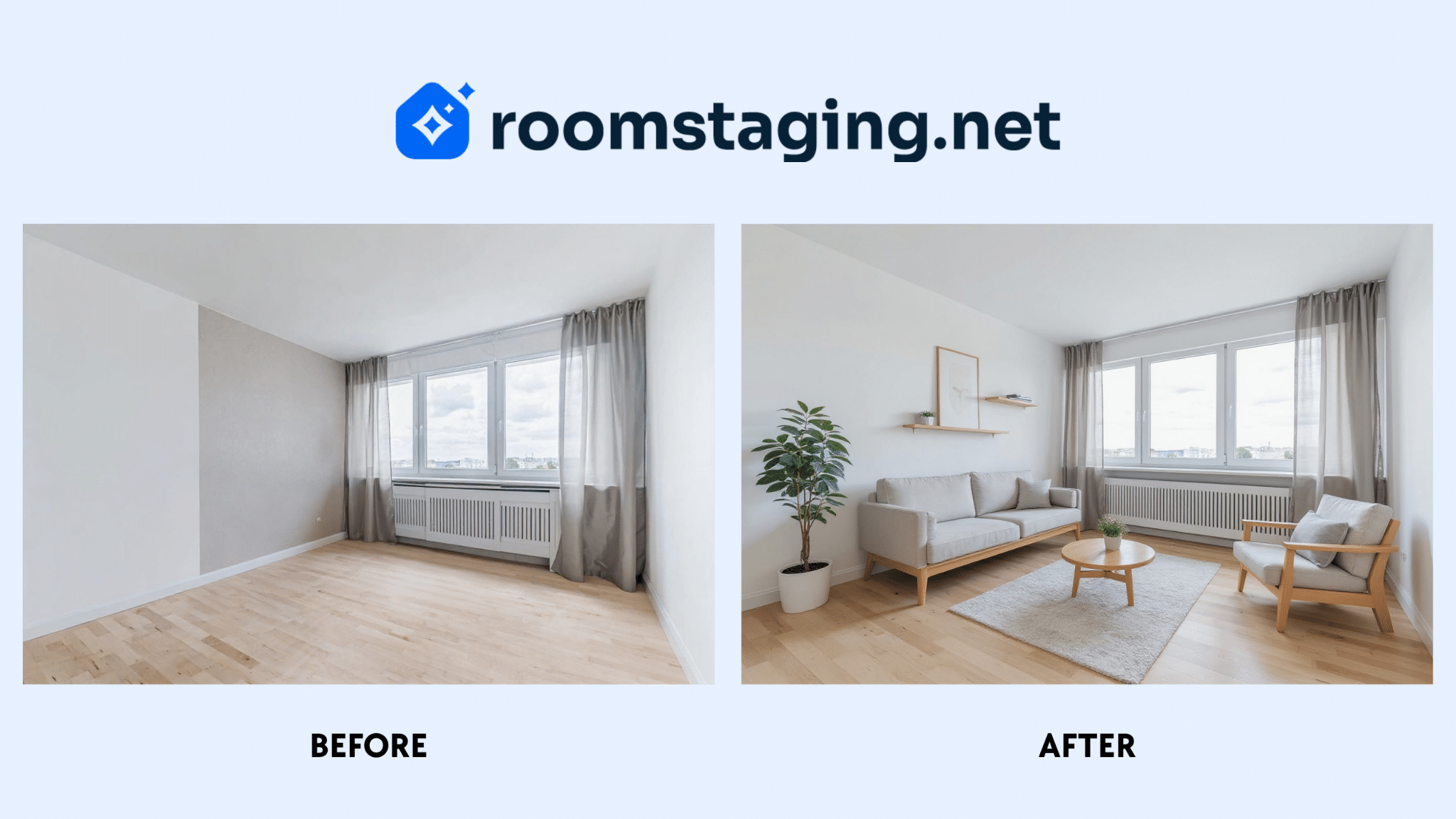
Agents often wonder whether new tools can actually keep up with the sheer variety of floor plans and room types out there. They can. Modern computer vision technology reads a room’s geometry in seconds and spits out a finished image — no manual input needed.
The algorithms work across a surprisingly wide range of spaces:
- Open layouts with multiple functional zones
- Rooms with non-standard angles and sloped ceilings
- Spaces with arches, niches, and bay windows
- Small studios where it’s important to maintain a sense of volume
Style variety isn’t an issue either. From minimalism and the Scandinavian approach to classic and industrial loft styles, the catalog covers a lot of ground. Every listing gets a presentation built around its actual target audience.
What the numbers say about AI virtual home staging
The results of using AI-generated staging go beyond mere aesthetics. Real-world market data demonstrates a tangible economic impact.
Properties with professionally staged photos sell 73% faster than similar properties without staging. Nearly one in three agents reported a 10% or higher increase in the final offer after using visual staging. At the same time, the cost of an AI solution is 90% lower compared to physical staging.
Agents rely on data to evaluate a property’s market potential. These metrics help agents assess a property’s potential, while the results of AI staging attract more buyer interest.
Legal aspects and transparency
An important point that is often overlooked: most MLS platforms require the “Virtually Staged” label on staged images. Transparent disclosure does not diminish interest in the property. On the contrary, buyers appreciate honesty and understand that they are seeing the true potential of the space, not the hidden condition of the apartment.
How technology is transforming the industry
Real estate photography is more than just a marketing tool; it has a direct impact on the speed and price of a sale. Artificial intelligence has made high-quality visual presentation accessible for any property, regardless of the agent’s budget or the urgency of the deal.
AI-powered virtual home staging opens up the possibility of transforming any empty room into a compelling image of a space ready for living.
A real estate AI tool is no longer an advantage for select market players; it is a new standard, without which it is becoming increasingly difficult to compete in today’s environment. Those who adapt sooner sell faster and at a higher price.

