


The stakes have genuinely never been higher. If you’re producing oversized components, aerospace structural frames, wind turbine housings, or heavy industrial assemblies, you already know the pressure. Faster delivery. Lower cost. Zero compromise on quality. A large part of manufacturing sits right at the center of some of the most demanding operational problems in modern industry, and the companies pulling ahead aren’t doing it by luck. They’ve updated their playbooks. This guide breaks down what’s actually working, what’s shifting fast, and what you should do about it now.
NIST puts it well: “additive manufacturing offers a wide variety of new opportunities and benefits by enabling production of complex product designs, rapid innovation, and improved economics for lower volume production and customization. If you’re trying to justify new production investments to leadership, that framing matters.
- Essential Large-Part Production Strategies for Modern Manufacturers
- Integrated Design-for-Manufacture (DFM) for Large Part Success
- Process Optimization Through Advanced Robotics and Automation
- Hybrid Manufacturing: Merging Additive and Subtractive Processes
- Agile Production Scheduling for Maximum Flexibility
- Next-Generation Materials and Technologies in Large Scale Manufacturing Solutions
- Industrial Manufacturing Best Practices for Quality, Efficiency, and Growth
- Workforce Upskilling for Smart Manufacturing
- Supplier Collaboration and Risk Mitigation
- End-to-End Traceability and Compliance Assurance
- Future-Proofing Large-Part Manufacturing: Innovation and Competitive Advantage
- Collaborating with Service Bureaus and Contract Manufacturers
- Key Metrics and KPIs for Continuous Improvement
- Case Studies: Success Stories in Modern Large-Part Production
- Take Action: Building Your Roadmap for Large-Part Manufacturing Success
- Your Top Questions on Large-Part Manufacturing, Answered
- Get Ahead in Large-Part Manufacturing: Start Your Next Project Today
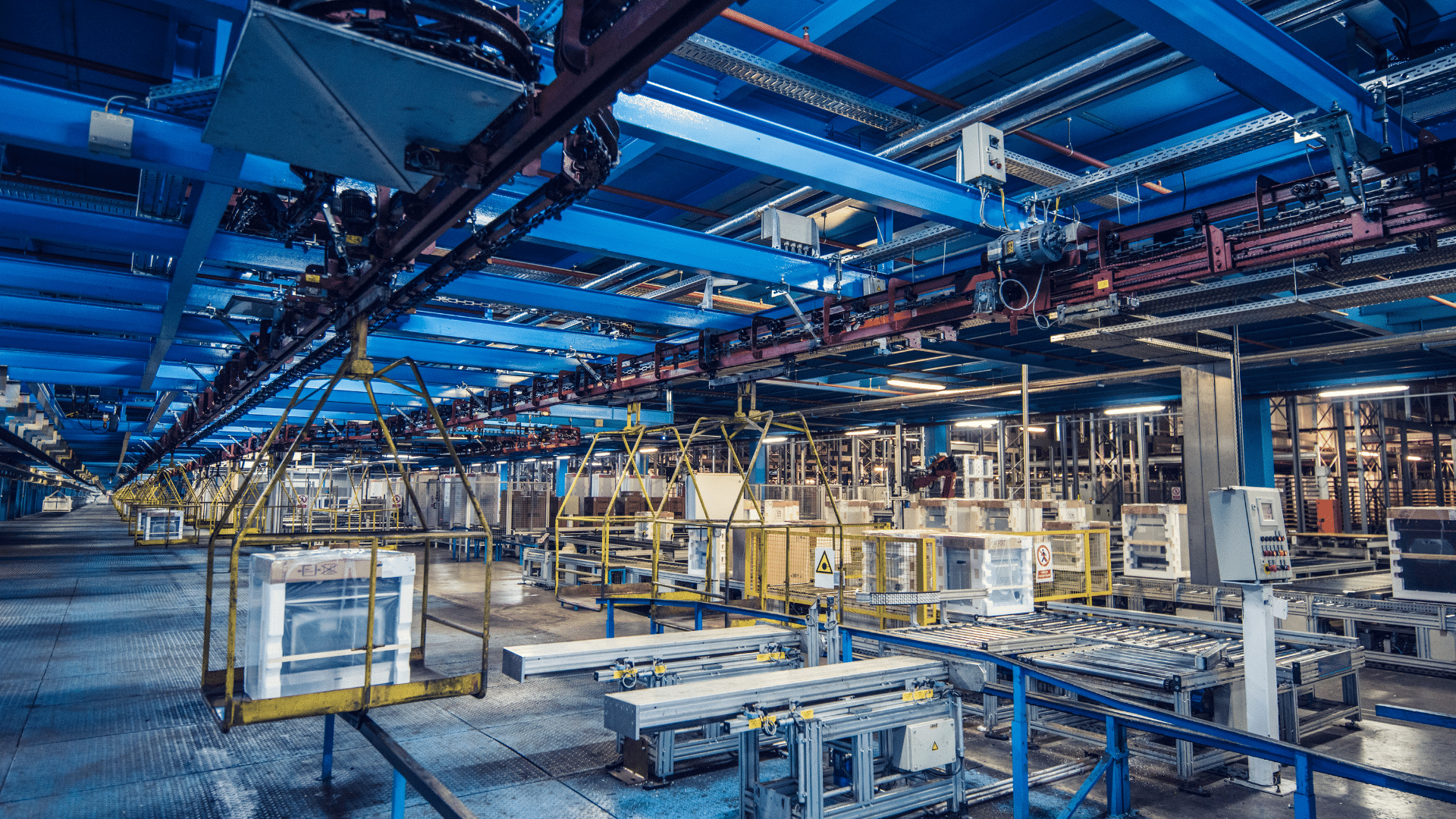
Essential Large-Part Production Strategies for Modern Manufacturers
Sequential traditional production models buckle under the weight of modern large-part production strategies. Integrated, data-connected workflows are where real performance gains live.When you’re running complex programs, the right manufacturing partner changes the outcome measurably. Companies like RapidMade offer end-to-end solutions, and for teams managing prototypes or low-volume runs, you can get custom 3D printed parts through service bureaus that integrate both additive and traditional capabilities without breaking your timeline.
Integrated Design-for-Manufacture (DFM) for Large Part Success
DFM brings engineers, designers, and production teams into one conversation from day one. Catching a design problem before tooling is built saves weeks and serious money, especially on large components where late-stage changes are brutally expensive. Real-time DFM feedback loops, supported by cloud-based collaboration platforms, shorten design cycles and close the communication gaps that silently inflate lead times on complex jobs.
Process Optimization Through Advanced Robotics and Automation
Collaborative robots are handling welding, assembly, and inspection tasks on large components that once required multiple skilled operators working sequentially. The consistency is notable; robotic systems don’t fatigue, don’t vary between shifts, and don’t have bad Mondays. Traditional automation still earns its place in high-volume, repetitive work. But for the variable geometries common in large-part workflows, collaborative robots offer flexibility that fixed automation simply can’t match.
Hybrid Manufacturing: Merging Additive and Subtractive Processes
Pair large-format 3D printing with CNC machining and you unlock a genuinely new capability tier for large-scale components. Near-net-shape additive deposition lays down material efficiently; CNC finishing brings critical surfaces into spec. For teams managing bridge production runs while traditional tooling is still in process, you can get custom 3D printed parts to keep timelines moving without stalling the main line.
Agile Production Scheduling for Maximum Flexibility
AI-powered scheduling tools now dynamically reallocate machines, labor, and materials based on live order status and equipment availability. In large-part environments where individual jobs can tie up major production assets for days, that kind of intelligent orchestration isn’t optional; it’s what separates operations that hit delivery windows from those that consistently miss them.
Next-Generation Materials and Technologies in Large Scale Manufacturing Solutions
Material selection often determines whether a large component succeeds or fails in performance, cost, and schedule alike.
Additive Manufacturing as a Disruptor
The global robotic large-format 3D printing market was valued at $2.8 billion in 2025 and is projected to reach $9.7 billion by 2034, at a CAGR of 14.8%.That’s not a niche trajectory. That’s a structural shift happening in real time.
Binder jetting and directed energy deposition are enabling large metal part production at costs and speeds that were genuinely unworkable five years ago. Aerospace structural teams and heavy industrial tooling producers are finding real ROI in large-format additive systems.
Surface Finishing and Dimensional Accuracy Solved
Non-contact metrology systems, such as structured light scanning and laser trackers, now inspect large-format parts in a fraction of the time required by traditional CMMs. Automated inspection routines run overnight. Robotic polishing and automated abrasive flow machining are bringing additive surface finishes within spec for structural and cosmetic large-part applications alike.
Industrial Manufacturing Best Practices for Quality, Efficiency, and Growth
Lean manufacturing, Six Sigma, and continuous improvement aren’t relics. They’re the backbone of every high-performing large-part operation running today. Organizations that treat industrial manufacturing best practices as living systems consistently outperform those treating them as compliance checkboxes.
Workforce Upskilling for Smart Manufacturing
Digital tools only deliver when your people actually know how to use them. Companies investing in structured training for CNC operators, robotics technicians, and data analysts are seeing measurable quality gains. Human-machine collaboration also introduces real safety considerations when robotic systems share floor space with workers. Proper training protocols reduce incidents while maximizing throughput.
Supplier Collaboration and Risk Mitigation
Tiered supplier networks with real-time digital collaboration tools give large-part manufacturers upstream visibility before shortages become production crises. Scenario planning, mapping supply disruption responses before you need them, is now standard practice for well-run operations.
End-to-End Traceability and Compliance Assurance
RFID tagging, digital traveler documents, and blockchain-based chain-of-custody records are giving large-part manufacturers the audit trail that defense, aerospace, and energy customers now demand. Emerging international standards for dimensional inspection and material certification are increasingly non-negotiable.
Future-Proofing Large-Part Manufacturing: Innovation and Competitive Advantage
Staying ahead requires more than reacting to change; it means building the organizational capacity to absorb disruption and move faster than competitors.
Collaborating with Service Bureaus and Contract Manufacturers
Strategic partnerships with service bureaus extend capacity quickly without capital equipment purchases. When volume spikes or a new geometry challenge appears, a contract partner fills the gap in days rather than months. Teams gain real advantage when they get custom 3D printed parts supplied by specialized bureaus, whether for bridge production, tooling components, or functional prototypes, keeping development cycles moving without disrupting primary production.
Key Metrics and KPIs for Continuous Improvement
Overall equipment effectiveness, first-pass yield, energy consumption per unit, and customer-reported defect rates are what top-performing large-part manufacturers track obsessively. OEE in particular surfaces hidden losses that feel invisible inside a busy operation.
Case Studies: Success Stories in Modern Large-Part Production
Transforming Legacy Factories for Smart Manufacturing
One Midwest-based heavy equipment producer reduced scrap rates by 31% and cut average lead times by three weeks after a phased digital transformation. The project began with a production data audit, expanded through pilot IoT deployments on two high-volume lines, and reached full-floor monitoring within 18 months. Workforce upskilling ran in parallel with technicians trained before systems went live, ensuring genuine adoption. Final results: a 22% OEE improvement, validated across six months of post-implementation data.
Take Action: Building Your Roadmap for Large-Part Manufacturing Success
You don’t need a complete overhaul overnight. Start with honest assessment, targeted pilots, and disciplined scaling.
– Audit current production data to identify your biggest OEE and quality gaps
– Identify one or two high-impact areas for DFM or automation pilot projects
– Evaluate your supplier network for single-source vulnerabilities
– Explore hybrid manufacturing capabilities for complex geometry challenges
– Align your workforce training calendar with planned technology deployments
When challenging designs demand faster iteration, partnering with providers where you can get custom 3D printed parts keeps your innovation cycles from stalling.
Your Top Questions on Large-Part Manufacturing, Answered
Which industries benefit most from large part manufacturing in 2024?
Aerospace, automotive, energy, and industrial equipment sectors see the greatest returns driven by recurring demand for oversized structural components with tight tolerances.
How does additive manufacturing reduce costs and lead times?
It eliminates tooling costs, reduces material waste through near-net-shape deposition, and compresses design iteration timelines significantly.
What are the biggest scaling challenges?
Maintaining dimensional accuracy across extended geometries, managing thermal distortion, and coordinating multi-machine workflows without scheduling conflicts.
Get Ahead in Large-Part Manufacturing: Start Your Next Project Today
The gap between manufacturers who’ve modernized and those still running legacy workflows is widening every quarter. Adopting effective large-part production strategies isn’t a future consideration; it determines which operations win contracts today and which lose them on lead time and price. The manufacturing trends 2024 point clearly toward hybrid processes, smart scheduling, and sustainability accountability. Pick one focused improvement, gather the data, and build from there. The window is open right now, don’t leave it sitting idle.

