


For decades research into brain activity has been associated with a very small number of huge and expensive machines, found in a few research centers and hospitals around the world. However, modern technologies have made brain research more accessible than ever.
Evolution of EEG and BCI Technology
Recent advances in computational methods have enabled the high speed processing of EEG signals collected for use with BCIs and have led to significant increases in BCI classification accuracy. In particular a number of recent methods have been shown to allow for real time classification, allowing for the first time BCI systems to be used in a wide variety of real world situations and allowing for high accuracy even when classifying difficult to classify situations.
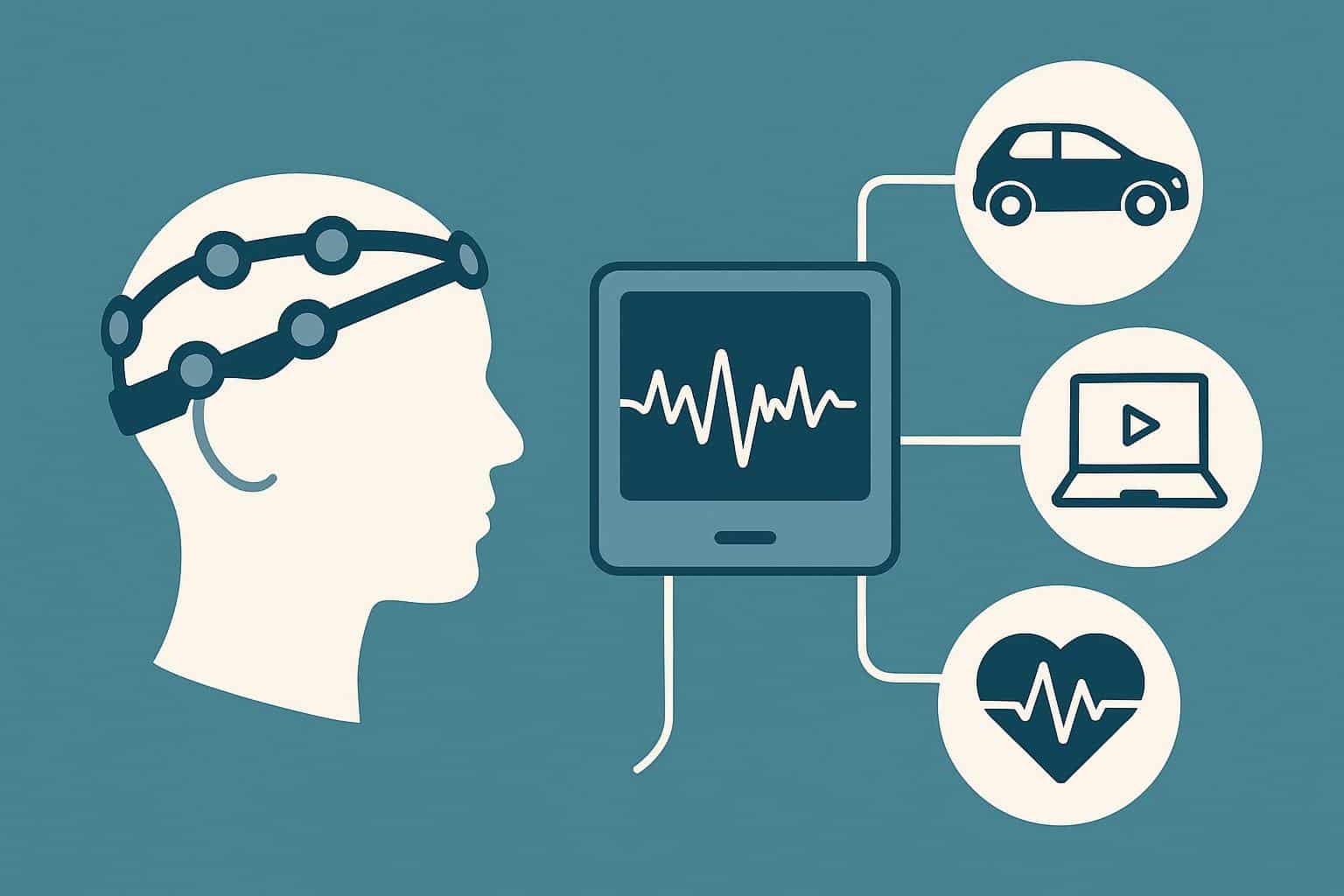
BCI technology is advancing the research of the brain activity analysis, by not only measuring brain activity, but also by processing the information gathered by measuring brain activity and by enabling the user to control software and/or hardware by means of the externalization of the information gathered by measuring brain activity. Using the computational power, the BCI processes information in real time and transfers information between the brain and external hardware in real time. Today, the BCI system processes a huge amount of information in a short time and is able to process information in real time and to interpret the information in real time.
The Shift to Non-Invasive and User-Friendly Hardware
The biggest change in technology to record brain activity in the last few years is the transition towards non-invasive solutions and more importantly, towards more consumer-friendly solutions that are easy to use. This means that instead of using invasive implants, or even wet EEG solutions with conductive gels, and then cleaning them off the subjects hair after the recording, researchers and developers can now use dry electrodes and wireless solutions to record brain activity. Using solutions such as the provided headsets from BrainAccess.ai for example, allows for high-quality brain activity data to be recorded while also saving a lot of time that would have been spent setting up and using traditional solutions for recording brain activity.
Now, brain monitoring technology has become portable, dry and wireless. New solutions for monitoring brain activity have been emerging. For example, there are dry-electrode systems, wireless headsets for different purposes. All of them are very easy to use. They don’t require complicated setup. Therefore, brain activity can be monitored outside of the lab, in real world environment where it can be applied in practice.
Practical Applications and Use Cases
Monitoring of portable and user-friendly brain activity has recently become possible and is actually applied in many fields.
Assistive Technology: BCI systems can be used as a means of communication for people with severe motor impairment, e.g. people with ALS or spinal cord injury. BCIs can be used for typing messages, for controlling wheelchairs and other mobility devices, or for controlling home appliances.
Cognitive and Psychological Research: Analyzing brain activity in various situations. The technology can be tested for new applications in various settings. For example, at the workplace it is possible to measure mental workload, stress and alertness. This can be used to increase work safety, for designing effective learning procedures and for analyzing information processing in natural situations and supporting it if necessary.
Neurorehabilitation: After a stroke or traumatic brain injury BCI systems can be used in physical and occupational therapy to aid the patient in their recovery. The parts of the brain that were damaged can be retrained. A patient can use a BCI system to see his or her brain activity. A patient can also use a BCI system to control devices used in physical and occupational therapy to improve his or her motor skills as part of the recovery process using neuroplasticity.
Human-Computer Interaction (HCI): BCI’s can be very useful for increasing the sense of immersion in Virtual Reality and in games in general. While currently players interact with games by pressing keys and by moving a mouse, in the future it will be much more natural for the digital environment of virtual worlds to react on the player’s emotions and on their mental intentions, by reading their brain signals.

