advertisement
On The Insider: Ethan Hawke Welcomes Baby Girl!
Find Articles in:
all
Business
Reference
Technology
News
Sports
Health
Autos
Arts
Home & Garden
advertisement

Content provided in partnership with
Thomson / Gale

The Myth of the Wage Gap

Civil Rights Journal,  Fall, 1999  by Diana Furchtgott-Roth

April 8, 1999, was dubbed Equal Pay Day by the National Committee on Pay Equity, which joined the National Organization for Women and the AFL-CIO to try to persuade the nation that women are paid only 74 cents on a man's dollar. Their organizational literature proposed stunts such as selling hamburgers for $1 to men but for 75 cents to women; selling cookies with one quarter removed; distributing dollar bills with holes in them to reflect the gaps in women's pay; and organizing a New Year's party on April 8 to recognize that women have begun a new year after catching up to men's earnings from 1998. Such claims draw media attention, but do not accurately describe women's compensation in the American workplace.

Most Popular Articles in Reference
The importance of understanding organizational culture
Credit card attitudes and behaviors of college students
What factors attract foreign direct investment?
Libraries Need Relationship Marketing - mutual interest marketing concept, ...
How to set performance goals: employee reviews are more than annual critiques
More »
advertisement

At about the same time, the AFL-CIO and the Institute for Women's Policy Research (IWPR) released Equal Pay for Working Families: National and State Data on the Pay Gap and Its Costs. This report again propounded the fiction that women are paid only 74 cents on a man's dollar in the United States as a whole, and presented data for women's earnings in individual States. In Louisiana, women's earnings are supposedly 67 percent of men's, whereas in the District of Columbia women earn 97 percent of men's wages. In addition, the report looked at the percent of men and women working in different industries, and concluded that "America's working families lose a staggering $200 billion annually to the wage gap."



If these groups are to be believed, then American women are still second-class citizens, as they were before they had the right to vote. But before declaring another crisis, it is worth looking at how these numbers were put together and some of the reasons behind the differences.

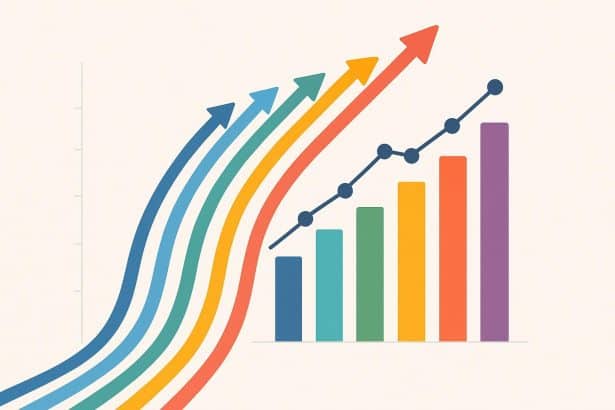
During the nineteenth century, employers usually operated on the assumption that women in the labor force earned wages that were merely supplemental to household income. This assumption was reflected in women's average earnings, which, according to most historians, were approximately one-third of men's in 1820, rising to approximately 54 percent of men's by the end of the nineteenth century. Women's average wages continued to rise relative to men's wages during the twentieth century, reaching 74 percent of men's in 1998.

The 74 percent figure is derived by comparing the average median wage of all full-time working men and women. To obtain figures for individual states, average wages of men and women within that state are compared. So older workers are compared to younger, social workers to police officers, and, since full-time means any number of hours above 35 a week (and sometimes fewer), those working 60-hour weeks are compared with those working 35-hour weeks. These estimates fail to consider key factors in determining wages, including education, age, experience, and, perhaps most importantly, consecutive years in the workforce. That is why in States such as Louisiana, where it is less common for women to work, and where they have less education and work experience, the wage gap is wider. In areas where it is more usual for women to work, such as the District of Columbia, the gap is smaller. But this average wage gap, as it is known, says nothing about whether individuals with the same qualifications who are in the same jobs are discriminated against.

When discrimination occurs, and, as readers know all too well, it does occur, our nation has laws to deal with it. We need to focus on individuals rather than averages, and apply the Civil Rights Act and the Equal Pay Act to eradicate cases of discrimination as they occur.

How much less do equally-qualified women make? Surprisingly, given all the misused statistics to the contrary, they make about the same. Economists have long known that the adjusted wage gap between men and women--the difference in wages adjusted for occupation, age, experience, education, and time in the workforce--is far smaller than the average wage gap. Even just adjusting for age removes a lot of the gap: in 1998, according to data published in Employment and Earnings by the Department of Labor, women aged 16 to 24 made 91 percent of what men made.

The wage gap shrinks dramatically when multiple factors are considered. Women with similar levels of education and experience earn as much as their male counterparts. Using data from the National Longitudinal Survey of Youth, economics professor June O'Neill found that, among people ages twenty-seven to thirty-three who have never had a child, women's earnings are close to 98 percent of men's. Professor O'Neill notes that "when earnings comparisons are restricted to men and women more similar in their experience and life situations, the measured earnings differentials are typically quite small."

What about the remaining gap, often referred to as the unexplained statistical residual? Economists Solomon Polachek and Claudia Goldin suggest that different expectations of future employment, or human capital investment, may explain the residual. In other words, since 80 percent of women have children, they may plan their careers accordingly, often seeking employment in fields where job flexibility is high and where job skills will deteriorate at a slower rate. This allows them to move in and out of the workforce with greater ease, or to shift from full-time to part-time work, if they so choose. But job flexibility frequently comes at the cost of lower wages in these fields.