


Clean office water should feel simple. Employees fill a cup, refill a bottle, and get back to work. Yet in many workplaces, tap water can raise questions.
Some employees worry about taste. Others notice odor, cloudiness, or old plumbing. Some have read about lead, PFAS, chlorine, or other contaminants and wonder what might be in the water they drink every day.
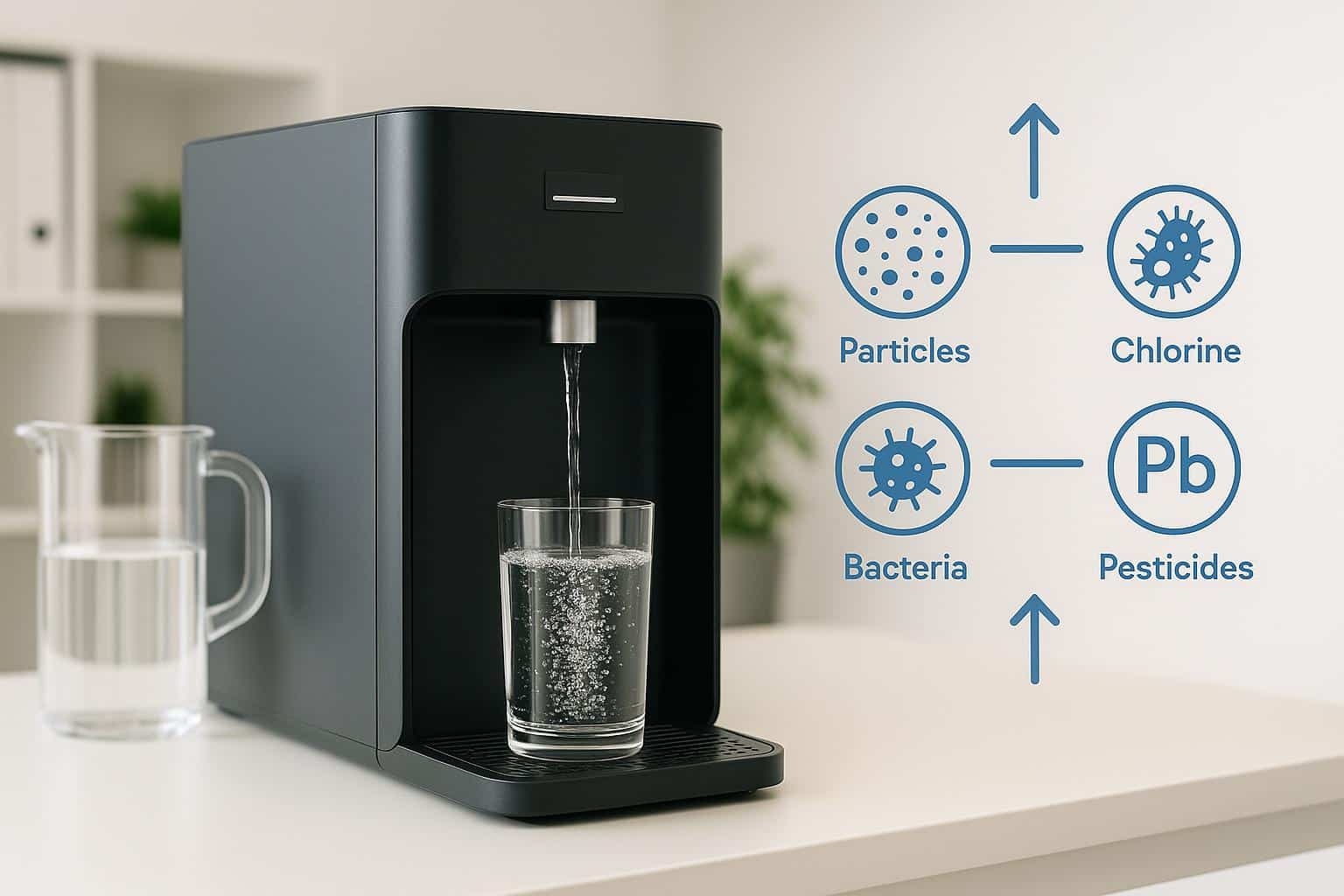
Why Employees Worry About Tap Water
Most public water systems are regulated, but employee trust often depends on what happens at the tap. Water can taste different depending on the local system, building pipes, fixtures, and how often plumbing is used.
The EPA sets legal limits for more than 90 contaminants in drinking water. Still, a glass of water that smells like chlorine or tastes metallic can make people hesitate.
A filtered water dispenser for office use can help address that concern at the point where employees actually drink. Instead of sending people to a sink or relying on bottled water, it provides the workplace with a dedicated refill station for filtered water.
That matters for both comfort and perception. When employees can see and use a clean water station, they know the business has taken an extra step to support a better workplace.
It can also reduce the habit of bringing in bottled drinks. If office water tastes better and is easier to access, employees are more likely to refill reusable bottles during the day.
What a Good Filter Can Help Reduce
Not all water filters are the same. Some improve taste and smell. Others are designed to reduce health-related contaminants. Business leaders should look closely at what a system is tested to do.
Common water concerns include chlorine taste and odor, which can make safe water less pleasant to drink. Many filters help reduce that taste, making employees more likely to choose water.
Lead is another major concern, especially in older buildings. Lead can enter drinking water through service lines, solder, plumbing, or fixtures. If an office has old plumbing or known lead risk, leaders should choose a system tested for lead reduction.
Sediment can also affect water quality. Small particles may change the look, taste, or clarity of water. A filtration system can help reduce visible particles and make water feel cleaner.
PFAS are another concern for many people. These human-made chemicals have become a larger part of conversations about drinking water. Businesses concerned about PFAS should ask whether a dispenser has testing or certification for any relevant PFAS-reduction claims.
NSF explains that different filtration standards apply to different needs. NSF/ANSI 42 covers aesthetic effects such as taste and odor. NSF/ANSI 53 covers certain health-related contaminant reduction claims. NSF/ANSI 401 covers some emerging contaminants.
That is why documentation matters. A system should clearly state what it reduces and how those claims are supported. A vague promise of “pure” or “clean” water is not enough for a business decision.
Why Filtered Dispensers Are Replacing Bottled Water
A filtered dispenser can also solve practical office problems. Bottled water and jug delivery often create more work than expected.
Someone has to order bottles, receive deliveries, store full containers, move empty ones, and replace heavy jugs. If deliveries are late or usage spikes, the office can run out. If too many bottles arrive, storage areas get crowded.
A connected dispenser can reduce those hassles. It filters water from an existing line, which means employees have steady access without waiting for bottles or lifting heavy containers.
The cost comparison can also be useful. Bottled water programs may include delivery fees, cooler rentals, deposits, extra orders, and storage needs. A dispenser may include installation, filter changes, service, and maintenance, but these costs are easier to plan for.
There is also a waste benefit. Fewer single-use bottles and fewer large plastic jugs can help offices keep breakrooms cleaner and support sustainability goals.
For employees, the benefit is simple. They get water that is easy to access, tastes better, and feels more trustworthy.
What to Check Before Choosing a System
The right dispenser depends on the office.
Start with water quality concerns. Are employees complaining about taste, smell, or cloudiness? Is the building older? Are there local concerns about lead, PFAS, or other contaminants? Those answers can guide the type of filtration needed.
Next, review the system’s claims. Ask what it filters, what standards it meets, and how often filters need replacement. If the system claims to reduce lead, PFAS, chlorine, or sediment, ask for proof.
Capacity matters too. A small office may only need one unit. A larger workplace may need several stations near break rooms, meeting areas, reception areas, or shared work zones.
Placement should be practical. The dispenser should be easy to reach, close to plumbing and power if needed, and located where employees already go.
Maintenance is just as important as filtration. Filters need to be changed on schedule, and the unit should stay clean. Ask who handles service, repairs, and routine upkeep.
Features are the last piece. Some offices only need cold filtered water. Others may want hot water for tea, ambient water for quick refills, or sparkling water as an alternative to canned drinks.
Better Water Builds Trust at Work
Employees may not think about office water when everything works well. They notice it when it tastes bad, smells strange, runs out, or feels questionable.
A filtered dispenser can help remove those doubts. It can improve taste, reduce selected contaminants, lower bottled water use, and make hydration easier throughout the workday.
For business leaders, the decision starts with a simple review. Look at current water concerns, compare filtration claims, check service needs, and choose a system that fits the workplace.
Better water is not just a breakroom upgrade. It is a practical way to support employee comfort, reduce waste, and create a cleaner daily experience.

