advertisement
On TechRepublic: 3 habits of highly ineffective employees
Find Articles in:
all
Business
Reference
Technology
News
Sports
Health
Autos
Arts
Home & Garden
advertisement

Content provided in partnership with
Thomson / Gale

Ars combinatoria: mystical systems, procedural art, and the computer

Art Journal,  Fall, 1997  by Janet Zweig

Mystical Systems, Procedural Art, and the Computer

"This is a slightly unusual request," said Doctor Wagner, with what he hoped was commendable restraint. "As far as I know, it's the first time anyone's been asked to supply a Tibetan monastery with an Automatic Sequence Computer.... Could you explain just what you intend to do with it?"

- Arthur C. Clarke, "The Nine Billion Names of God," 1952(1)

One of the Greek oracles, the sibyl at Cumae, used to write the separate words of her prophecies on leaves and then fling them out of the mouth of her cave. It was up to the suppliants to gather the leaves and make what order they could.

- Charles O. Hartman, Virtual Muse, 1996(2)

Most Popular Articles in Arts
Art since 1900: Modernism, Antimodernism, Postmodernism
Free-standing cardboard sculpture
What makes a successful business person? Business people who are tops in ...
Take advantage of local advertising: TV, newspaper or magazines? If your ...
Tino Sehgal at the ICA
More »
advertisement

Borges, in the essay "Kafka and His Precursors," suggests that our perception of the present alters our conception of the past, that we can look at texts from the past in a new way, influenced by things we now understand.(3) By the light of the computer, then, we can look anew at a long history of mystical texts and combinatorial systems that reach back to antiquity. Mystical systems involving permutational procedures that purport to reveal a body of hermetic knowledge or that lead to a revelatory exhaustion of all possibilities prefigure the computer's potential to permute and, given rules, to engage in "creative magic" by finding meaning in new combinations. A number of artists in this century, with or without the computer, have explored this realm in their work.
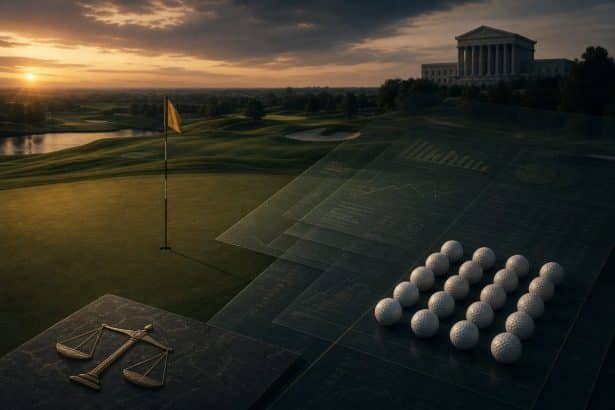

I have searched for examples of three specific types of combinatorial systems. In mathematics, these three types are called permutation, combination, and variation. Each begins with a limited number of items, a set of things. In permutations, the positions of these things are shuffled within the whole set, as in an anagram. For combinations, one can take out any number of elements from the set and put them together in a smaller group. Variations are permutations with repetitions allowed; in variations, one can permute to infinity. The computer, of course, excels at all of these systematic activities.

During this search for examples, certain questions, themes, and comparisons arose. Why are permutations of abstract symbols so often linked to creation, whether divine or artistic? What is it about permuting letters or numbers that leads to mystical experience? Is this experience born out of the creative transformation that occurs or out of the meditative activity? What role can the computer play as a stand-in for this process? What is the qualitative difference between permutational systems that are intentionally driven, and those systems that are manipulated with chance operations?

Among the themes that have recurred is the notion of total exhaustion; it is often hinted that, if all the possibilities of permutations are exhausted, there might be a revelation or a transformation on a larger scale, or even the end of the world. There is the recurring idea that the numbers 1 or 2 or 3 can give birth to everything there is, to the infinite. The number 1 is often paradoxically equated with the infinite.

Comparing the historic mystical systems to twentieth-century artistic practice with a similar systematic basis presents other questions. Are there larger, more transformational systems, and smaller, more self-contained ones? Why does some procedural work seem more spiritually based, while other work demands to be taken for exactly what it is, pure process? Does the artwork reside in the machine or in what the machine generates? What is so compelling, across the ages, about combinatorial activity?

What follows are several examples, by no means comprehensive, of ars combinatoria, or combinatorial art. They are presented in roughly chronological order with one notable exception, the I Ching, which is the oldest example of all and is placed just prior to a discussion of some works by John Cage. The examples begin instead with another ancient text, the Sefer Yetzirah.

The Sefer Yetzirah, or Book of Creation, is a mystical Hebrew text. Its origins are uncertain; but it may date as far back as the second century A.D.(4) Its purpose and meaning are equally unclear; it might have been an instructional text for meditative techniques and creative magic, as well as an explication of the book of Genesis. According to the Sefer Yetzirah, the world was fabricated by the Infinite One, the Ain-Sof out of permutations of letters and numbers:

Twenty-two Foundation letters:

He engraved them, He carved them, He permuted them, He weighed them, He transformed them,

And with them. He depicted all that was formed and all that would be formed.(5)

By the manipulation of letters, then, the universe was created. The permutational method that was employed by the Ain-Sof to create the world is described:

How? He permuted them, weighed them, and transformed them, Alef with them all and all of them with Alef Bet with them all and all of them with Bet. They repeat in a cycle and exist in 231 Gates. It comes out that all that is formed and all that is spoken emanates from one Name.(6)