


Modern visual production relies heavily on spatial computing and interactive graphics. For virtual reality, game engines, and digital commerce, the demand for realistic three-dimensional assets has grown faster than traditional studios can support. To resolve these supply-side issues, Neural4D, a generative platform jointly developed by Nanjing University, DreamTech, the University of Oxford, and Fudan University, offers a fast AI 3D generator designed to automate volumetric asset creation.
Instead of relying on manual polygon shaping, Neural4D compiles physical objects into clean digital meshes in seconds. This speed allows development teams to build detailed environments without the high cost of manual asset modeling.
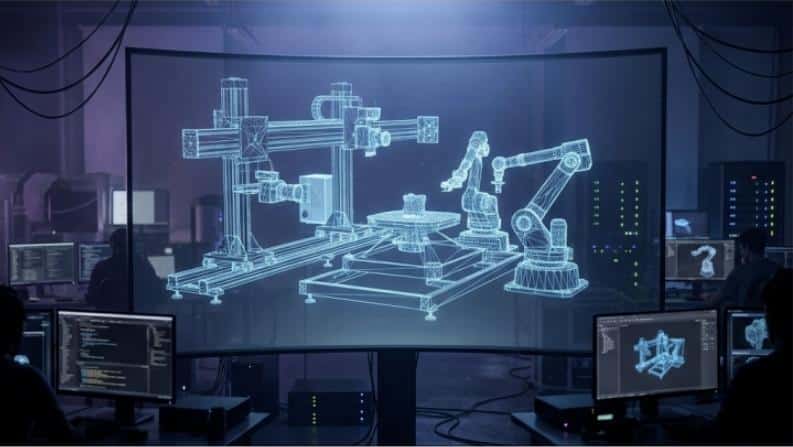
Bypassing Manual Modeling Pipelines
Traditional modeling requires hours of vertex manipulation, retopology, and coordinate mapping. For large-scale projects, this manual work slows down the entire pipeline. Utilizing the updated Neural4D-2.5 engine, developers can bypass these steps by feeding 2D source inputs directly into the generator to construct optimized, quad-dominant geometries.
- Faster production cycles for spatial design layouts.
- Consistent geometric density across different model classes.
- Automated polygon optimization to maintain high performance.
Solving Material Separation and Realism
A major technical obstacle in automated reconstruction is extracting realistic material properties under varying light conditions. The Direct3D-S2 engine in Neural4D-2.5 uses Spatial Sparse Attention to separate color data from baked lighting, outputting clean PBR maps.
- Individual maps for metallic, roughness, and normal parameters.
- Adaptable textures that respond correctly to custom lighting setups.
- Uniform surface mapping without distortion or stretching.
Streamlining Enterprise Workflows
Integrating automated 3D modeling allows companies to optimize catalog management, web displays, and architectural previews. Assets can be shared directly across teams in open-standard file formats.
- Direct compatibility with Unity, Unreal, and WebGL applications.
- Support for standard file exports including GLB and FBX.
- Reduced file sizes to prevent loading delays on web viewports.

