


A theme that runs through almost every consumer finance category is the gap between what is marketed and what is actually delivered. The marketed rate appears in headlines, on landing pages, and in summary documents. The actually-received rate appears on the statement after the transaction has completed, and it usually differs from the marketed rate in ways that benefit the provider rather than the borrower.
This article walks through the specific mechanisms that produce the gap, how each one operates in practice, and what a borrower can do to anticipate the gap before signing rather than discovering it afterward.
- Mechanism One: Rate Range Disclosure
- Mechanism Two: Conditional Promotional Rates
- Mechanism Three: Fee-Driven Effective Rate Increase
- Mechanism Four: Variable Rate Adjustment
- Mechanism Five: Daily Versus Stated Period Compounding
- Mechanism Six: Approval-Conditional Pricing
- What to Do With This Information
- The Underlying Principle
Mechanism One: Rate Range Disclosure
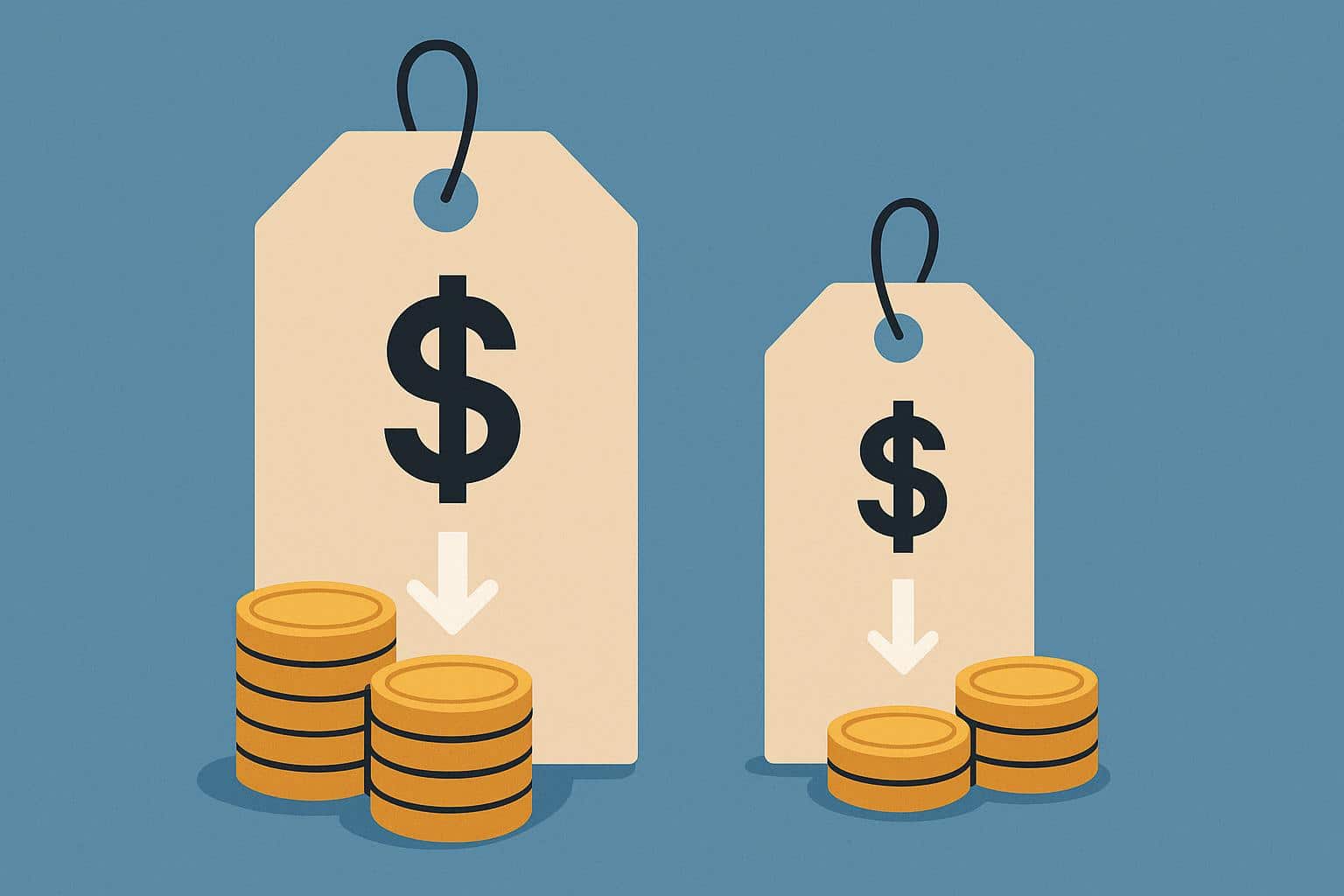
The first mechanism is the rate range disclosure. Many financial products disclose a rate range — for example, “rates from 5.99% to 35.99% APR.” The lower end of the range is the rate that appears in headlines and marketing. The upper end of the range is the rate that most borrowers actually receive.
The lower end is achievable only by borrowers with exceptional credit profiles and ideal application characteristics. The number of borrowers who actually qualify for the lower end is usually small — sometimes less than 10 percent of approvals. The other 90 percent receive rates somewhere in the middle or upper portion of the range, often substantially higher than the rate that drew them to the product.
The mechanism is legal because the range is technically disclosed. The marketing emphasis on the lower end is permitted because the lower end is theoretically available. The borrower’s expectation gets shaped by the marketing emphasis rather than by the realistic distribution of received rates, which is the gap that benefits the provider.
The defense is to recognize that the marketed rate is usually the floor of the available range, not the median. The borrower should plan for receiving a rate in the upper half of the range and verify their assumptions after approval but before signing.
Mechanism Two: Conditional Promotional Rates
The second mechanism is the conditional promotional rate. Many products offer attractive promotional rates that apply only under specific conditions — for an introductory period, for specific types of transactions, or for borrowers who maintain specific account activities.
The conditions are disclosed but often buried. The borrower sees the promotional rate in the marketing, assumes it applies to their use case, and signs up. The actual rate that applies depends on whether their use matches the conditions. If it does not, the rate reverts to the standard rate, which is usually substantially higher.
For card-based cash services and balance transfers, this mechanism is particularly common. The promotional zero-percent rate applies for six months, but only if the balance is paid off in full by the end of the promotional period. The promotional cash advance rate applies, but only for the first cash advance, not for subsequent ones. The borrower who reads the marketing without carefully reading the conditions can find the actual cost much higher than the promotional rate suggested.
The defense is to read the conditions section of any promotional rate before factoring the promotional rate into the cost calculation. If the conditions match the borrower’s intended use, the promotional rate is real. If not, the rate calculation should use the post-promotional rate, which is what the borrower will actually pay.
Mechanism Three: Fee-Driven Effective Rate Increase
The third mechanism is fee-driven. The marketed rate is the interest rate alone, but the effective cost includes fees that effectively raise the rate. Origination fees, transaction fees, account maintenance fees — each one adds to the cost in a way that the interest rate alone does not capture.
On short borrowing windows, the fee impact is largest because the fees amortize over fewer days. A 3 percent origination fee on a thirty-day loan effectively adds 36 percent to the annualized cost beyond the interest rate alone. The same fee on a five-year loan adds less than 1 percent annualized. The same fee can produce a small or large gap depending on the borrowing window, and short-term products usually fall on the large-gap end.
The defense is to translate the loan into total cost over the actual borrowing window rather than relying on the rate alone. The total cost is the sum of all payments, and dividing the total cost by the principal produces the actual cost as a percentage. This number can be annualized to compare across loans, and the annualized total cost is usually higher than the marketed rate by an amount that depends on the fee structure.
Mechanism Four: Variable Rate Adjustment
The fourth mechanism is variable rate adjustment. Many products are marketed at a current rate but include provisions that allow the rate to change based on external indices, the lender’s discretion, or specific borrower behaviors.
The borrower who signs at the marketed rate might be exposed to rate increases that the marketing did not emphasize. A variable rate that adjusts with a reference index can move substantially over the life of the loan. A rate that can be adjusted at the lender’s discretion can rise unpredictably. A penalty rate that activates after a missed payment can move from manageable to punishing in a single billing cycle.
The defense is to identify the rate’s variability characteristics before signing. Fixed rates are predictable. Variable rates are not, and the borrower should account for the realistic range of potential rates rather than just the current rate. The marketing emphasizes the current rate; the disclosure describes the variability mechanics.
Mechanism Five: Daily Versus Stated Period Compounding
The fifth mechanism is the compounding period. The marketed rate is often expressed in a way that does not capture how compounding actually works.
Daily compounding produces more interest than monthly compounding for the same nominal rate. A 20 percent annual rate compounded daily produces about 22.13 percent of effective interest. The marketing typically shows the 20 percent. The borrower experiences the 22.13 percent in the actual interest charges that appear on the statement.
The gap is small for individual transactions but accumulates across years of borrowing. The borrower who understands the gap can plan more accurately. The borrower who does not is consistently a small amount more in debt than the marketing suggested, and the difference compounds in the borrower’s disfavor over the life of the relationship.
Mechanism Six: Approval-Conditional Pricing
The sixth mechanism is approval-conditional pricing. Some products advertise an attractive rate but reserve the right to offer different terms upon approval, based on the underwriting assessment of the specific borrower.
The borrower applies, expecting the marketed rate. The approval comes back with a different rate, sometimes substantially higher. The borrower, having invested time in the application and having a need for the funds, often accepts the offered rate rather than walking away. The approval-conditional pricing has captured a borrower who would not have applied at the actual rate but who signs at it once already in the application flow.
The defense is to know in advance that the marketed rate is not necessarily the rate that will be offered. The borrower should evaluate the worst plausible rate that might be offered before applying, and have a clear rule for whether to accept or walk away from rates above a certain threshold. Pre-committing to a walk-away threshold prevents the sunk-cost capture that produces accepted high-rate offers.
What to Do With This Information
The mechanisms above are not unusual or hidden in the legal sense. They are disclosed in the agreements and visible to anyone who reads carefully. They are common because they all benefit the provider at the borrower’s expense, and the providers have learned that most borrowers do not read carefully enough to catch them.
The reader who understands the mechanisms can recognize them when they appear and adjust their evaluation accordingly. A range disclosure means the marketed rate is probably the floor. A promotional rate means the conditions need to be checked. A fee structure means the total cost needs to be calculated. A variable rate means the realistic range matters more than the current rate. Daily compounding means the effective rate is higher than the nominal rate. Approval-conditional pricing means a walk-away threshold needs to be set in advance.
For specific evaluation across short-term cash services, a 카드깡 style reference that walks through the mechanisms as they appear in this category can help the reader internalize them faster than evaluating each provider independently. The reference provides the framework; the reader does the case-specific evaluation.
The Underlying Principle
The marketed rate and the received rate differ because the marketing and the disclosure serve different purposes. The marketing is designed to attract. The disclosure is designed to comply. The gap between them is where the provider’s revenue lives, and the gap is structural rather than accidental.
A borrower who treats the gap as a fact about the category rather than as an exception about specific products is better equipped to evaluate any new offer that appears. The defense is calibration rather than vigilance. Vigilance is exhausting and breaks down under pressure. Calibration is just an updated expectation that produces appropriate skepticism by default, without requiring conscious effort each time. That calibration, applied across decades of consumer finance decisions, is what eventually distinguishes the borrowers who consistently get the terms they expected from the borrowers who keep being surprised.

