


The national soccer team in Sri Lanka holds an unusual place within sports in South Asia. It competes for regional games. However, the influence of cricket on the nation’s sports identity, as well as it being such a dominant sport, prevents the national team from competing with other teams to its full potential. Although there have been structural improvements made to help support the growth of the team. There continues to be a great difference between what the team can do and what they hope to achieve.
A Long Road in the FIFA Rankings
The Sri Lankan national football team’s current ranking of about 204th place on the FIFA World Rankings hasn’t changed much over time, even though there have been some notable successes for the national team in lower-profile friendly matches as well as in the qualifying rounds for major tournaments. The governing body of the team is the Football Federation of Sri Lanka (FFSL), which was established in 1939 and became an official member of FIFA in 1952. Anyone looking at the results of the national team using a betting site Sri Lanka can see how heavily favoured other teams are when they face off with the Sri Lankan national side. However, within South Asia, the story of the national team changes a little. In recent years, the national team has won games against Bhutan and Macau during their respective qualifiers for the Asian Football Confederation (AFC).
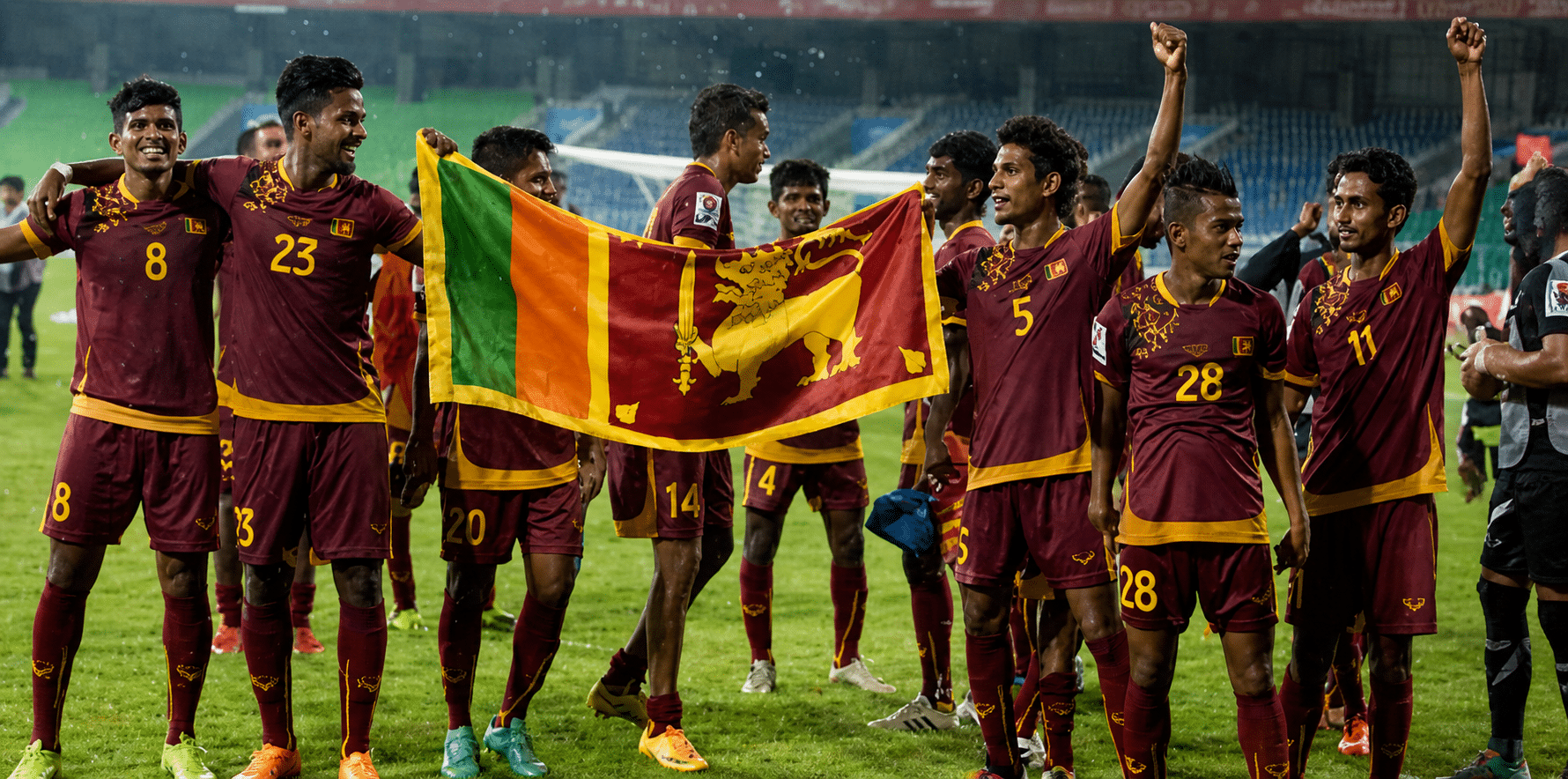
The SAFF championship is currently the team’s biggest competition. In the last few years of this competition, it has been dominated by India, Bangladesh and Nepal. Sri Lanka generally exits at the group stage. The 2023 version that was held in Bengaluru made it clear how difficult an obstacle the team faces; Sri Lanka were beaten 0-4 by India and defeated by just one goal by Kuwait, who are guests in the competition. While individual performances received some attention for the first time, as a whole, the results confirmed what can be referred to as a “ceiling” on which the team continues to hit.
Domestic Football and the Lanka Premier League
A country’s national team will always be connected to how good the league is that feeds it. The Lanka Premier League (LPL), then, is the main club competition on the island and also the primary route by which young players are able to progress into senior international football. With mobile technology enabling greater live broadcasting of games and Sri Lanka betting apps, allowing fans who are interested in their local clubs more access to those games, there is an evident increase in interest in the domestic club competitions amongst younger viewers. Although that increase in visibility has yet to translate into a similar increase in investment, the trend is positive for administrators looking to find funding for the sport through private sponsorship.
For many LPL players, they have other jobs, and this is a fundamental aspect of their lives that differentiates them from professional teams in India, such as the Indian Super League, where the ISL contracts allow players to train full-time. To begin addressing this issue, the Football Federation of Sri Lanka (FFSL) has created Youth Academies, which were established as part of its partnership with the Asian Football Confederation (AFC) Development Programme, aimed specifically at developing players aged between 14 and 20. While it may take years before these academies produce players capable of competing at senior levels, the FFSL is establishing a potential pathway for developing players.
Key Strengths and Persistent Weaknesses
An honest assessment of where Sri Lanka’s football programme stands today reveals genuine assets alongside stubborn deficiencies.
- Defensive organisation: Recent qualifying campaigns have shown disciplined, compact defending against higher-ranked opposition
- Diaspora pool: A sizeable Sri Lankan diaspora in Europe and the Gulf has produced dual-eligible players, several of whom the FFSL has begun to approach
- Youth infrastructure: Four AFC-supported academies are now active across the island
- Funding gap: The FFSL budget cannot sustain professionalism at the club level, limiting training hours and facilities
- Fixture scarcity: Sri Lanka plays roughly six to eight competitive fixtures annually — far below the ten to fourteen average across comparable SAFF nations
- Venue limitations: Sugathadasa Stadium in Colombo remains the primary international ground, with ageing infrastructure and a capacity that limits matchday revenue
| Indicator | Sri Lanka | SAFF Regional Avg. |
|---|---|---|
| FIFA Ranking (2024) | ~204 | ~165 |
| Top-flight clubs | 8–10 | 10–14 |
| Active youth academy centres | 4 | 7 |
| Annual competitive fixtures | 6–8 | 10–14 |
The Road Ahead
A sustainable route to improvement exists through the pursuit of both youth development (both at home and abroad) and targeted efforts to engage the diaspora. Many nations, such as Lebanon and Palestine, have shown how they were able to alter their national teams’ competitive ceiling over a period of approximately ten years by providing an outlet for overseas talent into domestic programs. Similarly, Sri Lanka has sufficient numbers of diasporic citizens who could potentially support a similar type of initiative. In addition, the AFC’s commitment to developing grassroots football throughout Asia offers the FFSL opportunities for coaches’ education, technical auditing, etc. that would normally be unaffordable.
Qualifying for the 2026 FIFA World Cup provided a small number of points; however, it was an opportunity to experience competition against much better teams due to the expanded schedule format used in the AFC. Both coaching staffs and federation employees have spoken publicly about viewing these matches as benchmarking tools, and not missions. Improvement in Sri Lankan football is measured on a yearly basis (as opposed to seasonally); therefore, what happens in terms of academy/club structure/governance for the FFSL will ultimately dictate whether or not there are realistic expectations for the national team to compete for one of the top three positions in the SAFF in time for the next World Cup.

