Peer content conferences
Teaching Pre K-8, Feb 2002 by Manning, Maryann
When students know what questions to ask during a conference, better writing is the result.
Rationale: Writers can assist other writers in improving their content and form through constructive comments during conferences.
Peer content and peer editing are the two major types of conferences. We've found that everyone's writing can improve with help from a peer. In the writing process, content and form revision must come before editing, so I'll only address content conferences here.
The process writing teachers I know wish they had time to conduct more conferences. Involving pairs or small groups of students in writing conferencing increases the amount of classroom discussion about writing, and the value extends far beyond the individual piece.
- Most Popular Articles in Reference
- The importance of understanding organizational culture
- Credit card attitudes and behaviors of college students
- What factors attract foreign direct investment?
- Libraries Need Relationship Marketing - mutual interest marketing concept, ...
- How to set performance goals: employee reviews are more than annual critiques
- More »
In the early primary grades, many children think of revision as simply adding to a piece of writing. As writers mature, so do their revision skills. There was a time when I thought young children couldn't conduct peer conferences. Daily, I see kindergartners and first graders who prove how wrong I was. Younger children don't conference in the same sophisticated manner as older children, but they do profit from the conference experience.
Rationale. Writers can assist other writers in improving their content and form through constructive comments during conferences.
Lesson. Introductory statements for the discussion of content peer conferences may include the following points:
(Primary students)
* First drafts can almost always be improved by revision.
* We learn about writing when we help others.
* Begin a conference by asking the writer the questions you have as a reader of the piece.
* It is important to first think about whether our writing can be understood by the reader before we check grammar, mechanics and spelling. When we conference with another writer, we want to ask questions about any place in a piece where we are puzzled.
* Help the author know when you think he or she needs to add more information.
(Intermediate and middle school students)
* Almost every piece of writing can be strengthened by revision.
* It is important to always see potential in a piece.
* Help the writer think about content and form and wait until editing to focus on grammar, mechanics and spelling.
* If you're concerned about the accuracy of information, ask the writer to research the topic.
Demonstrations with texts
1 Discuss the importance of revision by referring to Hooray for Diffendoofer Day! by Dr. Seuss, with help from Jack Prelutsky and Lane Smith (Knopf, 1998). In a section at the back of the book entitled, "How this book came to be," his editor, Janet Schulman, presents the changes in content Dr. Seuss made while working on the manuscript.
2 Discuss how published children's authors confer with their editors. Share examples of the acknowledgements authors make (often found in the frontmatter of books) to the editors who helped them improve their manuscripts. An excellent source is the book, Dear Genius: The Letters of Ursula Nordstrom, collected and edited by Leonard S. Marcus (HarperCollins, 1998), which chronicles the letters between legendary editor Ursula Nordstrom and some of her authors.


3 Many authors have given their drafts and revisions to libraries and museums. Discuss how the use of computers will limit access to authors' writing processes, because many revisions will not be on hard copy.

Demonstrations by the teacher
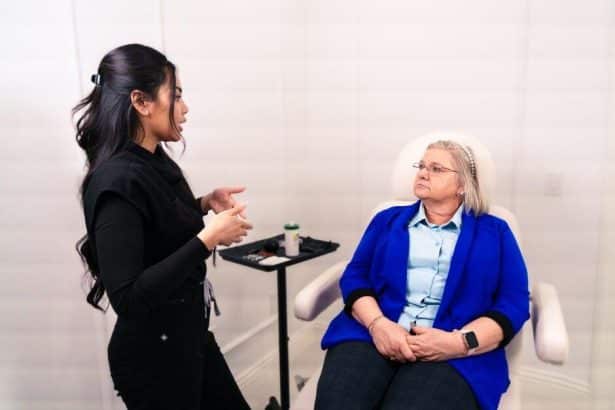
1 Ask a student who is a confident writer to allow you to conduct a content writing conference that the entire class can observe. Demonstrate how to give structure to a conference that is predictable, how to give positive comments and how to ask probing questions. Some possible questions include: "What concerns do you have about the piece?," "Who is your audience?" and "What help can I give you?" Point out that the writer doesn't have to incorporate all the suggestions into his or her revision of the piece.
2 Do a think-aloud conference with yourself and a piece of your own writing. Focus on one part of the piece (example: introduction, the conflict of the story, description of someone, conclusion).
3 Select a piece of your own writing and select a student whom you believe will feel comfortable making suggestions about it in front of the rest of the class. Read your piece aloud and follow the reading with a two- or three-question sequence dealing with what is good about the piece and what needs work. If you teach younger children, you can ask the student to tell you, "I liked... about the piece" and "I wish... about the piece." With an older student, follow a three-point sequence of: 1. A compliment about a specific point, 2. A question about the piece and 3. A suggestion for improvement.
Demonstrations by students
1 Suggest that students always have one or two peer conferences before they request a conference with you. Remind students that they're not judging their peer, but helping the writer. Encourage students to follow the procedures you have demonstrated.