On The Insider: Sexiest Magazine Covers of All Time
Find Articles in:
all
Business
Reference
Technology
News
Sports
Health
Autos
Arts
Home & Garden
advertisement
advertisement

Content provided in partnership with
ProQuest

Applications for Benefits: Due Process, Equal Protection, and the Right to Be Free from Arbitrary Procedures

Washington and Lee Law Review,  Spring 2004  by Vance, Virginia T

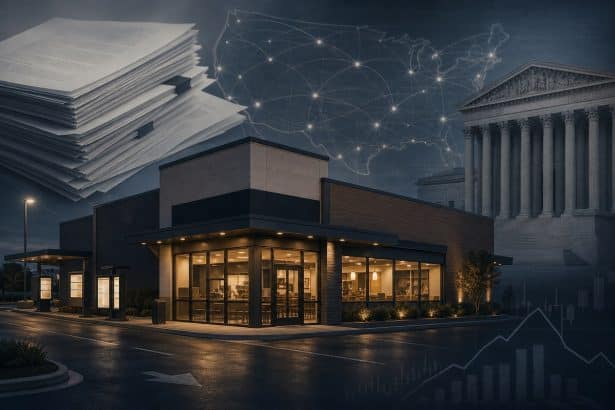
On January 31, 2003, the Los Angeles Times reported that government-contracted employees shredded approximately 90,000 documents at the INS California Service Center in Laguna Niguel. Among those documents shredded were applications for political asylum and applications for visas. According to federal prosecutors, an inability to keep up with mounting paperwork motivated the contract employees to engage in the "shredding spree." The responsible employees now face federal charges.1

Query: What happens when applicants for state benefits face similar difficulties?

I. Introduction

In 1970, the Supreme Court established that the termination of a person's welfare benefits demanded procedural due process protections, finding that welfare benefits are a statutorily created entitlement and thus a property interest.2 Ten years later, the Supreme Court declined to grant certiorari to address whether the safeguards of procedural due process covered an applicant for welfare benefits.3 In fact, over the past twenty years, the Court has repeatedly declined to address the issue of whether an applicant for benefits enjoys the same procedural due process protections as a person already receiving the same benefits or, for that matter, whether an applicant receives any procedural due process protections.4 Most recently, in American Manufacturers Mutual Insurance Co. v. Sullivan,5 the Court narrowly dodged the issue once more.6 The Court's repeated acknowledgement of the issue, and habitual avoidance of it, leaves a small but significant question looming over a large body of law: Is due process implicated when a person applies for a state benefit, and if not, does an applicant have any claim against a state agency when she feels that the state has arbitrarily denied her application for benefits?7

Originally identified as one of the "cracks" in "the new property" by Professor William Van Alstyne, the problem of an applicant's inability to obtain procedural protections to ensure a nonarbitrary denial of benefits still lurks within the framework of the modern administrative state.8 As Professor Van Alstyne observes:

When a litigant is adversely affected entirely as a predictable consequence of procedural grossness . . . he is in serious difficulty. The essence of his complaint is to the felt unfairness of procedural grossness itself-that it builds in such a large margin of probable mistake as itself to be intolerable in a humane society. The difficulty of his position appears to be, however, that unlike his freedoms of speech, association, assembly, religion, and petition . . . , and unlike his entitlement to privacy . . . , he cannot anchor a claim to freedom from procedural grossness per se in any clause of the Constitution.9

Current case law suggests that statutory construction can create a property right that guarantees some applicants procedural due process because of the nature of the interest at stake and the amount of government discretion involved in evaluating the application.10 However, other applicants who cannot point to such a statutorily created right still face unsatisfactory answers as to why the government did not extend them a particular benefit.11 Some state courts have sought to eliminate this problem and create uniform results by finding no property interest in any application for benefits.12 This approach seems arbitrary because in the absence of some sort of statutory protection of fair process, the applicant has no remedy for a mistaken denial of benefits.13 Thus, the current state of the law leaves us with two possible alternatives: Either there is a limited right to procedural due process in specific circumstances as defined by the property interest created by state statute, or there is absolutely no protection for applicants.

One may ask why it matters whether applications for benefits ought to trigger any due process concerns. The answer is simple: If the Court fails to acknowledge any due process concerns and sustains arbitrary and capricious state decisions with respect to any given application, it would in essence be signing off on a state government's right to treat its citizens arbitrarily and irrationally.14 For instance, a city zoning review board with broad discretion could deny any real consideration to an application for a license or certificate of location for a junkyard by rejecting the application as a favor to the mayor.15 In this situation, if the state did not provide any right to appeal or a right to sue under its own laws, the government disappoints a citizen's expectation that her government will at least observe minimal standards of fairness and rationality when considering her application.16 Legitimizing a state's arbitrary treatment of its citizens, irrespective of the discretion level a state actor enjoys in distributing a benefit, sets a dangerous precedent. Taking certain federal circuit court cases seriously, a state could easily escape its obligation to observe due process in certain circumstances by rewriting statutes to provide state decisionmakers with higher levels of discretion.17 Thus, decisions that do not acknowledge an individual's right to be free from procedural grossness threaten applications for benefits currently covered by procedural due process under the federal court property interest paradigm.