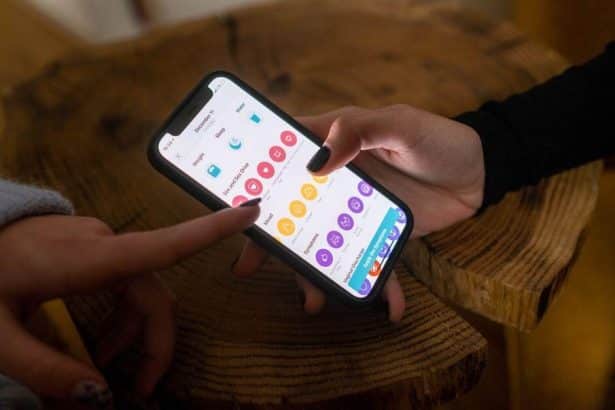
On GameSpot: Wii Fit tells 10-year-old she's fat
Find Articles in:
all
Business
Reference
Technology
News
Sports
Health
Autos
Arts
Home & Garden
advertisement
advertisement

Content provided in partnership with
Thomson / Gale

A Quarter Century of Skeptical Inquiry My Personal Involvement

Skeptical Inquirer,  July, 2001  by Paul Kurtz

The Creation of CSICOP

It is well known that I am the culprit responsible for the founding of the Committee for the Scientific Investigation of Claims of the Paranormal. Why did I do so? Because I was dismayed in 1976 by the rising tide of belief in the paranormal and the lack of adequate scientific examinations of these claims. At that time a wide range of claims were everywhere present. Books such as Erich von Daniken's Chariots of the Gods?, Immanuel Velikovsky's Worlds in Collision, and Charles Berlitz's The Bermuda Triangle were widely popular; and self-proclaimed gurus and soothsayers were stalking the media--from Uri Geller to Jeane Dixon. I was distressed that my students confused astrology with astronomy, accepted pyramid power, Bigfoot, the Loch Ness monster, Kirlian photography, and psychic surgery without the benefit of a scientific critique. Most of my scientific colleagues were equally perplexed by what was happening, but they were focused on their own narrow specialties--interdisciplinary efforts were frowned upon--a nd they did not know what the facts of the case were. Martin Gardner's Fads and Fallacies in the Name of Science was available, but aside from that there were all too few skeptical studies in the literature for open-minded inquirers, let alone the general public.

It is within this cultural milieu as background that I decided to convene a special conference to discuss "The New Irrationalisms: Antiscience and Pseudoscience." This was held on the newly built Amherst Campus of the State University of New York at Buffalo (where I was a professor) on April 30-May 2, 1976. I drafted a call inviting a number of leading scholars to the inaugural session of the proposed new organization. This was endorsed by many philosophers, including W. V. Quine, Sidney Hook, Ernest Nagel, Brand Blanshard, and Antony Flew. And I invited many of the well-known skeptical critics to this opening session--Martin Gardner, Ray Hyman, Philip J. Klass, Marcello Truzzi, James Randi, L. Sprague de Camp, and Milbourne Christopher. The new organization, which I co-chaired with Truzzi, was to be called the Committee for the Scientific Investigation of Claims of the

Paranormal (CSICOP). Our long-range goal was public education of the aims of science, particularly an appreciation for scientific methods of inquiry and critical thinking.

There had been other scientific efforts historically to investigate paranormal claims, such as the Society for Psychical Research founded in Great Britain in 1882 and in the United States in 1885 (by William James). And there had been many UFO groups which came into being in the post--World War II period. But most of these groups mainly attracted believers who were predisposed to accept the phenomena; the skeptics in their midst were few and far between. Thus CSICOP was the first body made up predominantly of skeptics, who were willing to investigate the alleged paranormal phenomena. We had been attacked by believers for being "closed-minded" and by other skeptics who claimed that we were dignifying phenomena that did not deserve special attention. But we thought that we had an important task to fulfill.

The Agenda

There were four strategic issues that CSICOP had to address at its founding.

First, what would be our approach to such phenomena? Would we simply be debunkers out to show by ridicule the folly of the claims that were made, or would we be serious Investigators concerned with research into claims, dispassionate, open-minded inquirers? The answer was clear: Our chief focus would be on inquiry, not doubt. Where we had investigated a claim and found it wanting, we would express our doubt and perhaps even debunk it, but this would be only after careful investigation.

Second, we asked, what would be our relationship to pro-paranormal believers? We observed that there were by now hundreds, perhaps even thousands, of pro-paranormal magazines and publications in the world, and that we were virtually the lone dissenting voice in the wilderness, as it were. We would be glad to engage believers in debate, but it would be our agenda, not theirs. Accordingly, we decided that we wished by and large to pursue our own research strategy, namely to encourage scientific and skeptical inquiry. Truzzi, cochairman and editor of The Zetetic (founded by him but which we took over), insisted that we present both believers and nonbelievers in dialogue in the pages of the magazine, and this he proceeded to do. Although members of the CSICOP Executive Council found this interesting and perhaps useful, they demurred because they felt that there was already tremendous exposure of the pro-paranormalists' viewpoint, and that we really wished to focus on the neglected skeptical case. Truzzi resigned from the editorship of the magazine, and indeed from the Council, and the SKEPTICAL INQUIRER came into being, edited by veteran science writer Kendrick Frazier, who had covered the first meeting of CSICOP for Science News.