On CBSSports.com: Stunning Maxim Hometown Hotties everyday
Find Articles in:
all
Business
Reference
Technology
News
Sports
Health
Autos
Arts
Home & Garden
advertisement
Featured White Papers
advertisement

Content provided in partnership with
Thomson / Gale

Performing "The Solitary Reaper" and "Tears, Idle Tears." - interpretive versus aesthetic literary criticism

Criticism,  Spring, 1996  by Kerry McSweeney

<< Page 1  Continued from page 1.  Previous | Next

1

The Solitary Reaper

Behold her, single in the field,

Yon solitary Highland Lass!

Reaping and singing by herself;

Stop here, or gently pass!

Alone she cuts and binds the grain,

And sings a melancholy strain;

O listen! for the Vale profound

Is overflowing with the sound.

No Nightingale did ever chaunt

More welcome notes to weary bands

Of travellers in some shady haunt,

Among Arabian sands:

A voice so thrilling ne'er was heard

In spring-time from the Cuckoo-bird,

Breaking the silence of the seas

Among the farthest Hebrides.

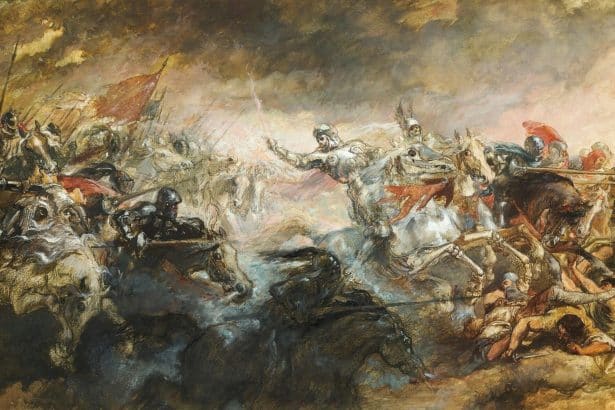
Will no one tell me what she sings?--Perhaps

the plaintive numbers flow

For old, unhappy, far-off things,

And battles long ago:

Or is it some more humble lay,

Familiar matter of to-day?

Some natural sorrow, loss, or pain,

That has been, and may be again?

Whate'er the theme, the Maiden sang

As if her song could have no ending;

I saw her singing at her work,

And o'er the sickle bending:--I

listened, motionless and still;

And, as I mounted up the hill,

The music in my heart I bore,

Long after it was heard no more.(11)

On 7 November 1805, Dorothy Wordsworth wrote to a correspondent from Patterdale in the Lake District, enclosing a transcription of a poem that her brother William had written two days before. She explained that "The Solitary Reaper" had been "suggested by a very beautiful passage in a Journal of a Tour among the Highlands, by Thomas Wilkinson."(12) On the poem's first publication two years later, Wordsworth gave the same explanation in a note, adding that its last line was taken verbatim from Wilkinson. The source passage reads as follows: "Passed by a Female who was reaping alone, she sung in Erse [Highland Gaelic] as she bended over her sickle, the sweetest human voice I ever heard. Her strains were tenderly melancholy, and felt delicious long after they were heard no more."(13)

William and Dorothy had toured the Highlands of Scotland two years previously, and Stephen Gill is no doubt correct in saying that if Wordsworth had not himself "seen isolated figures set against the immensity of the Highland landscape the poem would not have been written."(14) But Gill does not speculate on why this particular passage had such an impact on the poet. In the poem's opening stanza, the reaper's isolation is repeatedly emphasized ("solitary," "single," "by herself," "alone"), an auditor is directly addressed, and his/her attention insistently drawn to this figure ("Behold her," "Stop here," "Listen"). At first sight, this might suggest that the particular attraction of the Wilkinson passage was owing to Wordsworth's longstanding interest in pathetic subjects and their focalization. But there is a crucial difference between "The Solitary Reaper" and such poems as "The Ruined Cottage" and "The Thorn," which also center on solitary females in particularized natural settings and have narrators who directly address an auditor. These poems are calculated mixtures of lyrical and narrative elements; but there is little of the latter element in "The Solitary Reaper." And since the speaker does not know the language in which the maiden is singing, he cannot apprehend the "theme" of her song, cannot determine what story, if any, it tells.