By the sword and the plow: Theodore Chasseriau's Cour des Comptes murals and Algeria
Art Bulletin, The, Dec, 2004 by Peter Benson Miller
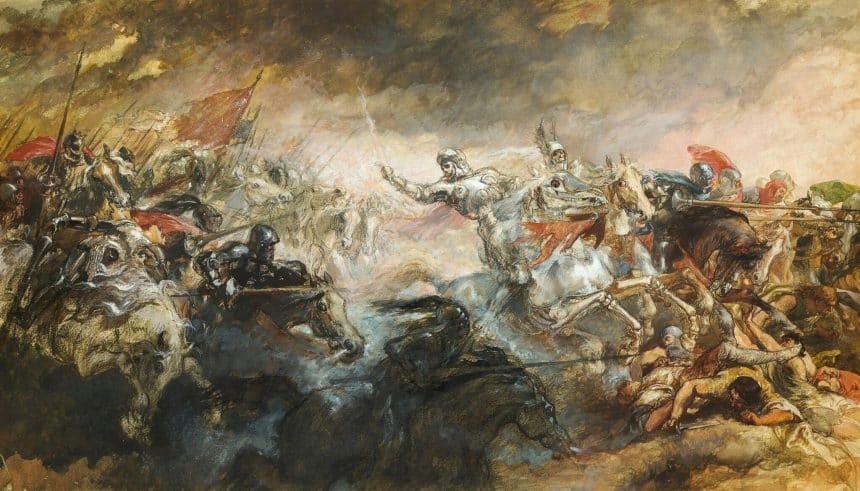
No study to date has proposed a comprehensive reading of Chasseriau's allegories as an ensemble from the perspective of French interventions in North Africa. (60) Yet Algeria provides the most satisfactory explanation of how form, context, style, and purpose together contributed to a meaningful visual experience at the Cour des Comptes. Launched by Charles X in 1830 and inherited by Louis Philippe, with whose dynastic aspirations it is closely identified, the Algerian enterprise and its vicissitudes dominated French public discourse for the duration of the July Monarchy. (61) Chasseriau interrupted his work at the Cour des Comptes in 1846 to travel to Algiers and Constantine, a voyage that left an indelible mark on his subsequent career. In 1852, Gautier--who went to Algeria in 1845--attested to the effect exerted by Chasseriau's experience there on the War mural, pointing to an almost military assurance in Chasseriau's style. (62) In so doing, he aligned Chasseriau with Horace Vernet, the chief hagiographer of the Algerian campaign, who was caricatured by Benjamin Roubaud charging at his canvas with his brush drawn like a sword. (63) To be sure, Chasseriau's elegiac pictorial language differs from Vernet's profusion of documentary detail. Even as a foil, however, Vernet's series of battle paintings of the Algerian conquest commissioned by Louis Philippe for Versailles Served as an inescapable point of reference. The younger artist was as committed as Vernet to the valorization of the war. This shared purpose stemmed from the intimate association between these artists and their military guides and interpreters in Algeria. (64) Chasseriau's imagery so accurately expressed the sensibility of the army that Gautier repeatedly identified Chasseriau as an official artist charged with representing the heroic feats of a conquering monarch, exactly the role that Vernet performed in his capacity as painter to the king. In Gautier's words, Chasseriau "seemed, like Apelles, to have followed the campaigns of Alexander." (65) Vernet, too, was likened to Apelles by a critic, Charles Blanc, who compared The Siege of Constantine to the Batailles d'Alexandre painted by Charles Le Brun. (66)
Although historians have tended to portray Chasseriau as indifferent to colonial politics, he appears to have been one of its more astute observers. In a letter sent from Philippeville to his brother on June 13, 1846, Chasseriau defended a beleaguered Marechal Thomas Robert Bugeaud de la Piconnerie, whom he was to visit in Algiers almost a week later. (67) His comments endorsed the French investment in Algeria:
Besides, all construction in this country will become French before long, and the town where I am now is as big as Chalons, Macon, etc., and it was built in four years. It is thus false to say that we haven't had any results. The results achieved are great on a fertile and savage land, and even if we pay for all this with sacrifices, at least we have real results. (68)