


Commercial truck accidents present a level of legal complexity that sets them apart from ordinary car crashes. The sheer size and weight of large trucks means that collisions often result in catastrophic injuries, and determining who bears financial responsibility can involve multiple parties, layers of insurance, and federal regulations that don’t apply to standard vehicles. For anyone injured in this type of collision, understanding how liability works is the first step toward pursuing fair compensation.
Why Truck Accidents Are Different
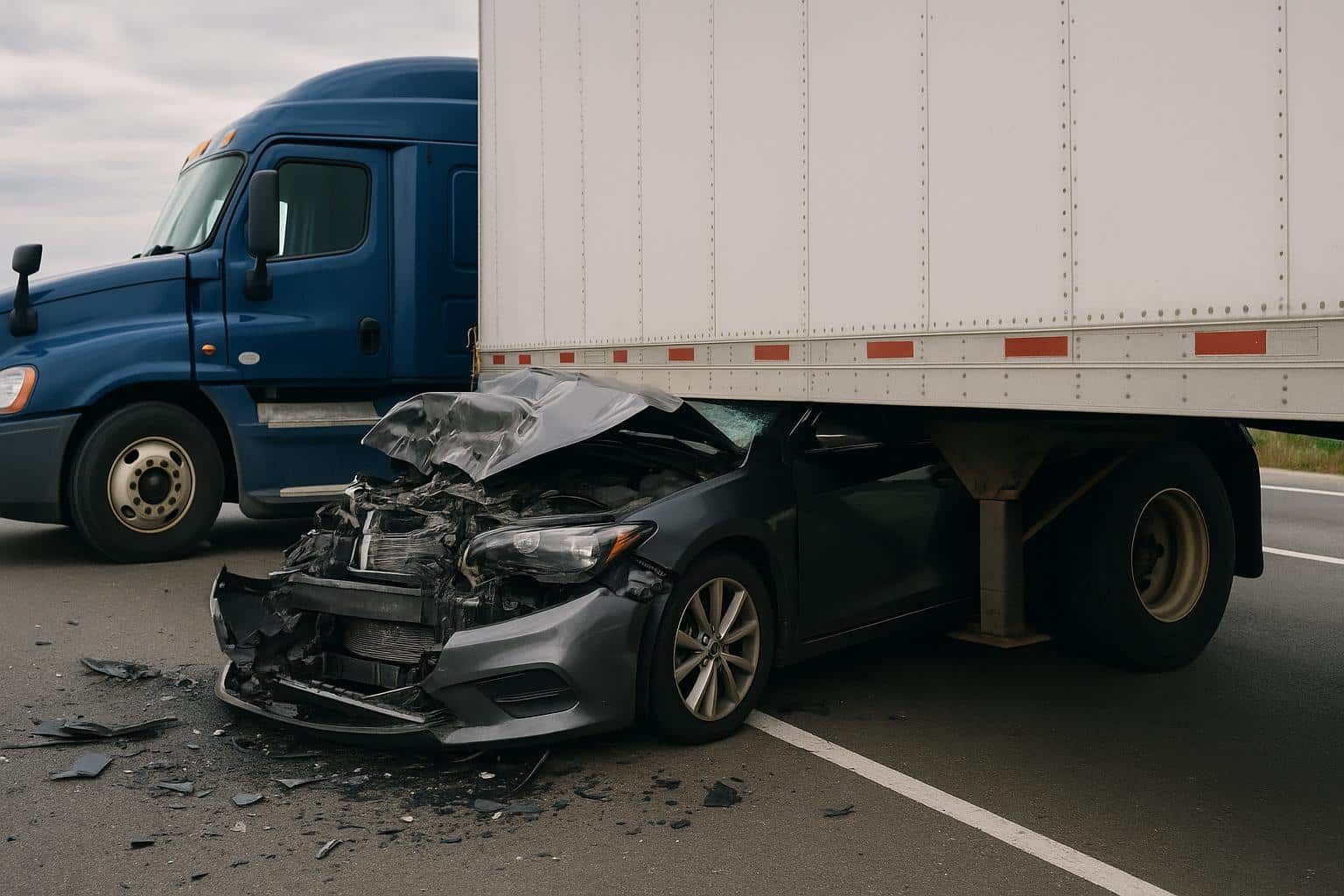
A fully loaded commercial truck can weigh up to 80,000 pounds, roughly twenty times the weight of a typical passenger vehicle. This weight disparity means that even a low-speed collision can cause severe harm to occupants of smaller vehicles. According to data compiled by federal transportation agencies, large trucks were involved in nearly 168,000 injury-causing crashes in a recent reporting year, with thousands more resulting in fatalities. These numbers underscore why liability determinations in trucking cases carry such weight, both literally and legally.
Unlike a two-car accident, where liability usually rests with one or both drivers, truck accidents frequently involve a web of potentially responsible parties. As per Bailey & Galyen, a truck accident lawyer from Fort Worth, identifying every liable party early in a case is often what separates a fair settlement from an inadequate one, since multiple entities may share fault even when only one truck was involved in the crash.
Who Can Be Held Responsible
The truck driver is often the first party examined, particularly if fatigue, distraction, or a violation of hours-of-service rules contributed to the crash. Federal regulations limit how many consecutive hours a driver can operate without rest, yet fatigue remains a persistent factor in trucking incidents. However, liability rarely stops with the driver alone.
Trucking companies can be held responsible under a legal principle known as vicarious liability, which holds employers accountable for the actions of employees performed within the scope of their job duties. Beyond that, companies may bear direct liability if they failed to properly train drivers, ignored maintenance schedules, or pressured employees to meet unrealistic delivery deadlines that encouraged unsafe driving.
Cargo loading companies also enter the picture in certain cases. Improperly secured or unevenly distributed loads can cause a truck to become unstable, leading to rollovers or jackknife accidents. When this occurs, the company or individuals responsible for loading the cargo may share liability alongside the driver and trucking company.
Vehicle and parts manufacturers represent another potential source of liability. If a mechanical failure, such as defective brakes or a tire blowout caused by a manufacturing flaw, contributed to the crash, the manufacturer of that component could be named in a claim. This is where truck accident cases begin to resemble product liability litigation rather than a straightforward traffic dispute.
The Role of Federal Regulations
The trucking industry operates under a dense set of federal rules established by the Federal Motor Carrier Safety Administration. These regulations cover everything from driver qualifications and vehicle inspections to drug testing and record-keeping requirements. When a trucking company or driver violates one of these standards, that violation can serve as strong evidence of negligence in a subsequent legal claim.
Inspection and maintenance records often become central to establishing liability. Trucking companies are required to keep detailed logs documenting vehicle upkeep, and gaps or inconsistencies in those records can suggest a pattern of neglect. Similarly, electronic logging devices now track driver hours automatically, making it more difficult for companies to dispute fatigue-related claims than in years past.
Comparative Fault and Its Impact
Many states apply a comparative fault standard, meaning that compensation can be reduced if the injured party is found partially responsible for the accident. This makes it especially important to gather thorough evidence, including police reports, witness statements, and any available black box data from the truck itself. Even a small percentage of assigned fault can significantly reduce a settlement, so building a complete picture of the incident matters from the outset.
Why Timely Investigation Matters
Evidence in truck accident cases can disappear quickly. Trucking companies are sometimes only required to retain certain records for a limited period, and physical evidence like skid marks or vehicle damage can deteriorate or be repaired before a thorough investigation takes place. Acting promptly after a crash, whether that means documenting the scene, preserving the vehicle, or requesting that records be retained, can make a meaningful difference in how a claim ultimately unfolds.
Moving Forward After a Crash
Because truck accident cases often involve overlapping insurance policies, corporate defendants, and federal safety standards, they tend to be more complicated than standard auto claims. Understanding the various parties who might share responsibility, and the regulations that govern the trucking industry, gives injured individuals a clearer sense of what to expect as their case develops. With so many moving parts, a careful and well-documented approach to liability remains the foundation of any successful claim.

