On GameSpot: Wii Fit tells 10-year-old she's fat
Find Articles in:
all
Business
Reference
Technology
News
Sports
Health
Autos
Arts
Home & Garden
advertisement
Most Popular White Papers
advertisement

Content provided in partnership with
Thomson / Gale

Dollars and Sense Stephen Moore - Review

National Review,  May 3, 1999  

Mr. Moore, an NR contributing editor, is director of fiscal-policy studies at the Cato Institute.

The Greedy Hand: How Taxes Drive Americans Crazy and What to Do About It, by Amity Shlaes (Random House, 255 pp., $22.95)

After 15 years of futile attempts to shrink the federal budget, I've become convinced that Milton Friedman was right: The only way to limit government is to starve the beast. Tax collections provide sustenance to the nanny state in Washington. Yet even after four and a half years of a Republican Congress, federal tax payments have lurched ahead by more than a half-trillion dollars. Federal taxes as a share of our incomes are now heftier than under Jimmy Carter-and the burden will grow again next year, and the year after that.

Along comes Amity Shlaes with a marvelous yet dispiriting treatise on our cradle-to-grave tax system. A Wall Street Journal editorial writer, she has a special talent that makes her unique among financial and economic writers: She actually makes taxation semi-interesting.

The theme is simple: The greedy hand of government "thrusting itself into every corner crevice of industry" is never satisfied with its take. (The metaphor of the "greedy hand" comes from Thomas Paine.) The payroll tax alone, paid by every McDonald's french-fry flicker or Wal- Mart checkout clerk, is higher than the original 7 percent income-tax rate applied only to the super-rich robber barons back in the early years of the century, when this evil extraction was invented.

Shlaes takes us on a magical mystery tour through the modern labyrinth of tax levies: federal income taxes, business taxes, marriage taxes, retirement taxes, death taxes, state use taxes, state sales taxes, unemployment insurance taxes, liquor taxes, tobacco taxes, local and state property taxes, baby-sitter taxes. By the end you just want to renounce your United States citizenship, move to Monte Carlo, and live the life of a tax refugee.

Once upon a time, tax refugees used to come here to dodge such burdensome levies. Two hundred years ago, anti-tax fanaticism was so intense on this continent that a nickel stamp tax helped incite a war. King George III is reported to have quipped that the colonists had gained their independence by fighting against taxation without representation, "but let's see how they like taxation with representation."

I have long suspected, and my suspicions are confirmed by this book, that the American tax tyranny was created not so much by the Sixteenth Amendment (which established the income tax) but rather by the World War II invention of the withholding tax. This supposedly temporary tax was never repealed. "As 1944 and 1945 passed with taxpayers obediently accepting their smaller checks," explains Shlaes, "the lawmakers got to work on the blueprints of their postwar projects. Withholding would indeed do more than fund the occupation of Germany or victory over Japan." And voila . . . the Great Society.

Shlaes reminds us that the tax code itself has become a method of intolerable social control. The Internal Revenue Code is now eight times longer than the Bible. The Republican tax bill of 1997 added hundreds of new pages: highly profitable for the lobbying industry. For every ten new words, Washington law firms add one more influence peddler, according to Shlaes's calculations.

The Greedy Hand is crammed with marvelous vignettes of how modern tax policy fiddles with the most private aspects of our lives. For example, did you know that the Social Security tax discriminates heavily against working women? The rule is one Social Security pension per household. So if a woman works outside the home and provides an income in addition to her husband's, her 15 percent payroll tax is poured down the trust- fund rat hole. Now where are feminists when we really need them?
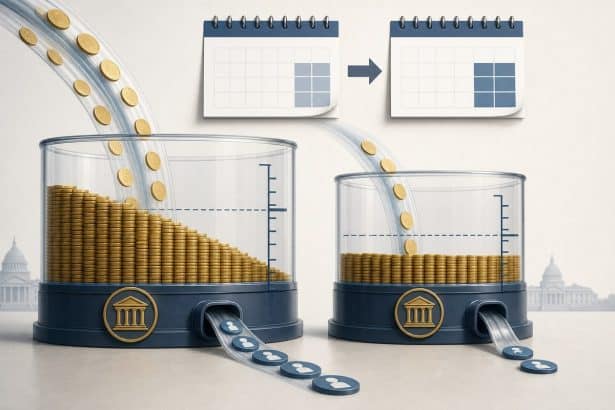
Here's another example: We have all heard repeatedly of late about the marriage penalty and how it encourages young people to shack up. Matrimony can mean an instant tax hike of $1,000 to $3,000 per year. What is not well known is that some of the biggest financial victims of the marriage penalty are senior citizens. Shlaes argues that this explains why more widowers than ever before are now choosing to live in sin during their retirement years. If Grandpa remarries, he and his live-in "lady friend" must surrender a larger portion of their fixed incomes to the IRS.

One comes away from this book convinced that the next great tax revolt will be incited by property taxes and the Robin Hood school-financing schemes that are now all the rage across the states. Suburban parents care intensely about the quality of their public schools. And they are generally willing to pay heavily for them. What they are not willing to do is pay high property taxes for someone else's kids' school. Even in liberal, yuppie Vermont, the latest spread-the-wealth school- refinancing scheme has sparked a local civil war over the issue.

So what advice does The Greedy Hand offer if we wish to fix the tax mess? I should recuse myself from this discussion, since Shlaes shows the good sense of endorsing a tax-reform strategy I recently proposed in the Wall Street Journal. I call it the Alternative Maximum Tax. The idea is simply to offer Americans a tax choice: the current convoluted tax system or a voluntary 20 per- cent postcard-return alternative with no deductions whatsoever. The Alternative Maximum Tax "has the power to muffle Gucci Gulch's roar, to expose the lobbies of the current code as dispensable." I couldn't have said it better myself.