


Almost every mover advertises trust, experience, and reliability. None of that is verifiable from a website. What is verifiable — quickly, and for free — is whether a moving company actually holds the operating authority it’s legally required to have, which is a far more useful signal than star ratings or testimonials when deciding who gets to load your belongings onto a truck.
Two Different Sets of Rules, Depending on the Move
Whether a mover needs federal or state authority depends on where the move starts and ends. A move that crosses state lines falls under the Federal Motor Carrier Safety Administration (FMCSA), which requires interstate household goods carriers to register for operating authority, carry specific insurance, and maintain a complaint record that’s publicly searchable.
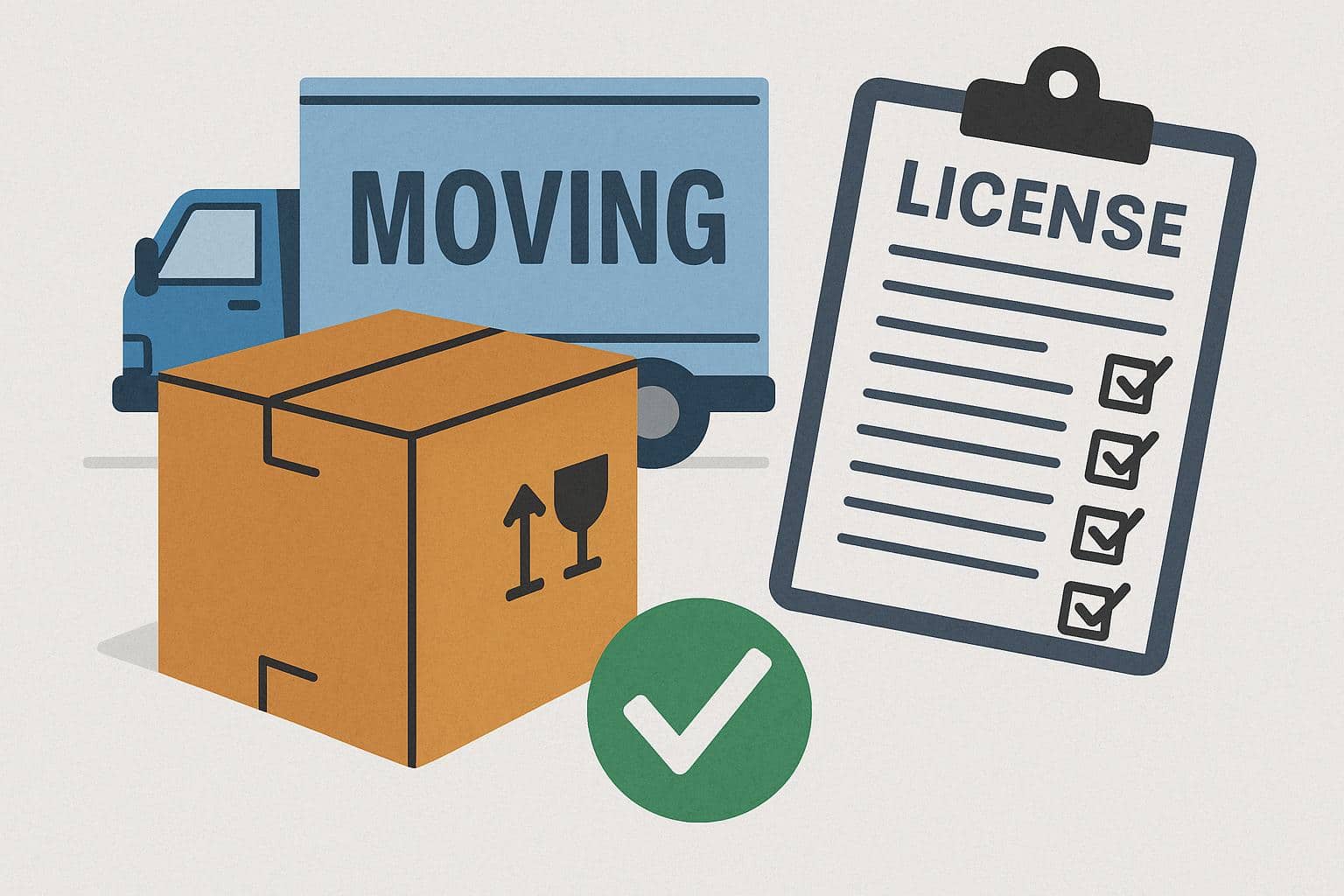
A move that stays entirely within Virginia is regulated differently. Under Virginia law, a company transporting household goods more than 30 road miles must hold a Household Goods Carrier Certificate of Fitness from the Virginia DMV’s Motor Carrier Services division. That certificate requires the company to maintain a $50,000 surety bond or irrevocable letter of credit on file with DMV for the first five years after the certificate is issued, along with minimum liability and cargo insurance. Moves of 30 miles or less don’t require a published tariff, but the underlying certificate requirement still applies to any company operating as a household goods carrier in the state. Operating, or even advertising, as a household goods carrier without this certificate is a Class 1 misdemeanor in Virginia, carrying fines up to $2,500.
This distinction matters because a company can be entirely unlicensed for the type of move it’s advertising and still look completely legitimate online. A polished website and a local phone number say nothing about whether the DMV or FMCSA paperwork is actually in order.
How to Actually Check
For interstate moves, FMCSA maintains a free, public database where consumers can look up a company’s USDOT number, operating authority status, insurance filings, and complaint history before booking. For Virginia-only moves, DMV’s Motor Carrier Services division can confirm whether a company holds an active Household Goods Carrier certificate. Both checks take a few minutes and cost nothing, which makes skipping them one of the more avoidable risks in the entire moving process.
Red Flags the Federal Government Specifically Warns About
The Department of Transportation’s Office of Inspector General publishes a list of indicators associated with moving fraud, drawn from patterns identified in federal investigations. Several are worth checking for directly:
- A website with no physical business address and no visible USDOT number or operating authority information
- Phone calls answered with a generic “Movers” or “Moving Company” instead of the business’s actual name
- A quote given sight-unseen, over the phone or online, with no offer of an in-home or virtual inspection
- No written binding or non-binding estimate provided before the move
- Reviews that are heavily concentrated in a short time window, suggesting they may not reflect a genuine, long-standing customer base
None of these factors alone proves fraud, but the federal guidance treats them as a cluster worth taking seriously — a company matching several of these patterns at once warrants real hesitation before a deposit changes hands.
Why Enforcement Has Ramped Up
This isn’t a hypothetical concern. FMCSA’s Operation Protect Your Move, a nationwide enforcement initiative targeting fraudulent household goods movers and brokers, has specifically responded to a rise in complaints about movers holding customers’ belongings “hostage” and demanding additional payment before delivery. In one enforcement sweep, the agency conducted more than 100 investigations across 16 states, resulting in over 60 enforcement actions that could lead to the revocation of operating authority for the companies involved. The scale of that response reflects how frequently these complaints have been showing up in FMCSA’s national consumer complaint database, not an isolated problem limited to a handful of bad actors.
What This Looks Like in Practice
For someone comparing moving companies in Virginia, the practical version of all this is straightforward: before booking, look up whether the company holds the certificate or authority appropriate for the type of move being planned, confirm they’ll provide a written estimate rather than a verbal one, and be cautious of any company that’s reluctant to share licensing details when asked directly. A legitimate mover generally has no reason to be vague about its own registration status — for reference, this Virginia moving company’s service details and background is an example of the kind of licensing and service-area information a legitimate operator typically makes easy to find, which is a reasonable baseline to compare against when vetting any company under consideration.
Licensing verification isn’t a guarantee that a move will go smoothly. But it removes one of the most common and most preventable categories of risk, and it’s one of the only parts of the vetting process that doesn’t rely on trusting a stranger’s word.

