On TV.com: ANGELINA JOLIE looks stunning as usual
Find Articles in:
all
Business
Reference
Technology
News
Sports
Health
Autos
Arts
Home & Garden
advertisement
advertisement

Content provided in partnership with
Thomson / Gale

Literacy, Learning, and Media

Technos: Quarterly for Education and Technology,  Winter, 2000  by Dennis Adams,  Mary Hamm

"The very notion of literacy is being altered.... To function in hypermedia, to read and design Web pages and embark on computer-based projects, one must orchestrate a fresh amalgam of graphic, linguistic, and auditory literacies. There is every reason to believe that these literacies will continue to proliferate."
* Howard Gardner, author of Intelligence Reframed: Multiple Intelligences for the 21st Century (Basic Books, 1999)

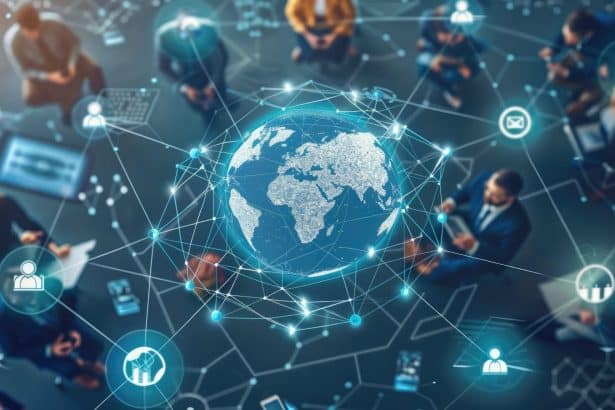
Literacy now requires understanding and manipulating the processes used to create messages in the modern world. This implies having the ability to decode information from all types of media. The features of multiple literacies are increasingly overlapping with each other and with basic subject matter. The expanding definition of literacy does not diminish the importance of traditional reading and writing skills; rather, it recognizes the increasing importance of information and communication technology. As the 21st Century gets under way, we see references to technological literacy, visual literacy, information literacy, networking literacy--and we can be sure that more are lurking out there beyond the technological horizon.

THE IMPACT OF MEDIA ON SOCIAL INTERACTIONS AND INTELLECTUAL DEVELOPMENT

Aldous Huxley felt that the more subtle and persuasive the medium, the greater the danger. Media that appealed to the senses of vision and hearing with stunning immediacy were viewed as particularly dangerous to the uninformed. Like Ray Bradbury's Fahrenheit 451, Huxley's Brave New World suggests that psychological and moral paralysis can be a direct consequence of powerful communication technologies. We would do well to keep these horrors in the realm of science fiction.

Multiple technology-intensive literacies increasingly cut across subject matter and life. Media literacy is a good example. It involves more than teaching through media; it is teaching about, and creating with, media. As part of an expanded definition of literacy, media literacy may be thought of as comprehending, analyzing, composing, and appreciating multiple print and nonprint symbol systems. As new subject-matter standards point out, communication and information technologies can serve as an integrating and collaborative force in the classroom.

Today's students live in a world where more and more information is communicated through a video screen. The habits of mind fostered through media interactions really do need to be understood by everybody. In 1999, the American Academy of Pediatrics pointed to parental responsibility for limiting TV watching. The Academy suggested (based on little empirical evidence) that children under the age of two should not view television at all. Its report also noted that if young children do tune in, the result may even hamper the brain development associated with essential stimuli like close-up interaction with older people. Though these are good arguments, there is little in the way of scientific foundation for them. There is general agreement, however, that direct human interaction is far better than frenzied images. Young children learn best when they can do things in three dimensions--but the video screen offers only two. Some of the same concerns that surround television viewing also apply to computer use at the early childhood level.

Whether it's the television or the computer, a little carefully chosen educational programming doesn't hurt children. In fact, above age three, it seems to be mildly helpful. With every age group, computer programs and the Internet can be fun--especially when an adult or a friend shares the experience. Still, the evidence is clear that children need to be carefully limited to developmentally appropriate material (Hamm, 1999). Children of all ages also need stimulating activities with peers and knowledgeable adults to guide them. However, at some point children have to understand the possibilities and the pitfalls of the electronic media surrounding them.

Clearly, students in tomorrow's schools will interact with the full range of media possibilities, viewing a mix of media as "texts" to be experienced, appreciated, analyzed, created, and shared. Digital media are good vehicles for interactive storytelling. For the first time, active, hands-on electronic learning is available for students all over the word. Internet technology puts the world at the student's fingertips.

As technology advances, learning how to sort valid information from a glut of misinformation is becoming an important element of literacy. We must learn to ask these questions:

* Who wrote this, and who would believe it?

* Is the source educational, commercial, gossip, or solid research?

* What are the credentials of the writer or producer?

* When was it originally published or produced?

* How accurate, current, and organized is the information?

* Why was it done, and where might I get more accurate information?

The next step is to learn how to sort out what's worth knowing and to focus on academics in the face of glittering distractions.