


A 750- to 1,000-square-foot space sits near the dividing line between two common mini-split sizes. A 18000 BTU mini split often works well in a large living room, open studio, finished basement, or well-insulated apartment. A 24,000 BTU system provides more capacity for spaces closer to 1,000 square feet, especially when tall ceilings, strong sun, or weak insulation increase the load. Before choosing a mini split AC unit, look beyond floor area. Layout, climate, insulation, room use, and heating demand can all change the size you need.
When 18,000 BTU Is Usually Enough
An 18,000 BTU unit is generally the better fit for a 750- to 900-square-foot open area with standard ceilings and average or better insulation. Common examples include studio apartments, combined living and dining rooms, finished basements, and large bonus rooms where air can move freely.
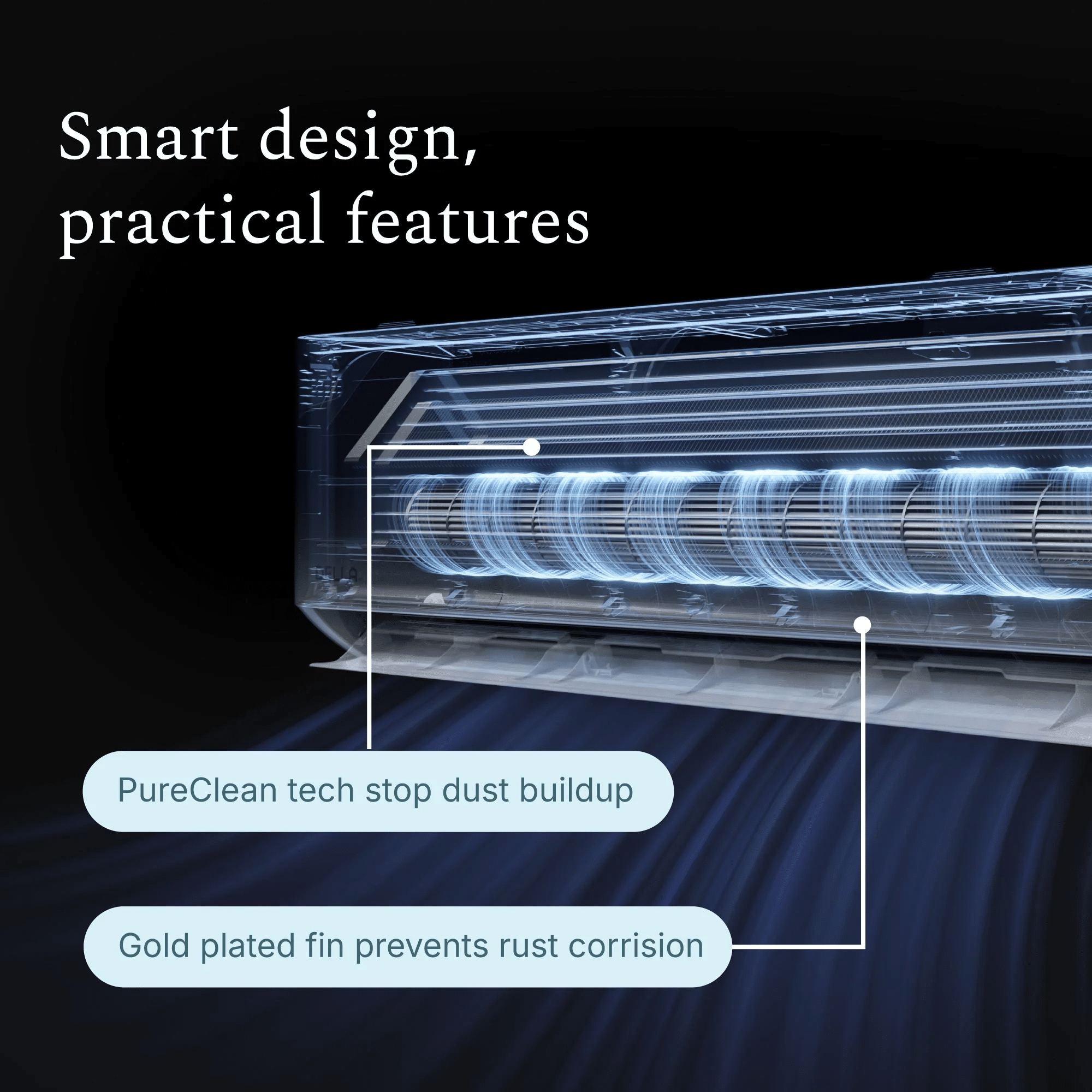
It may also work near 1,000 square feet in a newer, well-sealed home located in a moderate climate. In that setting, the smaller system can run steadily without delivering more capacity than the space needs. This makes 18,000 BTU attractive to apartment residents, basement owners, and families conditioning one large shared room without extending ductwork.
When 24,000 BTU Is the Safer Choice
A 24,000 BTU mini split makes more sense as the area approaches 1,000 square feet and the heat load rises. A top-floor apartment with west-facing windows, a garage conversion with limited insulation, or a living area with a vaulted ceiling may need the extra capacity even when its floor area is below 1,000 square feet.
Hot climates, cold winters, frequent occupancy, cooking equipment, and exercise machines can also increase demand. The added output gives the system more reserve during extreme weather. It is often a better match for garage workshops, home gyms, older apartments, and homeowners using the mini split as their main source of heating and cooling.
Room Layout Can Change the Answer
One indoor air handler works best in a single open zone. A 900-square-foot loft may be easier to condition than an 800-square-foot apartment divided into a living room, hallway, and two closed bedrooms. Walls and shut doors restrict airflow, and a larger compressor cannot push conditioned air evenly through every separated room.
For an open studio, basement, workshop, or living area, one correctly placed 18,000 or 24,000 BTU head may work well. A home with several enclosed rooms may be better served by a multi-zone system, which gives each space its own indoor unit and temperature control. Homeowners should evaluate air distribution before assuming that more BTUs will solve an uneven layout.
Compare Features Beyond Cooling Capacity
BTU output is only one part of the decision. Compare SEER2 ratings to understand cooling efficiency, especially when the system will run daily through a long summer. Homeowners in colder regions should also review heating efficiency and the manufacturer’s published low-temperature operating range.
Inverter operation is useful in either size because the compressor can adjust its output as indoor conditions change. This supports steadier temperatures and quieter operation than a system that repeatedly starts and stops at full power. Noise ratings matter in bedrooms and home offices, while Wi-Fi controls can help manage rentals, vacation properties, workshops, or rooms that are not occupied all day.
Filtration, dehumidification, warranty coverage, voltage requirements, and professional support also deserve attention. Two units with the same capacity can provide a very different ownership experience.
A Practical Choice for Different Homeowners
Choose 18,000 BTU when the space is closer to 750–900 square feet, the layout is open, the insulation is good, and the climate is moderate. It is often the more balanced option for a large room, studio, finished basement, or open apartment.
Consider 24,000 BTU when the space is near 1,000 square feet or has high ceilings, direct afternoon sun, drafty construction, heavy occupancy, or demanding seasonal weather. It also provides more margin for garages, gyms, and busy open-plan areas.
For a space that falls directly between the two, measure ceiling height, note window direction, inspect insulation, and consider how often interior doors remain closed. Then have an HVAC professional perform a load calculation. Those details will show whether the room needs the balanced output of an 18,000 BTU system or the added reserve of a 24,000 BTU model.

