advertisement
On TechRepublic: 19 words you don't want in your resume
Find Articles in:
all
Business
Reference
Technology
News
Sports
Health
Autos
Arts
Home & Garden
advertisement

Content provided in partnership with
Thomson / Gale

Not much stock in `put' conspiracy: the attacks on New York City and Washington have led to a new urban legend—namely, that inside traders used `put' options on airline stocks to line terrorist pockets

Insight on the News,  June 3, 2002  by Kelly Patricia O'Meara

There has been a great deal of talk about alleged insider trading of airline stocks by associates of Osama bin Laden prior to the Sept. 11 attacks on the World Trade Center and the Pentagon. Government investigators remain tight-lipped about a Department of Justice (DOJ) probe of possible profiteering by terrorists with advance knowledge of the attacks despite data that show trading activity on at least two of the most obvious stocks don't support the premise.

Most Popular Articles in News
The Ten Best Laptop bags
Tata plans cheapest-ever car for Indian market
GLOBALIZATION AND THE DEVELOPMENT OF UNDERDEVELOPMENT OF THE THIRD WORLD
Corn is good for you; Corn is not only a tasty treat, but also a cereal that ...
THE 50 BEST STYLISH HANDBAGS TO CARRY
More »
advertisement

In fact, based on financial information almost immediately available to investigators, even the most febrile conspiracy theorists would have to agree that this dog don't hunt. For instance, much of the speculation involves "put" options--a bet that a stock will go down--on American and United airlines, the two carriers whose planes hijackers seized for the attacks. Yes, there was a spike in puts on those airlines just days before, but the data show such spikes weren't anomalous.

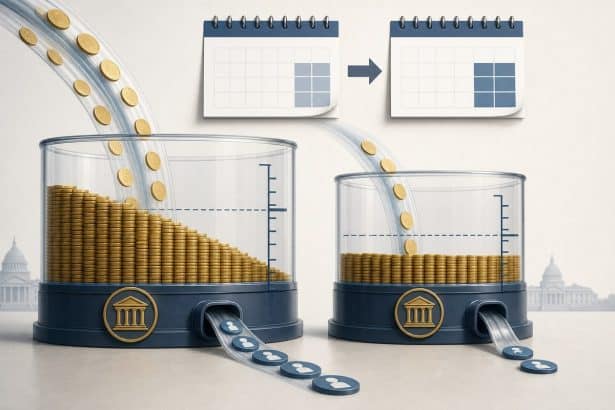
On Sept. 6, 2001, the Thursday before the tragedy, 2,075 put options were made on United Airlines and on Sept. 10, the day before the attacks, 2,282 put options were recorded for American Airlines. Given the prices at the time, this would have yielded speculators between $2 million and $4 million in profit--hardly what any analyst would call a killing in the options markets. Based on historical data for both airlines, the put options just prior to Sept. 11 neither were dramatic nor unprecedented.

For example, there were repeated spikes in put options on American Airlines during the year before Sept. 11, including June 19 with 2,951 puts, June 15 at 1,144 puts, April 16 at 1,019 and Jan. 8 at 1,315 puts. United Airlines puts were a little more during the prior year, including Aug. 8 at 1,678 puts, July 20 with 2,995, April 6 at 8,212 and March 13 at 8,072. Since such relatively small spikes in options occur frequently and in a random pattern, why would respected financial analysts and government investigators cry foul?

That is the mystery. Because the matter still is under investigation, none of the government investigating bodies--including the FBI, the Securities and Exchange Commission (SEC) and DOJ--are speaking to reporters about alleged insider trading. Even so, suspicion of insider trading to profit from the Sept. 11 attacks is not limited to U.S. regulators. Investigations were initiated in a number of places including Japan, Germany, the United Kingdom, France, Luxembourg, Hong Kong, Switzerland and Spain. As in the United States, all are treating these inquiries as if they were state secrets--which, given the known financial information about trading in the equities of the two airlines used in the attacks, seems curious.

Lynne Howard, a spokeswoman for the Chicago Board Options Exchange (CBOE), tells INSIGHT that information about who made the trades was available immediately. "We would have been aware of any unusual activity right away. It would have been triggered by any unusual volume. There is an automated system called `blue sheeting,' or the CBOE Market Surveillance System, that everyone in the business knows about. It provides information on the trades--the name and even the Social Security number on an account--and these surveillance systems are set up specifically to look into insider trading. The system would look at the volume, and then a real person would take over and review it, going back in time and looking at other unusual activity."

Howard continues, "The system is so smart that even if there is a news event that triggers a market event it can go back in time, and even the parameters can be changed depending on what is being looked at. It's a very clever system and it is instantaneous. Even with the system, though, we have very experienced and savvy staff in our market-regulations area who are always looking for things that might be unusual. They're trained to put the pieces of the puzzle together. Even if it's offshore, it might take a little longer, but all offshore accounts have to go through U.S. member firms--members of the CBOE--and it is easily and quickly identifiable who made the trades. The member firm who made the trades has to have identifiable information about the client under the `Know Your Customer' regulations (see "Snoops and Spies" Feb. 22, 1999), and we share all information with the Securities and Exchange Commission."

Given all of this, at a minimum the CBOE and government regulators who are conducting the secret investigations have known for some time who made the options puts on United and American airlines. The silence from the investigating camps could mean any of several things: Either terrorists are responsible for the puts on the airline stocks; others besides terrorists had foreknowledge; the puts were just lucky bets by credible investors; or, there is nothing whatsoever to support the insider-trading rumors.

Adam Hamilton of Zeal LLC, a North Dakota-based private consulting company that publishes research on markets worldwide, has looked at the numbers and doesn't see a conspiracy. "I read a lot of stories about the illicit profits, but it didn't make sense to me because the amounts of money that reportedly were made didn't seem large enough for someone with foreknowledge about some drastic and catastrophic drop in stock prices. I heard that $22 million in profits was made on these put options--that's a trivial amount of money for big-time options traders. After all, it makes sense that if you had advance knowledge of the Sept. 11 events you could have made hundreds of millions or even billions of dollars betting against these and other stocks that would have been affected. Sure, it makes a much more attractive story to write there's a huge conspiracy, but the numbers don't necessarily show this."