


Office furniture has traditionally been judged by a simple set of standards. A desk should provide enough room to work. A chair should support the body. A cabinet should keep files organized. If each item also looks good, it is usually considered a smart purchase.
Modern workplaces ask much more of their surroundings. Employees move between focused tasks, video calls, group discussions, and informal conversations throughout the day. Each activity produces sound, and much of that sound travels farther than expected.
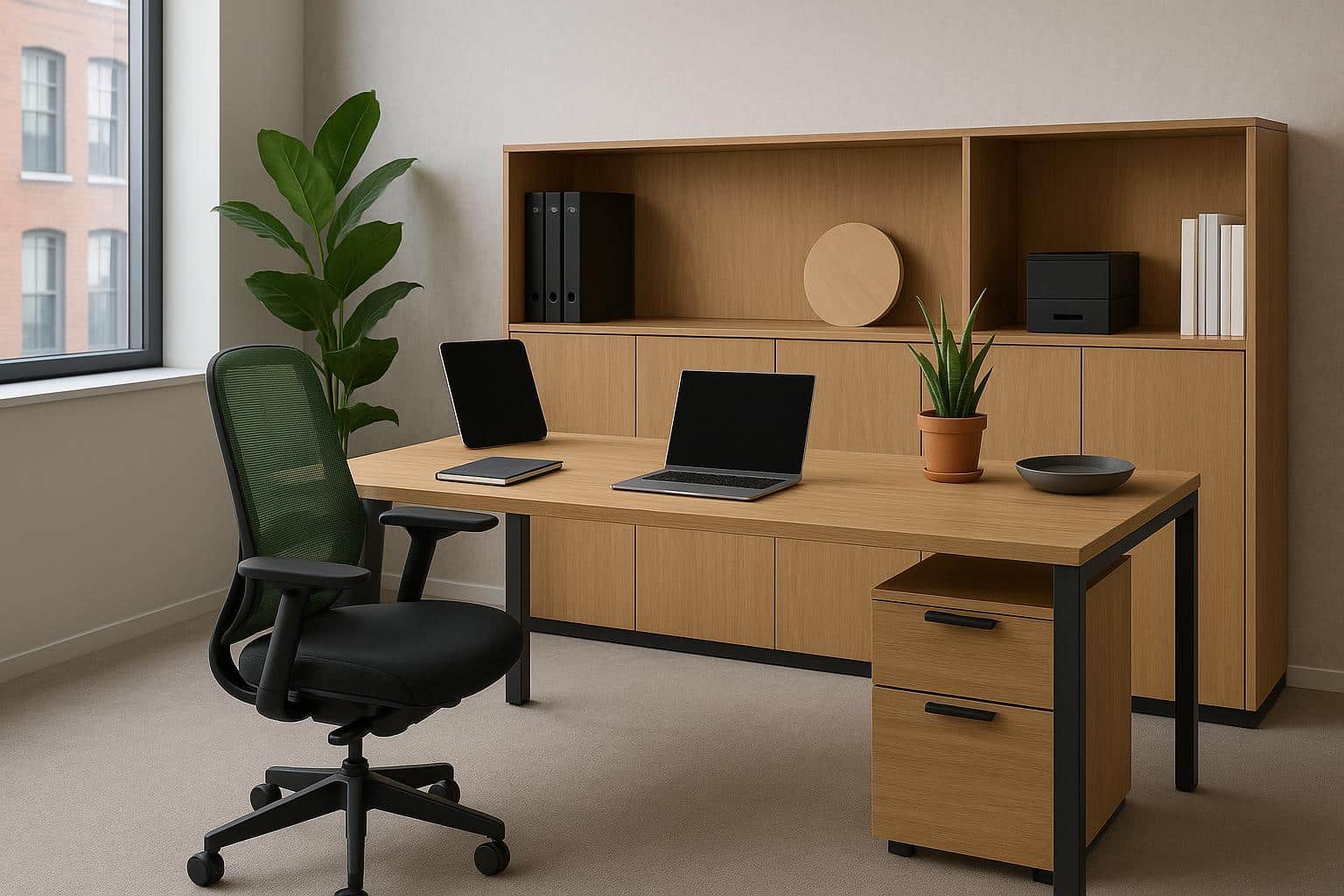
Research into workplace acoustics, furniture design, and sound-control systems shows that desks, shelving, storage units, and other furnishings can play an active role in managing noise. Instead of treating furniture as an object placed inside an acoustic plan, businesses can make it part of the plan.
That shift matters in open offices, shared workspaces, conference rooms, reception areas, and other environments where hard surfaces can reflect voices and create distracting echoes.
Why Ordinary Furniture Can Make an Office Louder
Sound does not disappear when a conversation ends. Sound waves move through a room and interact with the surfaces around them. Softer materials tend to absorb some of that energy, while hard materials such as glass, concrete, and untreated wood often reflect it.
Many modern offices contain a high number of reflective surfaces. Glass partitions, exposed ceilings, polished floors, large tables, and wooden cabinets may create a clean visual style, but they can also allow sound to bounce around the space.
The result is reverberation, which is the continued presence of sound after its original source has stopped. Excessive reverberation can make voices harder to understand and background activity more noticeable. Employees may hear nearby conversations, keyboard sounds, ringing phones, and meeting-room discussions all at once.
Businesses often respond by adding wall panels, ceiling treatments, fabric dividers, or enclosed booths. These products can be effective, yet they may require extra space, visible design changes, and added installation costs.
A different approach is to improve existing surfaces. Engineered sound absorbing furniture can turn desks, storage pieces, credenzas, and vertical wooden surfaces into part of a wider acoustic system. This allows furniture to perform its usual job while also helping control how sound behaves in the room.
The concept is practical. Every office needs furniture, so giving those pieces a second function can reduce the need to fill the space with separate acoustic products.
The idea also aligns with guidance from the U.S. General Services Administration, which recommends managing sound through workplace design to improve comfort, productivity, speech clarity, and privacy.
How Engineered Furniture Helps Manage Sound
Acoustic furniture is not simply a padded chair or a bookshelf placed between two teams. Its performance depends on how the materials and surfaces interact with sound waves.
SoniQ Technology uses precision laser-created perforations in wood surfaces. These openings are designed to be nearly invisible, allowing the furniture to retain the appearance of finished wood. Behind the surface, the system is engineered to absorb and balance sound rather than reflect all of it back into the room.
This process can be applied to furniture with useful vertical surface area, including desks, cabinets, shelving systems, and storage units. When several treated pieces are placed throughout an office, they can support sound control across the workspace instead of addressing only one wall or ceiling section.
Placement still matters. A treated storage unit positioned near a group work area may help control sound at the source. Furniture used as a divider can support clearer zones between collaborative and focused spaces. Desks and credenzas can add acoustic performance in areas where wall treatments may not fit the design.
This does not mean one piece of furniture can solve every noise problem. Effective acoustic design looks at the entire room, including its size, shape, materials, layout, ceiling height, and purpose. Furniture should work with other solutions when a space requires broader treatment.
The advantage is flexibility. Businesses can improve sound performance without making the office feel like a recording studio. The technology is integrated into items employees already use, so the room can remain professional, familiar, and visually consistent.
Acoustic furniture can also support future workplace changes. Modular desks and storage units are easier to relocate than permanent wall construction. When teams move or layouts change, acoustic performance can move with the furniture.
A Quieter Office Starts With Smarter Surfaces
Office noise is not only a facilities issue. It affects how people experience their workday. A room filled with reflected conversations can make focused tasks feel more demanding, while poor sound clarity can make meetings tiring and communication less effective.
Businesses planning a renovation or furniture purchase should consider acoustics early in the process. Waiting until employees complain about noise may lead to corrective products that feel like add-ons rather than being built into the design.
Start by identifying where sound is created and where it becomes distracting. Look at meeting zones, shared desks, walkways, reception areas, and spaces used for phone or video calls. Pay attention to hard surfaces and large open areas where sound can travel easily.
Furniture choices can then support both the practical and acoustic needs of each zone. A cabinet can provide storage and absorb sound. A divider can define space and reduce reflections. A desk can support daily work while contributing to a more balanced room.
Office furniture still needs to accommodate computers, organize materials, and fit the business’s visual style. Its job no longer has to stop there. When acoustic performance is engineered into the furniture itself, every surface has the chance to make the workplace calmer, clearer, and better suited to the way people actually work.

