


So, where the real value of any monitoring system is derived from is what people are able to do differently with it. Collecting data about network activity is just the first step. The far more consequential step comes at translating that data into effective, actionable alerts that allow IT teams to act before minor issues evolve into major outages, and before subtle anomalies become confirmed security incidents.
Enterprise infrastructure is never static. Things change configurations, devices go online or offline, and traffic patterns bounce around as applications get updated, and workloads shift between environments. Among all that activity, something is always different from how it was a day before. The question that needs to be asked when it comes to the monitoring systems for this aspect is which of those differences matter, and to whom they matter to.
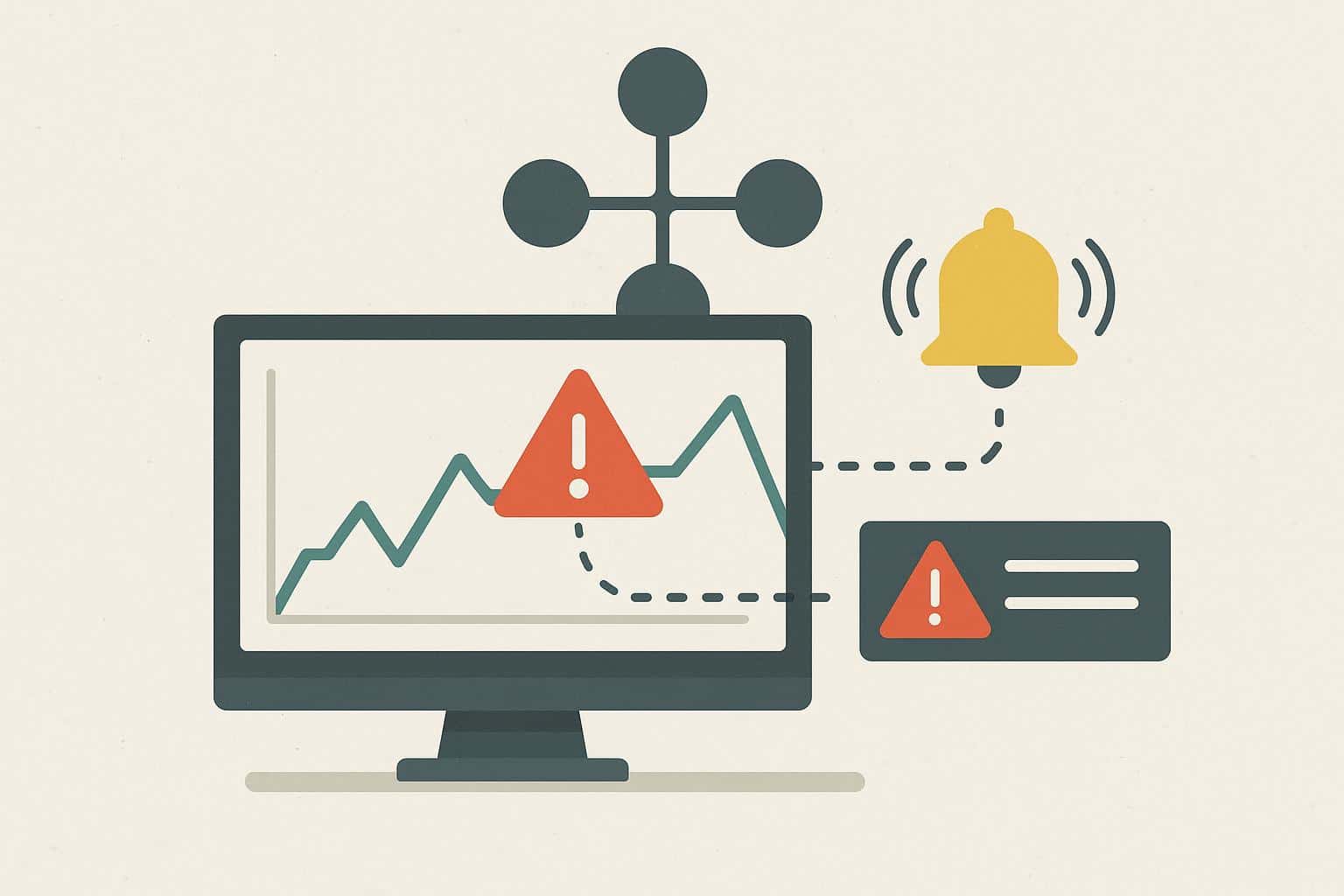
A network monitoring system’s alerting capability is what transforms passive watching into proactive intelligence. Understanding how it works and what distinguishes good alerting from noise is core to realizing all of the value that monitoring provides for enterprise IT. Network monitoring system alerting IT teams presents a step-by-step description of what these systems see and how they react, adding an important technical and operational aspect to the idea of continuous network coverage.
What Triggers an Alert
Not all changes on a network warrant their attention. A server rebooting during a maintenance window, a traffic burst during an enormous file copy, or a new device being detected on the same wireless segment as your guest SSID these are all benign. We can be overwhelmed with alerts by a monitoring system that treats all changes equally; we bury true issues underneath the noise.
Effective alerting depends on context. Traditional monitoring platforms create behavioral baselines through time, determining what normal looks like across every device, segment, and time period in the environment. If something is not consistent with that pattern, the system checks if it meets certain criteria to determine if a message will be generated. For example, the size of change – is it a key asset, what was the time of day and are you seeing such changes in the past?
- Threshold-based alerts: These are fired when a metric crosses a threshold: bandwidth utilization above 30 percent, device not responding for more than 2 minutes, error rate crossing the maximum acceptable per hour count.
- Behavioral alerts: A step above that, these fire when the current activity deviates from what the model expects to see in a given context — and NOT simply because some hard threshold has been crossed. Both get you both the rapid and gradual deviations.
Alerting on Types of Infrastructure Change
There are multiple types of infrastructure changes that are most relevant to IT teams, and monitoring systems are designed to discover all of them with minimal time lag.
- Performance degradation One of the most frequent causes behind alerts being triggered. The impact of latency spikes, packet loss, and throughput drops immediately ripple through client applications and users before any manual test would capture it. These metrics are scrutinized through 24/7 monitoring systems able to alert teams within seconds of a measurable change—often before the first help desk ticket even lands in the queue.
- Device availability: The other main category relates to device availability. If a router, switch or server fails to respond, the monitoring platform will notice it is no longer able to reach the machine and will notify the appropriate team immediately. This is fundamental to providing uptime because unrecognized device failure can degrade performance inadvertently over a locality long before end-users are aware of problem symptoms.
- Configuration changes: Always create their own type of alert for environments with configuration management integration. Whether a firewall rule is altered, an access control list is changed or there is sudden change in the routing protocol setting, monitoring systems can capture that comparison and show the difference between what they configured (policy) and what they have (reality). This is critical to identify rogue or accidental changes that could open up a security hole or break traffic flows.
- Topology changes: Such as new devices joining the network, known devices showing up on unexpected segments, or connections being established between systems that have no business communicating, complete the categories to monitor with serious implementations of this sort.
Directing Alerts to the Right Individuals
Creating an alert is only half the work. The monitoring implementations often succeed or fail in delivering it to the right person at the right time and with enough context, to do something about it.
Enterprise IT environments span multiple teams, network operations, security, application support, cloud engineering and so on, with each team responsible for a distinct slice of the infrastructure. For example, if an alert about a storage system being full should be routed to the storage team but not to the security operations center. An alert about strange outbound traffic to an unknown external address should go to the security team, not the help desk.
A robust monitoring platform allows configuring routing rules that funnel alerts by event type, system impacted, and severity. They also provide escalation paths that automatically notify a second contact if the first does not respond to an alert within a specified period. Such mechanisms will avoid critical information sitting in someone’s inbox while the problem only gets worse.
The volume and cost of security incidents makes the investment in this infrastructure straightforward to justify. Research tracking global security spending shows that organizations worldwide are significantly expanding what they allocate to detection and response capabilities, with security software, the category that includes monitoring and analytics platforms growing faster than the broader security market. That investment reflects what IT and security leaders already know from operational experience: early alerting translates directly into faster response and lower impact.
Alert Quality and Managing Noise
In short, the biggest real world challenge in alert management is sustaining good quality. When the system reports thousands of low-value alerts every day, this encourages you to develop a habit that makes your team less responsive in case the alert really matters. This is the most common problem that gets cited in large scale monitoring implementations.
Alert rules need constant configuration and tuning to maintain high quality. Changing baselines as the environment changes. The heuristics that were suitable six months ago may be too sensitive today as a new pattern of normal activity materializes. By nature, good monitoring practices require reviewing the volume of alerts, false positive rates, as well as the time span teams take to address and resolve firing alerts regularly.
Integrating Alerts with Broader Operations
Monitoring alerts become really useful when they work together with other operational measures. Integration with ticketing systems allows for every alert to be traceable and attributed to an owner. The integration with runbooks and knowledge bases provides responders with immediate access to the actions they need to take for common types of alerts. Integrating with incident management platforms enables the related alerts to be grouped into a single incident, providing teams with a more cohesive view instead of scattered notifications.
Organizational monitoring and alerting practices based on established guidance around logging and event management are able to marry event detection with the organizational policies governing data retention, escalation, and compliance (e.g., detailed in the security log management guide published by the National Institute of Standards and Technology).
Frequently Asked Questions
How does a network monitoring system make a decision to send you an alert?
It compares the observed metrics and behavior to predefined baselines and configured thresholds. The system alerts the relevant team whenever a deviation exceeds defined thresholds or conditions of magnitude, duration, or context.
What is the difference between a threshold alert and a behavioral alert?
Threshold alert: This type of alert fires when a metric crosses a deterministic boundary (e.g., CPU usage exceeds some x% threshold). Behavioral alert: This will fire when the current activity does not follow the predictions made by the monitoring system’s baseline model but has not crossed any static threshold in space and time defined by monitors.
How can IT teams avoid alert fatigue?
Through ongoing reviews and assessment of alert rules, keeping baselines up to date as the environment changes, enabling integration of monitoring outputs with logging and ticketing or incident management tools. Making sure that each alert is routed to the appropriate team with sufficient context that they can act on it also lightens any single team’s load and keeps response times short.

