advertisement
On TV.com: Watch the latest FAMILY GUY episode
Find Articles in:
all
Business
Reference
Technology
News
Sports
Health
Autos
Arts
Home & Garden
advertisement

Content provided in partnership with
Thomson / Gale

Virtual Banking

Black Enterprise,  Nov, 1999  by Allison J. Keyes

CUSTOMERS ARE BECOMING MORE COMFORTABLE WITH ON-LINE BANKING DESPITE SECURITY AND Y2K CONCERNS

DWIGHT ELLIS IS IN WITH THE ONLINE BANKING CROWD. IN HIS POSITION AS VICE PRESIDENT for human resource development with the National Association of Broadcasters in Washington, D.C., Ellis is on the road about 60% of the year. To help manage his finances, he has online accounts with Crestar National Bank, and uses the software programs Check Free and Quicken 99 to balance his books.

Most Popular Articles in Business
Research and Markets : Tesco Plc - SWOT Framework Analysis
Do Us a Flavor - Ben & Jerry's Issues a Call for Euphoric New Flavors
eBay made easy: ready to start an eBay business? These 5 simple steps will ...
Katrina's lawsuit surge: a legal battle to force insurers to pay for flood ...
Wal-Mart's newest distribution center opened last month near the southwest ...
More »
advertisement

"It's superefficient. I access and keep tabs on my bank register, how much money is in my accounts, and who is being paid through Quicken 99," says Ellis. "I find myself in a hotel room, and know in an instant how much money I have. I can transfer funds from savings to investment accounts. I think it's a wonderful, paperless, highly mobile society that I live in. I assumed that everybody was doing it."

Ellis is one of millions of people who have turned to the Internet as a viable alternative to traditional banking. According to Jupiter Communications, an independent new media research firm in New York City, in 1998 about 3.8 million households in the United States used the Internet for their banking needs. That figure is expected to grow to 19.4 million by 2002.
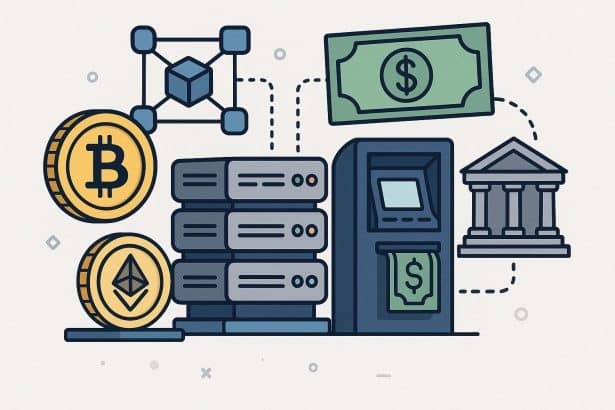

As banks consolidate and close physical branches, more are staking their claims on the Internet. "Banks aren't increasing their hours," says James Punishill, an analyst with Forrester Research, a Cambridge, Massachusetts-based firm that tracks e-commerce and financial services. "The more mergers and consolidations there are, the more companies are going to be hard-pressed to reduce costs by cutting the number of branches and the number of hours. Banking online is a compelling proposition."

In the past few months alone, at least three new cyberbanks have opened for business: Principal Bank, a subsidiary of the Principal Financial Group, an insurance and financial services firm based in Des Moines, Iowa (www.principal.com); CompuBank NA, a Houston-based Internet-only institution (www.compubank.com); and First Internet Bank of Indiana in Indianapolis (www.firstib.com). And stiff competition is helping to hold down fees charged by most online banks (see table).

In addition to traditional savings and checking accounts, more loans and credit cards are likely to be processed via the Net. Forrester Research estimates that in the next five years, about 11 million credit cards will be issued over the Internet. The firm also projects that by 2003 more than $21 billion in auto loans and $13 billion in student loans will originate online. Consumers are expected to take advantage of this burgeoning world of e-banking.

Steve Louie is one customer who already has. When the 50-year-old business systems analyst decided he wanted a home equity loan on his San Francisco house, he turned to the Internet. He had already gone through conventional brokers and banks, and wanted to see if he could do better on the Net. After searching a few directories, he tapped into LendingTree (www.lendingtree.com), a Charlotte, North Carolina-based company that offers a wide variety of loans.

"Compared to the conventional process, LendingTree wanted a minimum of information. It only took me 20 minutes to fill out the form, and I got a response almost immediately," Louie says. Within two days, he had a proposal from Pittsburgh PNC Bank. The bank verified his and his wife's employment over the phone, did a "drive-by appraisal" of his house, then sent his home equity loan check to him overnight.

"I got a rate three-quarters of a point lower than anyone else in my physical area was offering, and the whole thing took about 15 to 20 calendar days."

Although LendingTree is just three years old, in August there were over 70,000 loan applications worth $75 million, according to Reginald Bowser, the firm's vice president of marketing. That's up substantially from 7,000 actual loan applications for approximately $28 million over the same period a year ago.

Bowser asserts that using LendingTree is a win-win situation for lenders and borrowers alike for one main reason: lower costs. "You come to our site, fill out one qualification form and through the use of Internet technology you can send it simultaneously to different lenders on our network," he says. "It's good for both sides of the equation. You'll go to lenders who are more likely to approve you for a loan, and lenders see only those borrowers who they are more likely to approve. It cuts down on their marketing and origination costs, and allows lenders to actually make loans at lower rates than more traditional channels."

LendingTree currently has 75 lenders on its network, along with an affiliate network with more than 8,000 members.

Another virtual bank, Net.B@nk (www.netbank.com), an Atlanta-based institution chartered in July 1997, already has over 45,000 accounts and about $817 million in assets. D.R. Grimes, Net. B@nk's CEO, says the firm's business model makes it about half as expensive to run as a traditional bank because it hasn't had to build and staff branches and has been able to share those savings with customers.