


Nobody sets out to double their software bill. It just happens.
A company adds a project management tool because the operations team needs it. Then marketing wants their own platform. Then someone in finance discovers a reporting tool that saves them four hours a week. Each purchase makes sense on its own. Each one gets approved because the price seems reasonable. And then one day, someone actually looks at the combined software spend and realizes it has nearly doubled in eighteen months.
- Why Cloud Costs Grow So Quietly
- The Seat Creep Problem
- The Overlapping Tools Problem
- The Auto Renewal Problem
- The Upgrade Drift Problem
- The Real Cost Is Not Just the Bill
- How to Get Cloud Spending Back Under Control
- Run a Full Subscription Audit
- Consolidate Overlapping Tools
- Clean Up User Lists
- Reconsider Plan Levels
- Centralize Future Purchasing
- The Bottom Line
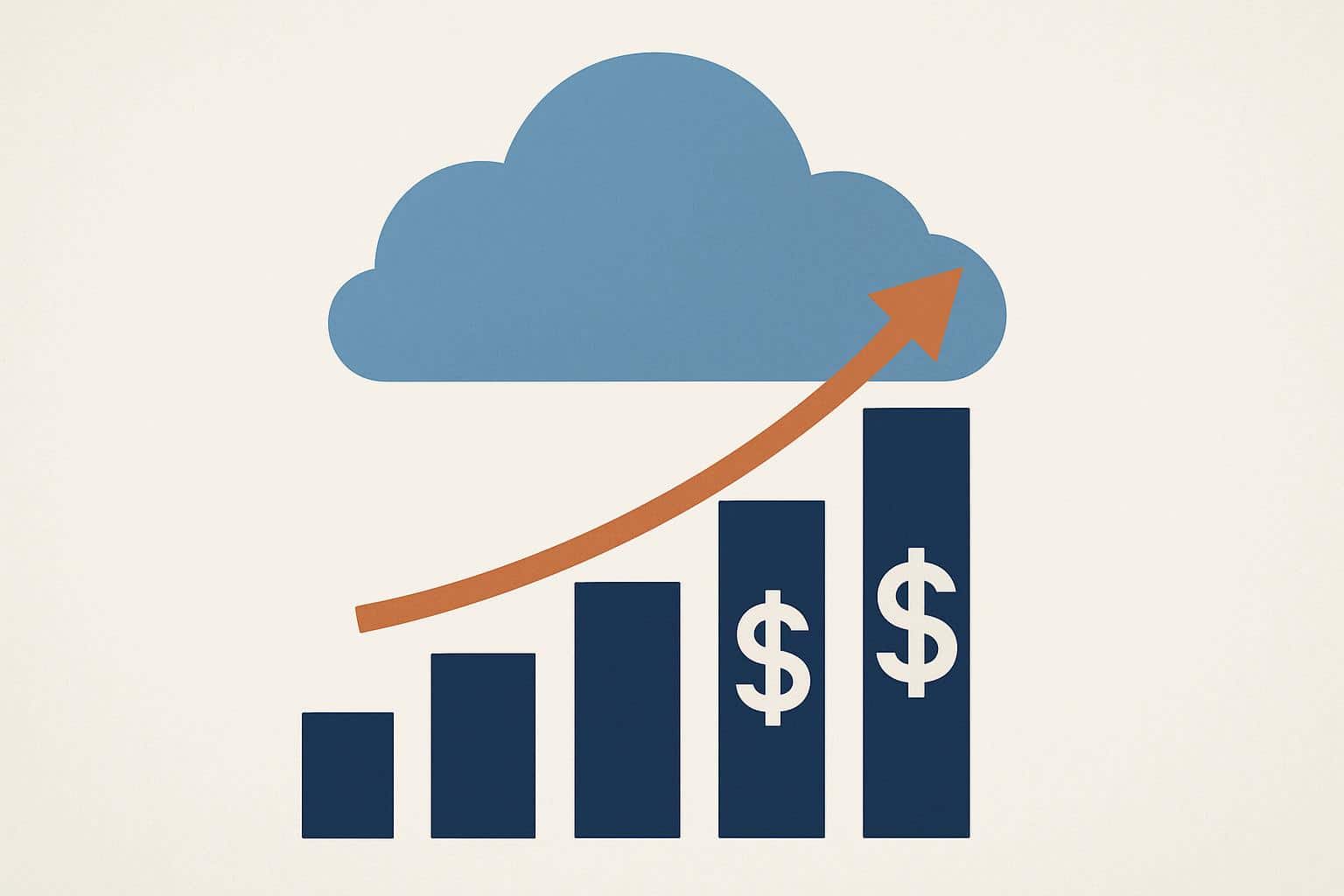
This is what people in the industry call cloud cost creep. It is one of the most common and least talked about financial problems growing businesses face. The cloud is supposed to be cheaper, more flexible, and easier to scale than the old on premises model. And it often is. But the same flexibility that makes cloud services so appealing also makes them dangerously easy to accumulate without anyone keeping a close eye on the total.
The problem is not usually one big purchase. It is dozens of small ones, layered on top of each other, renewed automatically, and rarely reviewed once they are in place.
Why Cloud Costs Grow So Quietly
The reason cloud spending sneaks up on businesses has a lot to do with how cloud software is sold and purchased.
Most cloud platforms are sold on a per user, per month basis. That pricing model is designed to feel low friction. Fifty dollars a user per month does not sound like much when you are approving it for a six person team. But that same platform, added to a company that grows to thirty people over two years, is suddenly costing eighteen hundred dollars a month. And that is just one tool.
Now multiply that across the average business, which typically uses between forty and seventy separate cloud applications depending on size and industry. Quick math tells you that even modest per user pricing adds up fast when you are running dozens of subscriptions at once.
There are a few patterns that drive this growth more than others.
The Seat Creep Problem
Most cloud platforms charge based on the number of active users. When someone joins the company, they get added to the relevant platforms. When someone leaves, they often do not get removed. Not right away, anyway.
The offboarding process in many growing businesses is informal. HR tells IT, or IT gets a ticket, and the former employee’s accounts get deactivated. But deactivation is not the same as license removal. Many businesses keep paying for inactive accounts for months, sometimes longer, simply because no one is auditing the license list regularly.
A business with twenty former employees still carrying active licenses across five platforms is quietly spending thousands of dollars a year on people who do not work there anymore.
The Overlapping Tools Problem
This one is almost universal. A business starts with one project management tool. A different team, frustrated with that tool or simply unaware it exists, adopts another one. A third team does the same. Now the company is paying for three overlapping platforms, none of which are fully utilized, and data is scattered across all of them.
The same thing happens with communication tools, file storage, note taking apps, reporting platforms, and design software. Without a centralized approval process, every team buys what works for them, and the company ends up paying for redundancy.
The Auto Renewal Problem
Most cloud subscriptions renew automatically. That is convenient, but it also means a tool that was useful two years ago can keep charging the company long after it stopped being used. Teams switch to a different platform, the old one never gets formally cancelled, and the credit card keeps getting charged every month.
This is especially common with tools that were adopted for a specific project. The project ends, the team moves on, and the subscription quietly keeps running in the background.
The Upgrade Drift Problem
Cloud platforms love to upsell. A basic plan becomes a premium plan. A premium plan becomes an enterprise plan. Each upgrade is usually justified by a specific feature someone needed at the time. But once the upgrade happens, it rarely gets reversed, even if that feature is no longer in use.
Over time, a business that started on basic plans across the board can find itself paying enterprise pricing on several platforms, often for features only a handful of users actually need.
The Real Cost Is Not Just the Bill
The direct software spend is the most visible cost, but it is not the only one. Cloud cost creep creates a set of secondary problems that are harder to quantify but often more damaging.
Security exposure grows with every new platform. Each application is another potential entry point for a breach. Each one has its own login, its own permissions model, and its own data storage. Most businesses could not tell you exactly where all their data lives across their cloud stack if asked.
Administrative overhead grows too. Someone has to manage user accounts across dozens of platforms. Someone has to handle password resets, permission changes, and access requests. In a growing business without dedicated IT staff, that someone is usually an office manager or operations lead who has better things to do with their time.
And then there is the productivity drag. When employees have to switch between five different tools to complete one workflow, or when they cannot find a document because it could live in any of three different storage platforms, time gets wasted. Not in dramatic chunks, but in small daily inefficiencies that add up over a year.
How to Get Cloud Spending Back Under Control
The good news is that cloud cost creep is reversible. It just takes a structured approach and the willingness to make some uncomfortable decisions about tools that people have gotten used to.
Run a Full Subscription Audit
Start by getting a complete inventory of every cloud subscription the company is paying for. This includes software charged to company cards, software billed through annual invoices, and software that was purchased by individual departments without central approval.
For each subscription, identify what it costs, how many users actually log in monthly, and what business purpose it serves. This audit almost always surfaces surprises. Businesses regularly find subscriptions they forgot they had, platforms with zero active users, and tools that three people use while the company pays for thirty seats.
Consolidate Overlapping Tools
Where you find redundancy, pick one platform and commit to it. This is not always popular. People get attached to the tools they chose. But running three project management platforms is not a sign of flexibility. It is a sign of disorganization.
The consolidation conversation should focus on what the business actually needs the tool to do, not which interface people personally prefer. In most cases, one well chosen platform can replace two or three redundant ones without losing meaningful capability.
Clean Up User Lists
Go through every platform and remove accounts for former employees, contractors whose engagements have ended, and current employees who do not use the tool. Most cloud platforms make this easy through their admin consoles, but it requires someone to actually do it.
Set a recurring calendar reminder to run this cleanup quarterly. License drift happens fast in a growing business, and a quarterly review keeps it from getting out of hand again.
Reconsider Plan Levels
For each platform, look at whether the current plan matches actual usage. If only two people need a premium feature, see if the platform offers a mixed plan or if those features are available as an add on rather than a full upgrade for everyone.
Many businesses are paying for enterprise plans across the board when most users only need basic functionality. Downgrading where it makes sense can cut a platform’s cost significantly without affecting day to day work.
Centralize Future Purchasing
The most important long term fix is to change how cloud software gets bought. Without a central approval process, cost creep will return. Every team will keep adopting tools independently, and the cycle will repeat.
This does not mean making purchasing painful. It means creating a simple review step where new software requests get evaluated for overlap with existing tools, security implications, and total cost impact. A five minute conversation before a new subscription starts can save thousands of dollars over a year.
The Bottom Line
Cloud software is not the problem. Used well, it lets growing businesses access capabilities that used to require massive infrastructure investment. The problem is that the same ease of adoption that makes cloud tools valuable also makes them easy to overuse.
Most businesses do not need to cut their cloud spending in half. They need to understand what they are actually paying for, eliminate what is not being used, and consolidate where there is overlap. The savings are usually significant, and the operational clarity that comes with a streamlined software stack is just as valuable as the money saved.
If your business has never done a full cloud subscription audit, there is a good chance you are carrying twenty to thirty percent more software spend than you need to be. The only way to know for sure is to look.

