


Cooking at home should feel rewarding, not stressful. Too often, people end up with dry chicken, unevenly cooked steaks, or fries that turn out soggy. The main reason is simple: traditional appliances rely mostly on time and guesswork. Typhur Robotics changes that. This brand builds smart kitchen appliances that focus on real temperature control and helpful technology so everyday cooks can get consistent, tasty results with less effort.
Typhur calls itself a home robotics company focused on the kitchen. Their tools use sensors, wireless probes, and AI to take the uncertainty out of cooking. The result is food that turns out the way you want it, more often.
- Why Precision Matters More Than Timing Alone
- 1. Doneness-Control Ovens
- 2. Wireless Food Thermometers
- 3. Smart Air Fryers with More Precise Heating
- 4. Induction Cooktops with Temperature Control
- 5. Precision Sous Vide Cookers
- 6. Smart Kitchen Scales
- 7. Smart Pressure Cookers and Multicookers
- What to Look for Before Buying
- Better Data, More Consistent Cooking
Why Precision Matters More Than Timing Alone
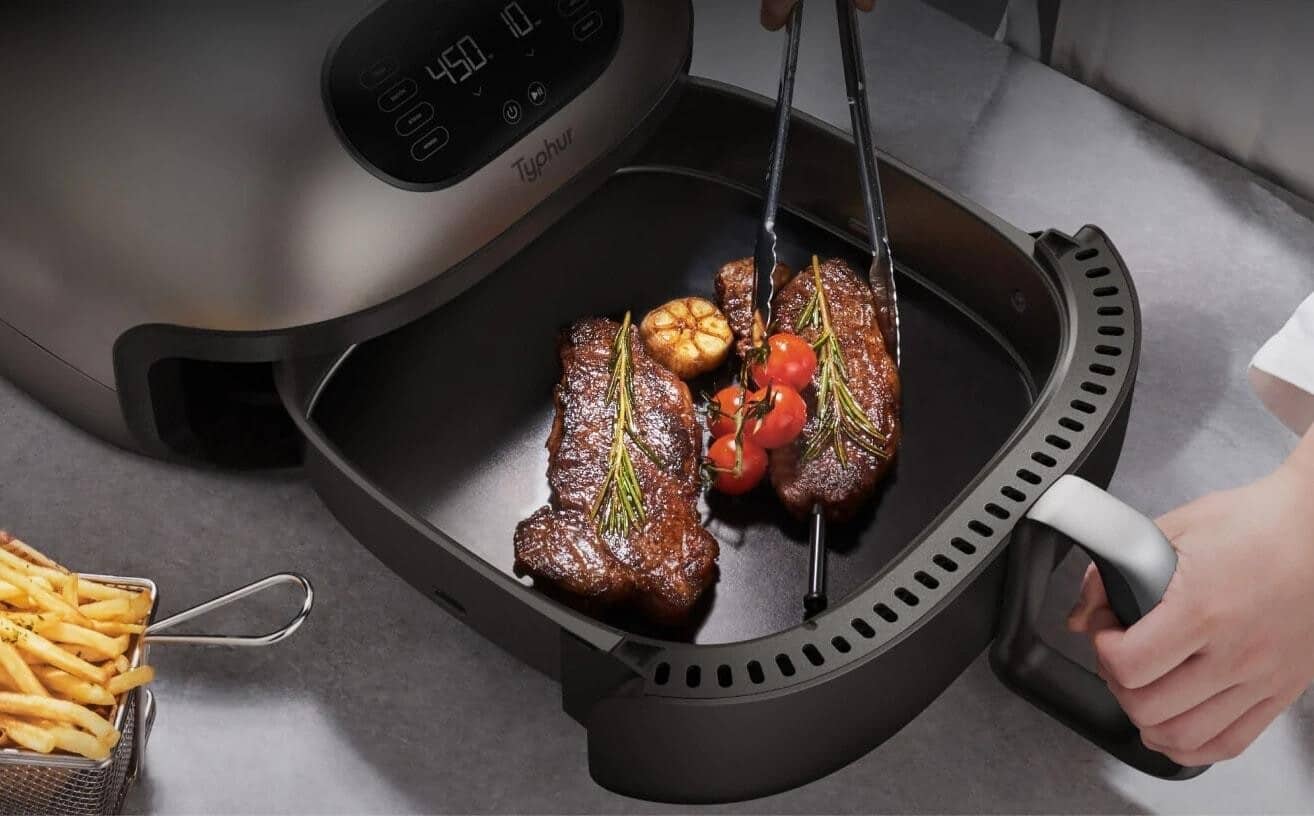
Most home cooks set a timer and hope for the best. Meat continues cooking even after you take it out of the heat, and different pieces of food heat at different rates. A thick steak and a thin one need different approaches. Typhur appliances shift the focus from “how long” to “what temperature inside the food.”
Many of their products include built-in or paired wireless probes with multiple sensors. These read the internal temperature of the food accurately (often within half a degree Fahrenheit). When the food reaches the doneness you selected, the appliance can stop or alert you. This approach helps prevent overcooking and undercooking. It works especially well for proteins like chicken, steak, pork, and fish, where the difference between juicy and dry can be just a few degrees.
1. Doneness-Control Ovens
Traditional ovens follow the temperature and cooking time selected by the user. They cannot determine whether the center of a chicken breast or roast is actually ready.
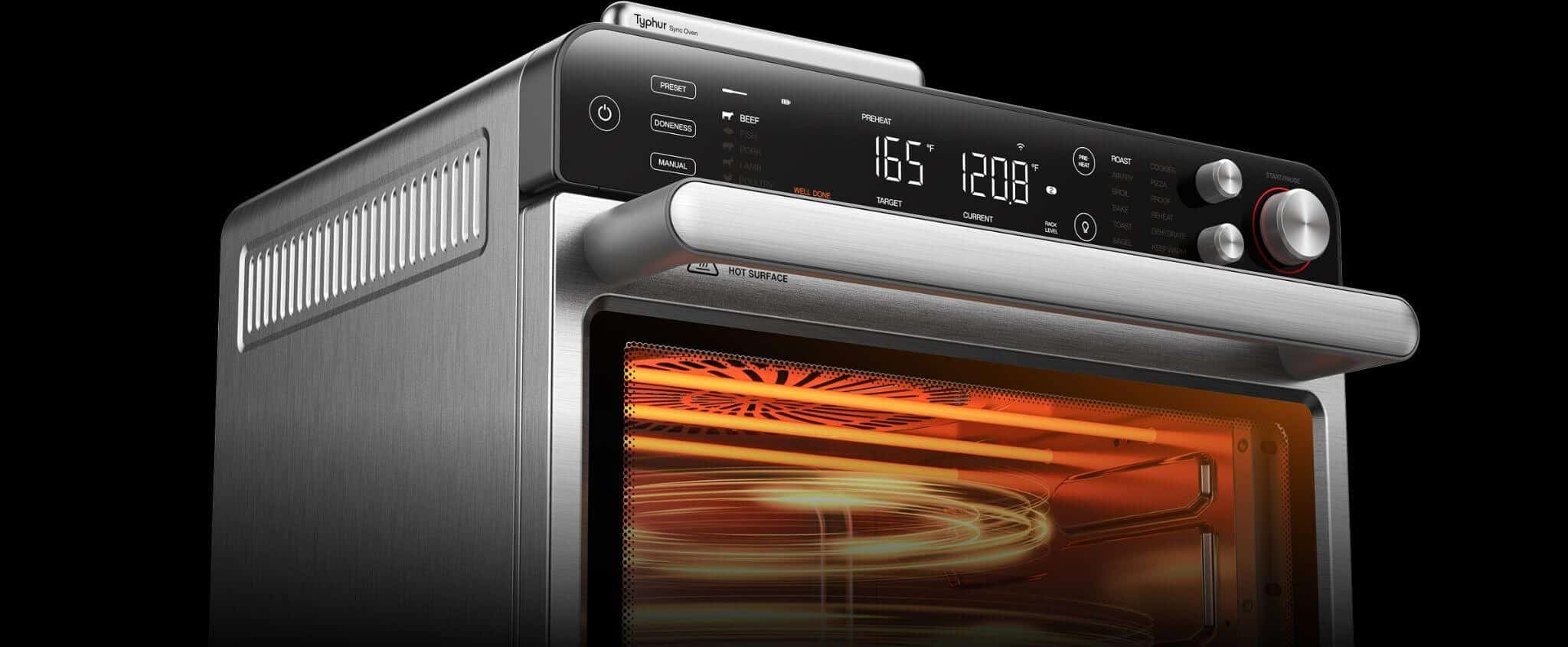
A doneness-control oven uses a food probe to monitor internal temperature during cooking. Instead of stopping after a fixed number of minutes, the appliance can respond when the food reaches a selected temperature.
The Typhur Sync Oven is one example. Its integrated wireless probe communicates with the oven throughout the cooking process. Once the selected internal temperature is reached, the oven automatically stops cooking, reducing the risk of food continuing to heat beyond the intended level of doneness.
This approach is particularly useful for:
- Steak
- Chicken and turkey
- Pork tenderloin
- Fish
- Large roasts
Probe placement still matters. The sensor should reach the thickest part of the food without touching bone. Carryover cooking should also be considered, especially with larger cuts that continue warming after leaving the oven.
2. Wireless Food Thermometers
A wireless thermometer improves cooking results without requiring a new oven or grill. Its probe remains inside the food and continuously sends temperature data to a receiver or connected device.
Unlike an instant-read thermometer, which provides a temperature only when inserted, a wireless model tracks changes throughout the cooking process. This makes it valuable for long sessions when repeatedly opening the appliance would release heat.
Depending on the model, useful features may include:
- Internal food-temperature monitoring
- Ambient oven or grill temperature
- Target-temperature alerts
- Estimated cooking progress
- Multiple probes for separate foods
- Extended transmission range
Wireless thermometers work especially well for smoked meats, whole poultry, roasts, and thick steaks. When comparing products, prioritize accuracy, temperature limits, connectivity, and replacement-probe availability.
An instant-read thermometer is still useful for quick checks. Many home cooks benefit from having both tools because they serve different purposes.
3. Smart Air Fryers with More Precise Heating
An air fryer cooks by circulating hot air through a relatively compact chamber. It can prepare vegetables, chicken, fish, frozen food, and leftovers more quickly than many full-size ovens.
Smart controls can improve convenience, but the appliance’s heating design has a greater effect on the food. Look for even airflow, responsive temperature control, and enough cooking surface to arrange ingredients without excessive stacking.
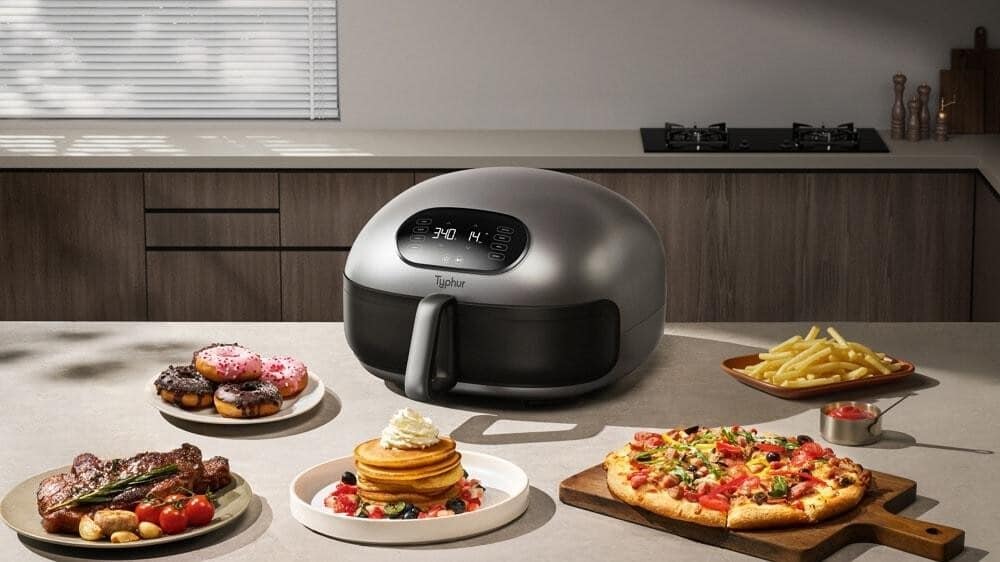
The Typhur Dome 2, for example, combines a wide, low-profile 5.6-quart basket with heating elements above and below the food. The basket fits a 12-inch pizza and gives ingredients more room to cook in a single layer. App controls and preset programs add convenience, but the dual-heating configuration is what directly supports more even cooking with less turning.
When comparing air fryers, consider:
- Usable basket area
- Heating configuration
- Countertop footprint
- Temperature range
- Manual controls
- Cleaning requirements
A large advertised capacity is less helpful if the basket shape forces food into several layers.
4. Induction Cooktops with Temperature Control
Induction cooktops use electromagnetic energy to heat compatible cookware directly. They respond more quickly to adjustments than many traditional electric cooktops, giving the cook greater control over simmering, boiling, and searing.
Some connected induction systems go further by pairing the cooktop with a temperature sensor. The appliance can then maintain a specified pan or food temperature rather than relying only on numbered power levels.
This is useful for tasks that benefit from controlled heat, including:
- Melting chocolate
- Preparing delicate sauces
- Shallow frying
- Simmering
- Candy making
- Maintaining a low cooking temperature
Before upgrading, confirm that the cookware is induction-compatible. If a magnet attaches firmly to the bottom of a pan, it will generally work with induction.
A full-size installation may require electrical changes. A portable induction burner offers a lower-cost way to test the technology before replacing an existing cooktop.
5. Precision Sous Vide Cookers
A sous vide cooker heats water to a controlled temperature and circulates it around food sealed in a suitable bag or container. Because the water remains close to the selected temperature, the food cooks evenly from edge to center.
Sous vide is particularly useful for steak, chicken, pork, fish, eggs, and vegetables. It can provide a wider window for doneness than high-heat methods because the food is not exposed to temperatures far above the intended endpoint.
Many connected models offer guided settings, cooking notifications, and remote monitoring. However, accurate temperature control and reliable water circulation matter more than app features.
Sous vide does not usually create browning. Meat is commonly dried and briefly seared in a hot pan after cooking to develop color and flavor.
Home cooks should also follow appropriate time-and-temperature guidance. Lower-temperature cooking requires attention to food safety, particularly for poultry and longer cooking sessions.
6. Smart Kitchen Scales
A digital scale improves consistency by measuring ingredients by weight rather than volume. Smart models can also connect to recipe platforms, track nutritional information, or guide users through ingredient additions.
The greatest benefit is still measurement accuracy. A cup of flour can vary depending on how it is scooped, while a measurement in grams remains consistent. This makes scales especially valuable for bread, pastry, pizza dough, and other recipes that depend on specific ratios.
Useful scale features include:
- A tare function
- Multiple measurement units
- A responsive display
- Sufficient maximum capacity
- A platform large enough for mixing bowls
- Water resistance or easy cleaning
Connected guidance can help beginners, but essential weighing functions should remain available without an app. A scale should not become unusable because a phone is unavailable or the network is offline.
7. Smart Pressure Cookers and Multicookers
Electric pressure cookers automate tasks that would otherwise require extended stovetop attention. Sensors and programmed controls manage pressure, heat, and cooking time for foods such as beans, grains, soups, stews, and tougher cuts of meat.
Many models also offer slow cooking, steaming, sautéing, rice cooking, and warming. Connected versions may provide guided recipes, notifications, and the ability to monitor progress.
These appliances improve results by making the cooking environment more repeatable. Once a reliable ratio and program have been identified, it becomes easier to reproduce the same texture in future batches.
However, programmed cooking time does not always include the time required to build and release pressure. Users should account for the complete process when planning a meal.
Always follow the manufacturer’s filling limits, liquid requirements, and pressure-release instructions.
What to Look for Before Buying
A smart appliance should perform its primary function well even without its connected features. Before purchasing, ask:
- What does the appliance measure or automate?
- Does that function directly improve cooking results?
- Can essential controls operate without an app?
- Does it work during an internet outage?
- Will it fit the available counter or cabinet space?
- Are replacement probes and accessories available?
- Does it require a subscription?
- How long is the warranty?
- Are software and security updates provided?
Also consider cleaning. An appliance that produces excellent food but requires complicated maintenance may not improve the overall cooking experience.
Better Data, More Consistent Cooking
Smart kitchen appliances are most effective when they replace assumptions with useful information. Temperature probes reveal what is happening inside food, automated ovens respond to measured doneness, and precision cookers maintain controlled cooking conditions.
Connectivity should support these functions rather than become the main attraction. The best smart appliances require less checking, reduce avoidable mistakes, and make successful results easier to reproduce. For home cooks, that is a more meaningful upgrade than technology added for its own sake.

