


AI video tools are moving quickly, and the question for many tech teams is no longer whether a model can make an impressive clip. The harder question is which workflow fits the job.
A product team, software publisher, ecommerce brand, or content studio may need very different things from an AI video generator. Some projects need a compact cinematic scene with sound and shot changes. Others start with approved images, brand references, product notes, audio cues, and a longer review cycle.
That is why a comparison between Seedance 2.5 and Kling 3.0 is useful. Both are strong models in the current AI video market, but they are not built around the same kind of production question.
What This Comparison Covers
This is a feature-based workflow comparison, not a controlled benchmark using identical prompts. Real results can vary by prompt quality, input assets, review standards, and the type of video being tested.
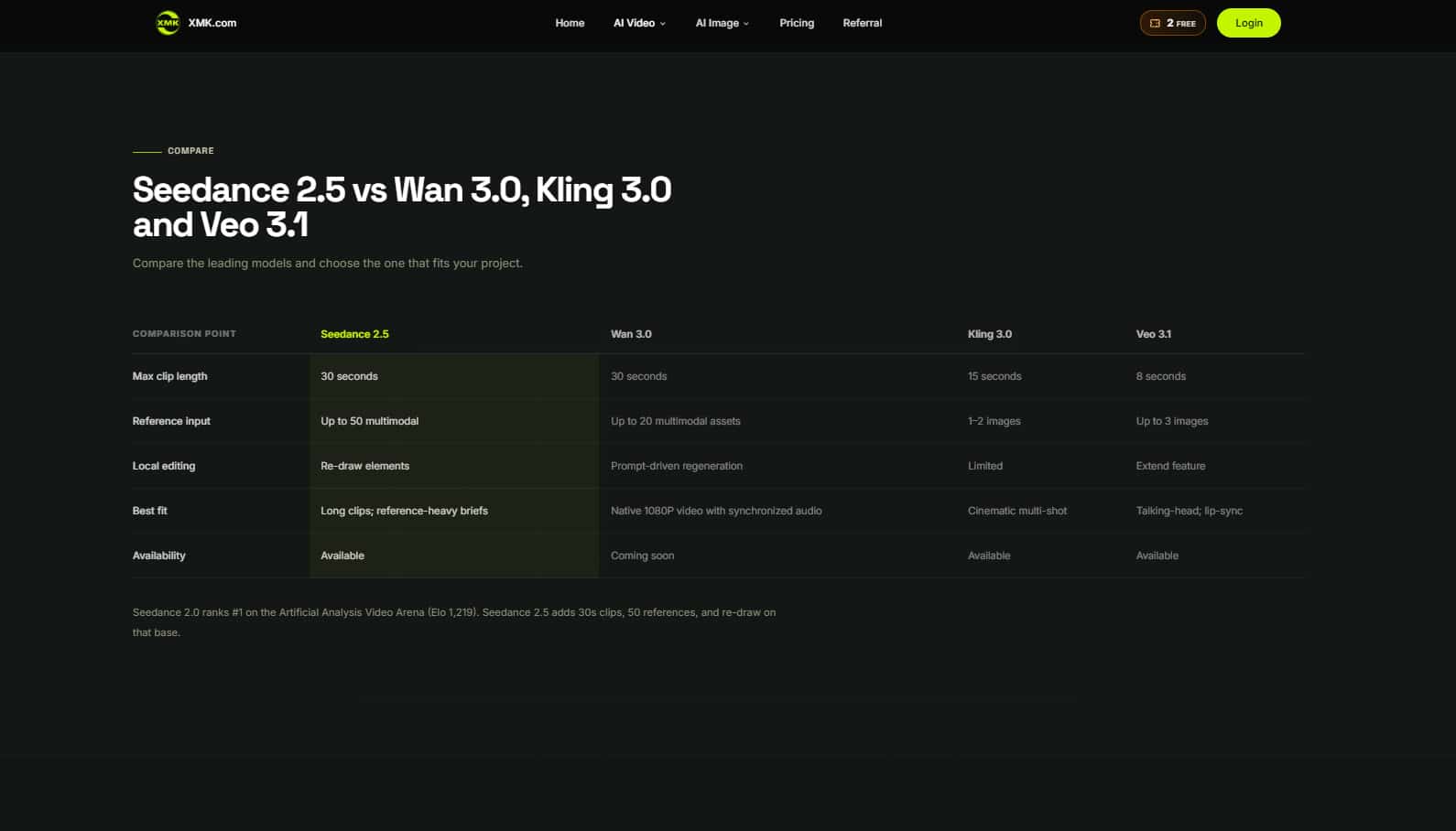
Kling 3.0 is often discussed around cinematic generation, native audio, flexible storyboard planning, and compact multi-shot output. Kling 3.0 also supports image and video element references, subject binding, and improved character consistency. Its distinction is not an absence of reference control, but a stronger emphasis on scene planning, native sound, and multi-shot storytelling.
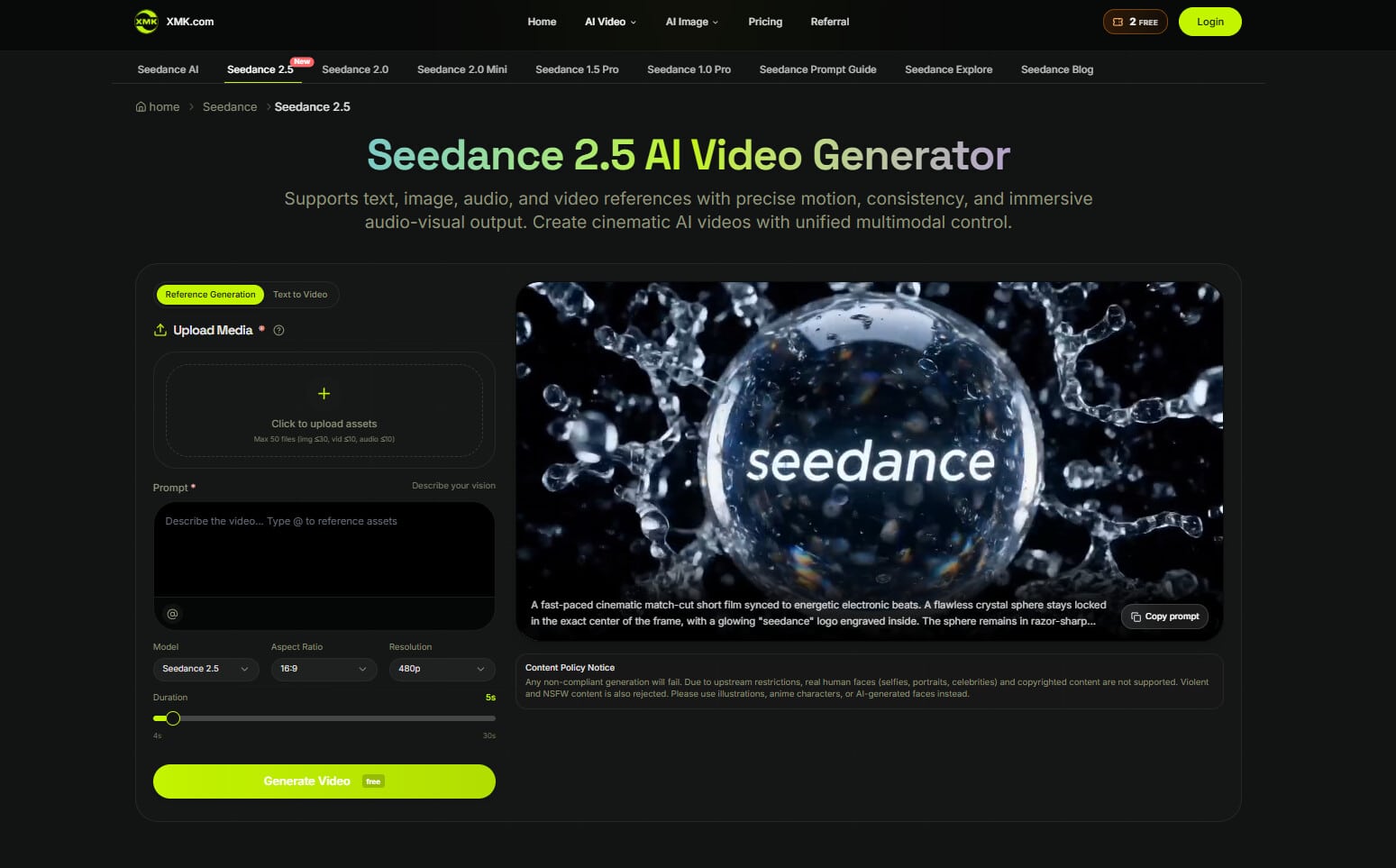
Seedance 2.5, on the other hand, is positioned around longer single-generation output, larger reference sets, higher-resolution output in supported workflows, and more targeted editing. On XMK, the model supports generation of up to 30 seconds and accepts up to 50 multimodal reference files, including as many as 30 images, 10 video clips, and 10 audio clips. XMK also presents local re-draw as a way to adjust individual frame elements. This points to a workflow in which a team may already have product images, brand references, motion notes, or a style brief before generating.
The Main Difference: Storyboard Motion or Reference-Heavy Drafting?
Kling 3.0 may make sense when the creative task starts with a scene idea. A creator can plan subject, camera, mood, sound, and shot progression, then test whether the result feels cinematic or emotionally clear. That is useful for teasers, concept scenes, entertainment-style clips, and short social ideas where audio and visual rhythm matter from the beginning.
Seedance 2.5 may be more useful when the task starts with existing materials. A team might already have product shots, approved brand colors, a previous campaign clip, example motion, or a voice and mood reference. In that case, the goal is not only to make something attractive. It is to see whether the model can hold enough context for the team to review the draft seriously.
This difference changes the production conversation. One model may help a team shape a compact audiovisual moment. The other may help a team test a longer, more reference-led draft before handing work to designers, editors, or marketers.
Where Kling 3.0 Fits
Kling 3.0 is a strong option when the first question is whether a scene works as an audiovisual idea. Native audio can matter when timing, atmosphere, speech, music, or ambience are part of the early concept. Multi-shot planning also helps when a clip needs to move through several moments rather than stay in one continuous view.
A team might choose Kling 3.0 to test a cinematic product teaser, a short brand scene, a mood-driven social clip, or an entertainment-style concept. Its strengths are especially relevant when the draft needs to feel like a small sequence rather than a single visual pass.
That does not mean every result is ready to publish. Generated text, brand details, product claims, people, copyrighted materials, interface states, and factual scenes still need careful review. A strong-looking clip should still be treated as a draft until the team checks what it shows.
Where Seedance 2.5 Fits
The Seedance 2.5 workflow is useful when a team wants to bring more context into the generation process. Product images, brand references, style frames, short videos, and audio cues can all help define what the draft is supposed to follow.
The ability to generate up to 30 seconds in a single pass gives teams more room to test a beginning, a middle beat, and a closing action before moving into editing. That can be helpful for product explainers, launch visuals, campaign drafts, ecommerce content, training previews, and editorial video concepts.
The reference limit also matters. A real creative brief is rarely just one sentence. It may include product angles, packaging, color direction, previous creative, background notes, and examples of movement. A larger reference set gives the team a way to make those inputs part of the draft instead of relying only on text.
Local re-draw editing adds another practical layer. If the overall clip works but one object, frame area, or detail is wrong, a targeted adjustment may be worth testing before regenerating the entire video. Teams should still review the full result after any edit because a local change can affect lighting, motion, composition, or nearby details.
A Practical Workflow Comparison
For tech teams, the better question is not which model wins in every situation. It is which uncertainty the team is trying to reduce.
- If the uncertainty is whether a scene feels cinematic, rhythmic, or emotionally clear, Kling 3.0 may be a strong first test.
- If the uncertainty is whether approved assets can remain useful across a longer reviewable draft, Seedance 2.5 may fit better.
- If native sound and compact multi-shot structure are central to the idea, Kling 3.0 deserves attention.
- If product identity, reference context, and targeted revision matter more, Seedance 2.5 may be the better starting point.
- If the team needs many inputs from a real creative brief, the reference-based Seedance 2.5 workflow on XMK may be easier to evaluate.
Neither approach removes the need for editing, review, or human judgment. Final videos still need captions, rights checks, brand approval, factual review, and post-production polish.
What Teams Should Compare Carefully
Output quality matters, but it is not the only useful measure. A beautiful clip can still fail if the product changes shape, the camera movement distracts from the point, or the team cannot explain what went wrong.
Length and resolution also need context. Longer generation gives teams more material to inspect, not an automatic advantage. Higher resolution can help with visual review in supported workflows, but it does not guarantee factual accuracy, readable text, or product consistency.
For most teams, the more useful comparison is about workflow control. Can the model follow the brief? Can it use the right references? Can it produce a draft that reviewers can discuss? Can the team revise a specific issue without losing the whole direction?
Rights and Review Still Matter
Both models should be used with normal publishing discipline. Teams should avoid uploading real human faces, celebrity likenesses, copyrighted characters, private files, customer information, unreleased assets, or third-party materials that are not cleared for external AI processing.
Important text should be added and checked during editing, not trusted inside a generated scene. Dates, prices, app labels, claims, addresses, product specs, and safety details should come from verified sources.
Generated video can help test visual direction, but it should not be presented as proof of a real event, a verified product result, or an approved technical process. That boundary protects both the publisher and the brand.
Final Verdict
Kling 3.0 and Seedance 2.5 both show how far AI video has moved beyond simple prompt experiments. Kling 3.0 is compelling for native audio, compact multi-shot structure, and cinematic scene planning. Seedance 2.5 is compelling for larger reference sets, up to 30 seconds in one generation, higher-resolution output in supported workflows, and targeted editing.
The right choice depends on the brief. If the project starts with sound, scene rhythm, and a compact story idea, Kling 3.0 may be the better first test. If the project starts with many approved references, brand materials, product context, and a need for a longer reviewable draft, Seedance 2.5 may be the more practical option.
For tech teams, the smartest model is not always the one with the most dramatic demo. It is the one that reduces the right uncertainty before the team spends time on final production.

