advertisement
On TechRepublic: Power tips for Windows XP
Find Articles in:
all
Business
Reference
Technology
News
Sports
Health
Autos
Arts
Home & Garden
advertisement

Content provided in partnership with
Thomson / Gale

Trompe L'Oeil: the art of illusion

Arts & Activities,  April, 2005  by Mark M. Johnson

For thousands of years, artists have attempted to create images that accurately reflect the world around them. In the medium of painting--to be specific--artists have endeavored, through talent and technique, to present subject matter in a realistic and naturalistic manner. Over the centuries, painters have achieved varying levels of success; but it wasn't until the Renaissance, with its interest in scientific observation and the understanding of linear perspective, that painters finally could produce highly realistic and even illusionistic works of art.

advertisement

The Italian architect and sculptor Filippo Brunelleschi (1377-1446) is credited with the "invention" of geometric perspective that was first realized by the Florentine artist Masaccio (1401-1428) in his fresco, Trinity, in which the depth of a side chapel is illusionisticly suggested on the flat wall of the church of Santa Maria Novella.

Many other artists continued the investigation of suggesting the third dimension on a two-dimensional surface. Leonardo da Vinci's (1452-1519) Last Supper shows a space that seems to extend one entire wall of the room it occupies. In some of Leonardo's other paintings he experimented with atmospheric or aerial perspective, a coloristic device giving the impression of realistic depth in the portrayal of landscapes. Michelangelo (1475-1564), in his extraordinary ceiling of the Sistine Chapel, creates a masterful illusion of an architectural framework that supports the figures placed within the structure.

In Germany, Albrecht Durer (1471-1528) authored and illustrated a Treatise on Measurement that discusses the use of perspective devices. Artists have studied his groundbreaking writings on perspective and anatomy for nearly 500 years! And, in Holland and elsewhere, artists developed ingenious equipment such as a surveying machine and a camera obscura--instruments to aid them in the viewing of a scene and its more accurate interpretation in a painting.

From the 15th century to the present, artists have continued to refine and perfect their style, skills and methods so that they could represent nature so exactly as to make it appear real to the viewer. Trompe l'oeil is a French term that translates to mean, "trick the eye." It is the ultimate illusionistic style of painting that is so realistic that it fools the viewer into thinking that they are seeing actual three-dimensional objects on a two-dimensional surface.

Trompe l'oeil paintings challenge our ability to distinguish what is real and what is not. Such illusions--sometimes playful, sometimes serious--make us question our perception of art and nature. Ultimately, however, the magic of this deception only lasts until the viewer discovers the trickery. But even then, one is still impressed, even in awe, of the painter's ability to fool us, if only momentarily.

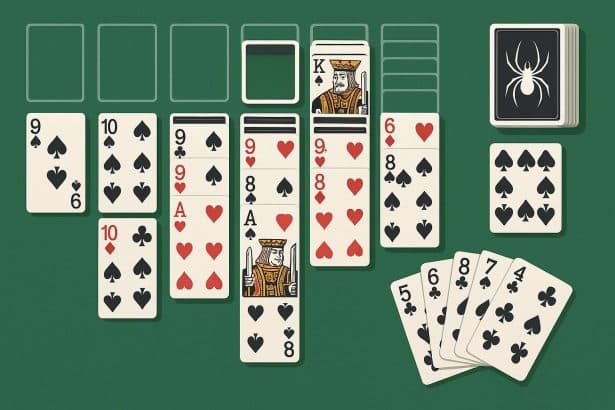
Successful trompe l'oeil paintings produced on a small canvas or a wall-sized mural are only convincing when the viewer is standing in the correct location--the station point--generally right in front of the image. If the viewer moves from side to side, then the illusion falls apart as the image is static and cannot accommodate a vantage point from more than a single position. Thus, to accomplish the highest level of deception, the painter is wise to choose inanimate objects (rather than living subjects) that are presented in a limited depth. Thus, as was popular with still-life painters in the 18th and 19th centuries, it usually is more illusionisticly successful to represent flat objects (or objects in low relief) on a flat surface. Popular subjects included: paper currency, playing cards, puzzle pieces, photographs, postage stamps and envelopes set against a flat textured background such as canvas or a plank of wood.

For the next two years, a remarkable exhibition is traveling to museums across the nation that will amaze and delight visitors of any age, background or interest. Trompe L'Oeil: The Art of Illusion presents 65 paintings highlighting the work of 13 of America's finest contemporary trompe l'oeil artists. Artists represented are Larry Charles, Donald Clapper, Eric L. Conklin, Ken Davies, Gary T. Erbe (who also serves as the exhibit's guest curator), Michael Gallarda, Gerald P. Hodge, Michael Molnar, Michael Riddet, Barbara Stadtlander, Gayle B. Tate, Debra Teare and Gregory West.

These skilled artists are part of a long and distinguished history of trompe l'oeil practitioners dating back to a pair of renowned 19th-century American painters: William Harnett and John Frederick Peto. Like their illustrious predecessors, these contemporary artists are technically accomplished and extraordinarily creative and imaginative. Initially one is astounded by the magic of illusionism, but these paintings can also be appreciated on many other levels.
According to guest curator and artist Gary Erbe, "This exhibition will challenge the viewer's imagination while pleasing the viewer's eye. Many of the works go beyond aesthetics elevating this wonderful art form to a new level of creativity. Trompe l'oeil is moving along with the times and yet is deeply rooted to its past."