advertisement
On The Insider: Photo Gallery: Waxy Celebs
Find Articles in:
all
Business
Reference
Technology
News
Sports
Health
Autos
Arts
Home & Garden
advertisement

Content provided in partnership with
ProQuest

Marcos mystery: A chat with the subcommander of spin, The

Columbia Journalism Review,  Sep 1994  by Simon, Joel

In the July issue of Vanity Fair, Sub-commander Marcos, the masked leader of Mexico's Zapatista Army of National Liberation, describes himself as a "brilliant myth." Despite the volume of ink that has been spilled about him, that's exactly what he remains. No journalist has figured out who Marcos is, really, and until someone does, he will continue to invent and re-invent the image of himself that he disseminates to visiting journalists. The mystery of Marcos helps continue to make him a good story, despite a lot of exposure; his secret identity allows him to be both elusive and accessible at the same time.

Most Popular Articles in Reference
The importance of understanding organizational culture
Credit card attitudes and behaviors of college students
What factors attract foreign direct investment?
Libraries Need Relationship Marketing - mutual interest marketing concept, ...
How to set performance goals: employee reviews are more than annual critiques
More »
advertisement

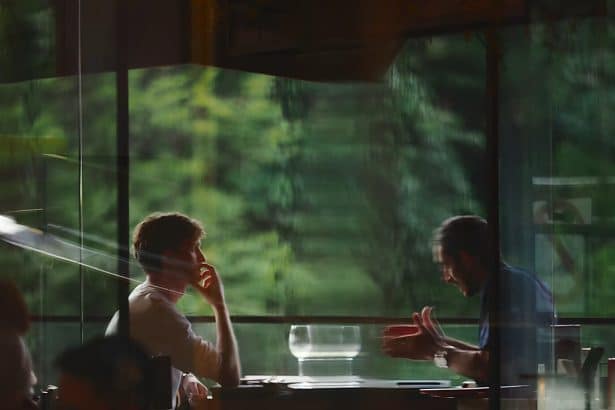
By the time I set out to interview Marcos this past March, three to five carloads of journalists were arriving every day at the Zapatista checkpoint heading into the Lacandon jungle. In San Cristobal de las Casas, I had teamed up with Susan Ferriss of the San Francisco Examiner and photographer Ricardo Sandoval. At the Zapatista checkpoint, Bill Weinberg of High Times magazine and WBAI radio in New York joined our group. After two days of waiting, a Zapatista militiaman came to tell us that we would be permitted through the checkpoint.

The decision about who gets through is made by Marcos himself and those denied access are never explicitly told they will not be let in. Mexican journalists grumble that the foreign press gets preferential treatment. I'm not sure how Marcos decides whom to let in and whom to exclude, but he certainly has a remarkable knowledge of the U.S. press. He asked Ferriss of the Hearst-owned Examiner what had ever become of Patty Hearst and when he met Weinberg he blurted out the correct frequency for WBAI--99.5.


Inside the Zapatista camps, Marcos likes to make everyone wait for an interview, and in fact he seems to show up only after a journalist throws a tantrum or starts packing up to get ready to leave. In our case that was after almost a week. Through a courier, we sent a letter to Marcos letting him know that we had a flight the next morning and couldn't wait any longer. Late that night, he pushed open the door of the shack where we were sleeping, climbed into an empty bed, and lay there smoking a pipe until we noticed him. When he inhaled, the glowing tobacco illuminated a prominent nose, which was barely contained by his ski mask; a pair of tired-looking, greenish eyes; and a weather-beaten, gray military cap adorned with three plastic stars. He spoke mostly in Spanish, occasionally lapsing into fluent, accented English.

It took me a while to make the transition from sleep and unfortunately our colleague Bill Weinberg was unable to do it. He woke up briefly when Marcos came in, and then went back to sleep convinced that the wise-cracking guy joking about his sex life couldn't possibly be a guerrilla commander, even if he did have a bandolier of red shotgun cartridges strung across his chest. But Marcos has a conscience; he gave Weinberg an exclusive interview the next morning.

Part of the explanation for the theatrics--long waits, dramatic midnight appearances--may be a legitimate security concern. The nocturnal visits can also be explained by Marcos's reported insomnia. But his antics also seem calculated to make for good copy. He tells different stories about his past during each interview.

For example, Marcos told us that during the Vanity Fair interview the week before he had invented stories about his early years. "I told them that I became a revolutionary because my parents had a bad divorce," he joked. "I told them a whole bunch of lies that I don't remember right now." (In fact he told them just the opposite--that he had a normal childhood and home life in northern Mexico.)

Marcos has said that he learned military strategy by reading CIA manuals, but he is less forthcoming about how he mastered the fine art of media relations. What is clear is that he began cultivating favorable press the moment the Zapatista uprising began. After the Zapatistas marched into San Cristobal, virtually unopposed, on January 1, Marcos called out to Mexican journalists by name and invited them to take his picture (how he recognized them after supposedly spending a decade in the jungle remains a mystery). Within the first two months, he had granted extensive interviews to a number of publications, including the Mexican dailies La Jornada and El Financiero, and The New York Times. "We did not go to war on January 1 to kill or have them kill us," Marcos was quoted in the Times as saying. "We went to make ourselves heard."

In July, Marcos sent a facetious communique in which he both mocked journalists and revealed his knowledge of their trade: "Everything You Wanted to Know About El Sup [Marcos's nickname] But Were Afraid to Ask." It supplies reporters with a format and multiple choices for their pieces on the subcommander. "At last we arrived at (a valley/a forest/a clearing/a bar/a Metro station/a pressroom)," the communique says at one point. "There we found (El Sup/a transgressor of the law/a ski mask with a pronounced nose/a professional of violence). His eyes are (black/coffee/green/blue/red/honey-colored/ oatmeal-colored/yogurt-colored/granola-colored). He lit his pipe while he sat on a (rocking chair/swivel chair/throne ...).