


Due to a variety of geopolitical factors, among other reasons, economic uncertainty appears to be at an all-time high. Inflation is at or has reached near-record levels in many countries over the last few years, prices for groceries and other commodities continue to rise, and more people are having trouble saving for retirement. A 2025 Empower survey revealed that more than 50 percent of American adults feel financially unprepared for the end of their careers.
These economic conditions have sparked a change in how consumers invest and save for the future, with people increasingly turning to hard assets like real estate, equipment, and precious metals. Preserve Gold, a leading North American precious metals firm, facilitates the acquisition of gold on behalf of its clients, allowing them to obtain physical gold or invest in it via a Precious Metals IRA.
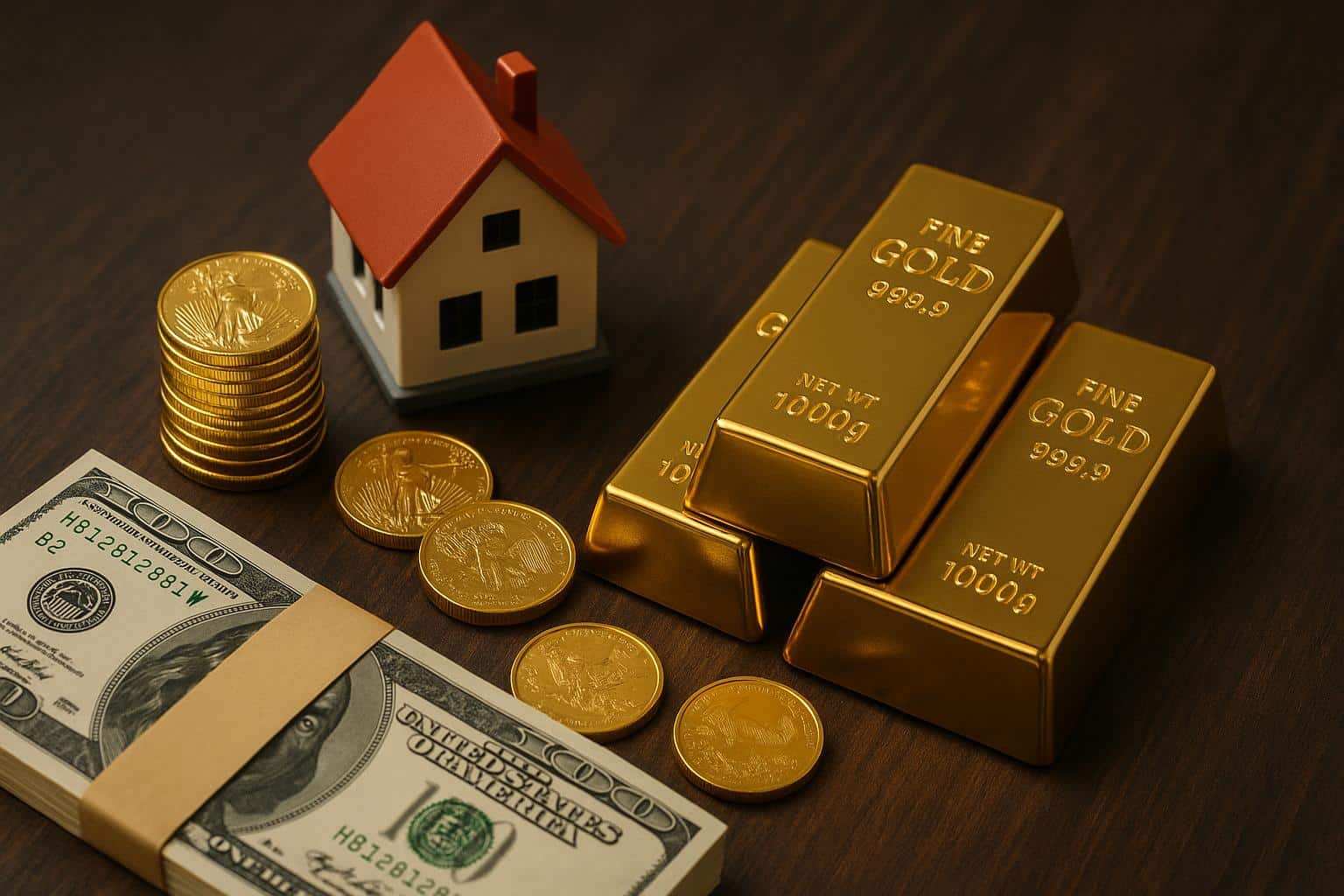
Here’s a closer look at why people are increasingly seeking alternative investment options like gold and other hard assets.
Inflation Driving Renewed Interest in Tangible Wealth
Inflation has significantly affected economies—and consumer purchasing power—around the world in recent years. In the US, the annual inflation rate reached 3.8 percent in April 2026, up from 3.3 percent the month prior and the highest it has been in nearly three years. While select stock market indexes, like the Nasdaq Composite Index, have performed well recently, there are also warning signs that may indicate a stock market crash—and perhaps even greater interest in tangible wealth.
The cyclically adjusted price-to-earnings (CAPE) ratio is a measure of a market’s inflation-adjusted earnings over the course of a decade, providing more reliable long-term stock valuations. In May 2026, the S&P 500’s CAPE ratio was 41; its average over the last 100-plus years is 17. The only two other times it was near this elevated level was in 1929 before the Great Depression and the early 2000s before the dot-com bubble burst.
The erosion of purchasing power due to inflation and weak stock market indicators have devalued currencies and decreased consumer trust in financial systems. The psychology behind people’s trust in a hard asset like gold is that it has been around for centuries, with its value typically rising during periods of economic uncertainty. In fact, many people view gold as an effective hedge against inflation.
The Search for Financial Systems That Inspire Greater Confidence
People around the world are seeking financial systems that they believe can provide stability during periods of economic and geopolitical uncertainty. Concerns about government debt, currency debasement, inflation, and broader market volatility have led many investors to explore hard assets that exist outside traditional financial systems..
By September 2025, global debt markets exceeded $322 trillion, outpacing global equities at $126 trillion. With a mounting debt burden, many governments continue to face significant financing and debt management challenges. Governments can monetize debt and print more money, but hard assets like gold are finite and outside of traditional banking systems.
Impact of the Digital Age
For some, the ability to hold gold and other tangible assets appeals more psychologically than owning a digital asset stored in an online wallet. There are also cybersecurity and regulatory concerns associated with certain digital assets, whereas firms like Preserve Gold can facilitate secure storage for their clients.
Gold’s Reputation As a Safe Haven Is Stronger Than Ever
“Gold has a number of characteristics that make it a great safe haven. First of all, it’s indestructible,” said investment manager Joe Foster. “You can bury a gold coin in your backyard, and your grandchildren can dig it up 50 years from now, wash it off, and still find a nice, shiny gold coin … It’s very liquid. You can convert gold to paper currency anywhere in the world, anytime you want. Most importantly, it’s a financial asset outside of the established financial system. It needs no government backing. There’s no counterparty risk with gold.”
Foster offered this explanation on gold’s safe-haven status in 2015. More than a decade later at the beginning of 2026, gold reached an all-time high price of more than $5,500 per ounce. Aligning with its “safe-haven” status, this occurred as a result of a weakening US dollar, rising geopolitical tensions, and trade uncertainties.
Hard Assets Offer Diversification
Even during periods of increased investor confidence, hard assets like gold still hold value for portfolio diversification. Having too much exposure to one or two asset classes is generally not advised. Instead, by holding multiple assets, investors are protected when one or more experiences a sharp decline in value.
Gold, in particular, may be an ideal hard asset for diversification. It has often outperformed the S&P 500 and other equity funds during periods of market stress.

