Charles Sheeler and film
Magazine Antiques, Nov, 2002 by Karen E. Haas
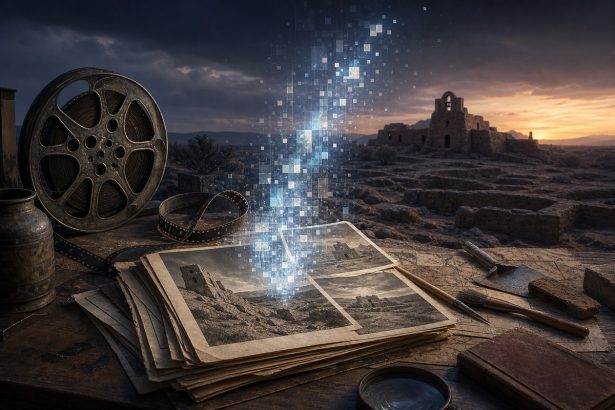
Charles Sheeler is recognized as a major American modernist painter and one of the master photographers of the twentieth century, yet what is seldom acknowledged is the impact of his early experiments in film on his work in both fields. Although it is well documented that Sheeler used his own photographs as the basis for many of his canvases and works on paper, it is less well known that his first direct appropriations, about 1920, were made from moving-picture film rather than still camera images. For amateurs like Sheeler, 35-mm moving-picture film was an introduction to the versatility of a new format that, nearly a decade later, revolutionized the field with the introduction of "miniature" handheld cameras such as the Leica.
- Most Popular Articles in Home & Garden
- Coolest room on the block: have a bedroom that's way drab and boring? Hang ...
- Reuse, recycle, remodel: environmentally friendly materials and techniques ...
- Keeping it simple: interior designer Michael Lee finds an overdesigned ...
- House of the Year: this craftsman-inspired home is factory-built--proving ...
- Dreaming of cabin life: smart ideas for small spaces, plus the hottest spots ...
- More »
Sheeler's motion-picture films, which in all but the case of Manhatta are known only through surviving stills, are marked by a newfound freedom that sets them apart from his earliest photographs made with a large-format camera and tripod. The act of shooting and editing moving-picture film, and enlarging and printing the stills, inspired Sheeler to explore a number of radical innovations such as multiple exposures, reversed negatives, motion studies, unusual camera angles, and extreme close-ups. These laid the groundwork for much of his later work and placed him solidly in the forefront of modernist photography in the United States.
Beginning in 1903, Sheeler trained at the Pennsylvania Academy of the Fine Arts in Philadelphia under the American impressionist painter William Merritt Chase (1849-1916). During a visit to Paris in early 1909, he had his first introduction to the work of the fauves and the cubists--Pablo Picasso (1881-1973), Georges Braque (1882-1963), and Henri Matisse (1869-1954)--and soon after his return, Sheeler renounced his teacher's painterly style.
Determined to make his own avant-garde paintings, he took up commercial photography between 1910 and 1912, in the hope of supporting himself until his paintings began to sell. Initially photographing houses and gardens for Philadelphia architects and eventually documenting domestic interiors and works of art, Sheeler described photography, at first, as a kind of "necessary evil" that only over time led him to see its "interesting possibilities." (1)
Thus, what had begun as a way to make a living soon became central to his art, resulting in a lifelong balancing act between the two sides of his career. In fact, no other American artist of the period seems to have been so powerfully affected by photography in all its aspects. Photography and film became the tools that Sheeler used to get at the underlying structure and elemental abstract forms he sought to capture in his paintings, and the camera developed into a crucial intermediary between the real world and the painted one. As one of his contemporaries put it: "It was Charles Sheeler who proved that cubism exists in nature and that photography can record it." (2)
How Sheeler came to own his first movie camera and where he learned to make films remains a mystery, but it is clear that he produced at least three experimental movies between about 1914 and 1920. His earliest known film, from which there are just two extant stills, depicts his fellow artist Morton Livingston Schamberg (see Pl. II), whom he met at the Pennsylvania Academy and with whom he shared a studio until Schamberg's untimely death in the influenza epidemic of 1918. In this pair of skillfully lit images the elegantly dressed Schamberg is shown reclining on a sofa, seemingly unaware of the camera, with a large parrot perched on his arm. This collaborative effort by the two artists was something of a tour de force, since filming with a hand-cranked camera in such low light would have been technically very challenging. An unsigned photograph of the inner workings of a French-made movie camera (Pl. I), discovered among the holdings of Sheeler's estate, points to the likelihood that the Pathe Cinematographe was the camera he used to make this and other, now lost, films before 1920. (3)
The stills of Schamberg and the parrot have been dated as early as 1912 or about 1914-1915, but may have been done closer to 1917 or early 1918. (4) Letters from Sheeler to Alfred Stieglitz (1864-1946) and Walter Arensberg (1878-1954) during the summer and early fall of 1918 indicate that Sheeler at that point still considered himself a novice, but had begun to think of training as a moving-picture man in very practical terms. Unlike the documentary photography of architecture and works of art he had been doing to support himself, Sheeler saw filmmaking as a skill that might help him avoid being sent overseas during World War I. In an undated letter to Arensberg, Sheeler described a meeting he had had in Washington, D. C., during which representatives of the United States Army Signal Corps film division assured him that he could join their ranks and do his military service as a movie cameraman, but that he would have to pay for his own film and processing during his apprenticeship. (5) To Stieglitz he wrote t hat he had been tentatively offered a job with the signal corps, to begin filming in France immediately but that he hoped that there might be other assignments in this country malting "records of industrial achievement" for which he felt better suited. (6) The whole issue was eventually moot, for the war ended in November before he could be drafted. However, the necessity of making a living during difficult times had once again opened Sheeler's eyes to the possibility of a career behind a camera--in this case, a movie camera.