Retail Industry
Industry: Email Alert RSS FeedBuzz Giant Poster Boy
American Demographics, June 1, 2004 by Noah R. Brier
Byline: NOAH R. BRIER
A face nonchalantly wallpapers urban landscapes in Los Angeles, Chicago, New York, London and Tokyo and most other metropolitan areas. Evident or not to passers-by, the black-and-white visage glued to stop signs, light poles, scaffolding, brick walls and fences around the world is the face of Andre the Giant. The Andre the Giant who fought Hulk Hogan in wrestling bouts, who was ever so briefly WWF champion and who appeared in Rob Reiner's 1987 film, The Princess Bride.

- Most Popular Articles in Business
- Research and Markets : Tesco Plc - SWOT Framework Analysis
- Do Us a Flavor - Ben & Jerry's Issues a Call for Euphoric New Flavors
- eBay made easy: ready to start an eBay business? These 5 simple steps will ...
- Katrina's lawsuit surge: a legal battle to force insurers to pay for flood ...
- Wal-Mart's newest distribution center opened last month near the southwest ...
- More »
How did this phenomenon come to be everywhere? Why has the 7'4" wrestling figure gained such posthumous fame - Andre died in 1993 - that people literally risk arrest to post his image? As a student at Rhode Island School of Design in Providence, Shepard Fairey thought it would be fun to print up a bunch of stickers with Andre's face, and, in the late 1980s, he started pasting them up in the streets and alleys of Providence, Boston and eventually New York. The stickers read, "7'4," 520 lbs. Andre the Giant has a Posse." At first, it was just a few friends that signed on as accomplices in the miniature billboard campaign. Today, untold hosts of acolytes spread the odd Obey gospel to the ends of the earth.
Some 15 years later, Fairey sticks to his plan, and he's steered a virally crafted wellspring of global goodwill, brand recognition and buzz into a portfolio of businesses in apparel, skateboards and media astride inner-city hip-hop culture and that of kindred suburban skater youth society - tastemaker nirvana for marketers. Fairey's inadvertent talent at generating buzz among tough-to-reach young consumers has also landed him consulting assignments from the likes of Coca-Cola, Nike and the Gravity Games. Today, Fairey's original intent, to remind people to think about their surroundings and question what they see, offers a textbook case in building brand identity based on creating a rapport with people that's not all about selling stuff, but can be all about having people buy stuff as they enthusiastically coalesce and evangelize via a global underground word-of-mouth network.
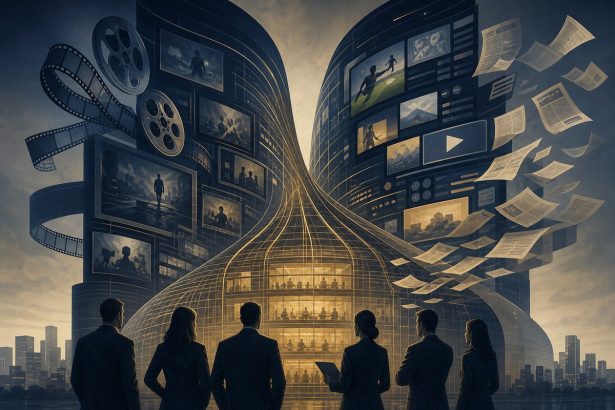
As if traditional media business models aren't challenged enough these days, stories like Fairey's - which turn brand marketing inside out - further call into question the roughly $128.4 billion TNS Media Intelligence/CMR estimates was spent on advertising in 2003.
These questions intensify as Yankelovich research released at the American Association of Advertising Agencies annual conference in April says 65 percent of people feel they are "bombarded with too much marketing and advertising," and 54 percent of those surveyed avoid buying products that they feel are over-marketed.
Companies such as Nike and Quicksilver have taken their share of bruises as a result of such over-marketing in the world of skateboarding where the name Obey Giant carries clout among 15- to 25-year-olds who buy tons of branded clothing and skateboard items. In 2003, the skateboard accessories market had $5.7 billion in total volume of retail sales, according to Board-Trac, an Orange County, Calif.-based market research company. Sponsoring pro riders, creating entertainment products such as video documentaries and advertising in smaller magazines are among the nontraditional marketing channels players in this arena use to maintain credibility, according to Marie Case, managing director at Board-Trac. Not mega-bucks ad campaigns.
For an age group that spends $100 billion annually on discretionary purchases, 15- to 25-year-olds make it pretty rough on media channels trying to reach them. People ages 13 to 24 spend more time online weekly (16.7 hours) than they watch TV (13.6 hours) or talk on the phone (7.7 hours), according to a 2003 study by Harris Interactive and Teenage Research Unlimited. The reason for this, they cite, is ability to control content and overall experience.
Still, Fairey and art director John LaCroix are going to see if they can strike more lightning in a bottle with a new magazine concept, a hardcover quarterly called Swindle, whose first issue is due this summer. Swindle's media kit says this of its target reader, "This is a generation who grew up with pop culture and media as their wet nurse, and it takes a certain skill set to reach them with success." Ecko, Paul Frank and 55dsl, part of the clothing company Diesel, are among advertisers in the premiere issue. Most magazines cost around $5, and they're read once or twice and then tossed. Priced at $12, Swindle will attempt to cross over the line from ephemeral magazine to more permanent keeper status with its readers.
What can mainstream consumer goods and services organizations and other companies large and small learn from what Fairey has accomplished? "Clearly there's a dramatic change in the marketplace in how you place a brand in a consumer's mind," notes Alan Siegel, chairman of the strategic branding firm, Siegel & Gale. "The days of buying national television ads are totally disintegrating, because the media have diversified so much." Fairey and Obey Giant provide a lesson in brand building in an increasingly media-neutral world, where young people are Instant Messaging, talking on the phone and watching television all at the same time.