advertisement
On The Insider: Sarah Jessica Parker's Mole Removed
Find Articles in:
all
Business
Reference
Technology
News
Sports
Health
Autos
Arts
Home & Garden
advertisement

Content provided in partnership with
Thomson / Gale

The search for Margery - Notes on a Strange World - medium associated with Houdini

Skeptical Inquirer,  Nov-Dec, 2002  by Massimo Polidoro

While researching material for my book Final Seance: The Story of the Strange Friendship Between Houdini and Conan Doyle (Prometheus Books, 2001) I made several attempts at locating some of the relatives of the medium "Margery," whose role was so prominent when Houdini and Doyle were friends and later enemies.

Margery (Mina Crandon was her real name) was the wife of Dr. LeRoi Goddard Crandon, a wealthy Boston physician, who, in 1924, entered the contest announced by Scientific American according to which $5,000 would be paid to anyone able to demonstrate psychic powers under scientific controls. The only catch was that Houdini was a member of the committee, and that proved to be enough to scare away most tricksters eager to win the prize by any means.

Most Popular Articles in Reference
The importance of understanding organizational culture
Credit card attitudes and behaviors of college students
What factors attract foreign direct investment?
Libraries Need Relationship Marketing - mutual interest marketing concept, ...
How to set performance goals: employee reviews are more than annual critiques
More »
advertisement

I knew that Margery had a son and that he was probably still alive, but though I tried many times to contact him I was never able to get a reply. The deadline for the book finally came and I closed it without the information I wished to include.

Then, in March of this year, I received an e-mail from an Anna Thurlow, who introduced herself as Margery's granddaughter. She was writing me because she had read a review I wrote for the SKEPTICAL INQUIRER on Ken Silverman's book on Houdini (SI 21(3), May/June 1997). She thought the book was "superb" but wanted to "point out, though, that it was not ever proven that Mina provided 'sexual favors' to members of the seance circle. Ken is careful to point this out himself. Bird [Malcolm Bird, secretary of the Scientific American Commission] later made that claim, but I would argue that a man desperate to salvage his own reputation and is willing to do so by commenting on such personal matters is perhaps not the most trustworthy source of information."

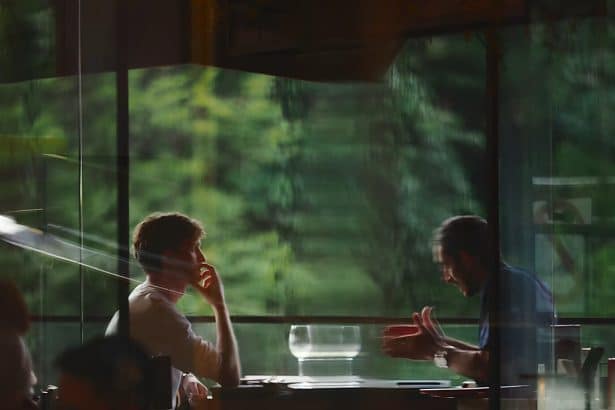
I was quite excited to get a chance to speak to someone who had had Margery as grandmother and I thought it would be very interesting to hear the perspective of a member of the family who was not as involved in the case as Dr. Crandon. To me it looked almost as if, eighty years later, the contemporary "representatives" of Margery and Houdini had a chance to meet and discuss what went on during those famous seances in Boston. So, imagine you could step back in time and listen to a conversation between two people who could have been "very close" to those two giants.

Massimo Polidoro: Anna, I must say that I am an admirer of Margery and I think that the idea of her faking the phenomena was probably more a matter of a difficult relationship with her husband than an attempt to deceive the public. What do you think?

Anna Thurlow: Please, do not feel any anxiety over offending me regarding whether she was "authentic" or not--I do not believe in supernatural phenomena. I am, however, fascinated with the pageantry and ritual of it. I know that for whatever reason she started it (and I agree with you, I do not think it was with intent to deceive but rather for reasons more psychologically complex), it conquered her mentally in the end--after Dr. Crandon died (even though he was my great-grandfather, we've always called him "Dr. Crandon") she continued automatic writing on her own, as if it was the only company she had, which I find very sad.

MP: Did you have a chance when you were a kid to know Mina personally?

AT: I never knew Mina, nor did my mother, as Mina drank herself to death so early on. But my grandfather John Crandon (Mina's son and my mother's father) was greatly influenced and shaped by her. He was a very unhappy man and both obsessed with and ashamed by her. She was rarely spoken of in the family but my mother gathered many stories and passed them on to me. I've been worried about the veracity of the stories, but where I've been able to verify them, they've turned out to be true. More immediately, however, the psychological impact of my greatgrand-parent's dysfunctionality and the conflict with Houdini was deeply imprinted on the family.

MP: Is John still living?

AT: Yes, my grandfather is still living although not mentally competent; even before, however, he rejected anyone's attempt to contact the family-- which is why you wouldn't have been able to find any of us. My mother, on the other hand, was fascinated by Mina and was preparing to write a book about women, spirituality, and class in Boston, with Mina as the central figure. My mom died of cancer in 1995, just before Ken's book came out--she would have been thrilled to read it, as he uncovered so much more than we knew. I've been very grateful to him for answering so many of the questions that my grandfather never would. There is only myself and my mother's brother.

MP: It must not have been easy for a kid like John, your grandfather, to live in a house were all those strange things went on. What did he think about his mother's fame?

AT: It made my grandfather very angry to talk about Mina (the Rand side of the family only knew her as Mina, people outside of the family or Houdini specialists always refer to her as Margery; my mother and I refer to her as both). I asked him several years ago what he thought about the whole thing, and he said that he knew when she started the seances that something was not right with her, mentally. However a few minutes later he turned to me and said in a way that made my hair stand on end: "They didn't know what they were playing with. It was a very dangerous game." His room at 10 Lime street was right next to the seance room, and he could hear everything. They locked him in every night (as well as the servants) to prove to the sitters that the seance circle was controlled. I think he was around twelve years old. So I imagine, for him, however much a rationalist he was, it must have nonetheless been absolutely terrifying. Seeing him re-live that was chilling enough for me to not ask again. My mother told m e that the public outcry on this arrangement was such that Mina had to send my grandfather away; which they did--to Andover (a boarding school). When I asked him once about how it was done, he said, "mirrors." But he didn't explain more than that.