


When buying an electric motorcycle for a child, many parents first ask, “What age is suitable to ride?” This is a reasonable starting point, but age is actually only one reference factor. In reality, even children who are the same age—such as two 8-year-olds—can differ greatly in height, strength, balance, and how well they adapt to speed. Some children may already ride a bicycle or scooter comfortably, while others are still getting used to basic balance.
Therefore, when choosing a kids electric motorcycle, age should only be used as an initial guideline. More important factors include the child’s height, leg length, coordination, riding experience, and the environment where they will ride. Rather than choosing a bigger or faster model, it is better to select an electric motorcycle that fits the child’s size, has controllable speed, and is easy to operate. This not only improves safety but also helps children build confidence and enjoy riding.
- Why Age Matters but Should Not Be the Only Standard
- Ages 3–5: Best for Low-Speed Ride-On Electric Motorcycles
- Ages 6–8: Many Children’s First Electric Motorcycle
- Ages 9–12: A More Mature Riding Stage
- Teenagers: A Riding Experience Closer to Real Motorcycles
- How to Tell if a Child Is Ready to Ride an Electric Motorcycle
- Common Mistakes Parents Make
- Recommended Electric Motorcycles for Kids
- Conclusion: What Age Is Best for a Kids Electric Motorcycle?
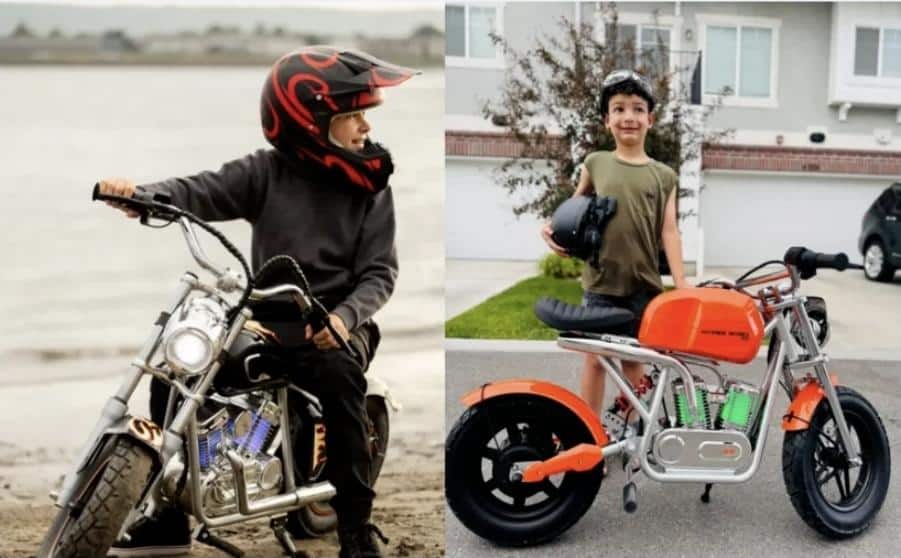
Why Age Matters but Should Not Be the Only Standard
Age matters because it roughly reflects a child’s physical development and level of maturity. Younger children usually need lower speeds, lighter vehicles, and simpler controls. As children grow older, their strength, reaction time, and spatial awareness improve, making it easier for them to control the motorcycle.
However, age should only be treated as a reference. In real situations, a child’s height, body size, and riding experience are often more important. For example, even if a motorcycle is labeled for 10-year-olds, it may still be difficult for a child to control if the seat height is too high or the bike is too heavy.
In addition, a child’s personality and comfort with speed should also be considered. Some children adapt quickly to riding, while others prefer a slower pace to gain confidence. Parents should use age as a starting point, but make the final decision based on the child’s physical ability, confidence, and riding environment.
Ages 3–5: Best for Low-Speed Ride-On Electric Motorcycles
For children aged 3 to 5, low-speed ride-on electric motorcycles are usually more suitable than models that closely resemble real motorcycles. At this stage, children are still developing basic balance and coordination, so the vehicle should be as simple and stable as possible.
For this age group, a low seat height and strong stability are the most important factors. When children sit on the bike, being able to place their feet close to the ground gives them a stronger sense of security and better control. Power delivery should also be gentle, avoiding sudden acceleration that could make children nervous or cause them to lose balance.
As a reference, suitable specifications often include:
- Top speed: about 3–5 mph (5–8 km/h)
- Motor system: about 6V–12V
- Seat height: about 30–40 cm
- Ride time: about 40–60 minutes
At this stage, riding is mainly about fun and becoming familiar with the vehicle rather than pursuing speed or complex control. Parental supervision is very important. Children do not need long riding sessions—the key is allowing them to experience riding in a safe environment. Once they become comfortable with movement and control, parents can consider upgrading to a more realistic electric motorcycle for kids.
Ages 6–8: Many Children’s First Electric Motorcycle
Ages 6 to 8 are often when many children first start riding a real kids electric motorcycle. Children in this age range usually have better coordination and can understand basic riding rules and safety awareness.
Many children at this stage have already learned to ride bicycles or scooters, so they have some familiarity with steering, balance, and braking. This makes it easier for them to adapt to an electric motorcycle.
For this age group, motorcycles should balance safety with riding enjoyment. Recommended specifications may include:
- Top speed: about 6–10 mph (10–16 km/h)
- Motor power: about 100–250W
- Battery system: commonly 24V
- Seat height: about 45–55 cm
In addition, the motorcycle should provide smooth acceleration and brakes that are easy to control. If the bike is too large or too powerful, children may lose confidence. For beginners, control is usually more important than speed.
This stage is often when children develop their basic riding skills. A properly sized and easy-to-control motorcycle helps them build confidence and gradually improve their riding ability.
Ages 9–12: A More Mature Riding Stage
Ages 9 to 12 offer the widest range of options for kids electric motorcycles. Children in this stage usually have stronger physical ability, faster reactions, and better spatial awareness, allowing them to handle larger and more capable models.
Many children at this age already have stable riding skills and can better manage speed and direction. Riding becomes less about simple play and more like an outdoor activity or hobby.
Parents can consider motorcycles with improved specifications, such as:
- Top speed: about 10–15 mph (16–24 km/h)
- Motor power: about 250–500W
- Battery system: about 36V
- Seat height: about 55–65 cm
It is also helpful to look for features that improve riding comfort and control, such as suspension systems, larger pneumatic tires, and stronger frames. However, even for older children, choosing the biggest or fastest motorcycle is not always necessary. If a bike is too heavy or too powerful, it can still be difficult to control. Often, a slightly smaller but easier-to-handle model is better for long-term use.
Children aged 9 to 12 also begin developing personal riding preferences. Some prefer riding in a driveway or neighborhood, while others enjoy grass or light off-road environments. The riding environment should therefore also be considered when choosing a model.
Teenagers: A Riding Experience Closer to Real Motorcycles
Once children enter their teenage years, the logic of choosing an electric motorcycle becomes closer to selecting a small motorcycle for adults. Riders at this stage are usually taller, stronger, and capable of handling larger bikes.
However, size matching is still very important. Seat height, handlebar position, and bike weight should all fit the rider’s body proportions. Even if a motorcycle has enough power, it may still be uncomfortable or difficult to control if it is too large.
For teenagers, mini electric dirt bike–style motorcycles are often more suitable. Typical specifications may include:
- Top speed: about 15–25 mph (24–40 km/h)
- Motor power: about 500–1000W
- Battery system: about 36V–48V
- Seat height: about 65–75 cm
Teen riders often pay more attention to riding performance, including speed, handling, and overall riding enjoyment. However, safety remains essential. Helmets, knee pads, and elbow protection can significantly reduce injury risks. Even as children grow older, parents should continue guiding and supervising safe riding habits.
How to Tell if a Child Is Ready to Ride an Electric Motorcycle
First, consider basic balance ability. If a child can already ride a bicycle or scooter steadily, it is usually easier for them to adapt to an electric motorcycle.
Second, look at attention and rule awareness. Riding requires following simple instructions such as accelerating slowly, braking in time, and paying attention to surroundings. If a child can understand and follow these rules, they are likely ready for basic riding.
Next, observe whether the child can control the motorcycle naturally. They should be able to grip the handlebars comfortably, operate the brakes, and remain stable when stopping.
Finally, check whether the child’s body size matches the motorcycle. Ideally, when seated, the child’s feet should be able to reach or nearly reach the ground with slightly bent knees. As a reference, most kids electric motorcycles are suitable for children with a height of about 100–150 cm, though the exact fit depends on the seat height. If the child can control the handlebars, operate the brakes, and stop smoothly, they are generally ready to ride.
Common Mistakes Parents Make
Many parents make a common mistake when buying kids electric motorcycles: purchasing a bike that the child can “grow into.” Although this may seem practical, a bike that is too large is harder to control and may reduce the child’s confidence.
Another common issue is focusing only on the age label while ignoring the child’s height and body size. Even if the age recommendation matches, a child may struggle to control the motorcycle if their feet cannot reach the ground.
Some parents also focus too much on maximum speed. In reality, smooth acceleration and reliable braking are more important for children. A moderately fast but stable motorcycle is usually safer and easier for beginners to learn.
Finally, riding environment is often overlooked. If a child mainly rides in a driveway or yard, the requirements for suspension and tires will be different from off-road riding. Choosing a model based on the actual riding environment leads to a better experience.
Recommended Electric Motorcycles for Kids
HYPER GOGO Cruiser 12 Plus with App
The Cruiser 12 Plus is suitable for children aged 6–8, and can also work for some beginner riders around age 9. It uses a 160W motor with a top speed of about 10 mph (16 km/h), providing a balance of fun and control. This makes it a good option for children transitioning from bicycles or scooters to electric riding.
In terms of appearance, the bike features acruiser motorcycle style design. Its low frame, wide tires, and simulated exhaust give it the look of a miniature motorcycle rather than a toy. This realistic design is visually appealing to children.
The bike also includes ambient lighting, simulated exhaust smoke, and engine sound effects, which create a more immersive riding experience and strengthen the emotional connection children feel while riding.
In terms of features, it includes Bluetooth speakers, app control, and multiple speed modes, allowing kids to play music while riding and enabling simple management through a mobile app. Overall, it is an entertainment-focused electric motorcycle that works very well as a first riding experience.
HYPER GOGO M5 Electric Motorcycle
The HYPER GOGO M5 is better suited for children aged 9 and above. It is powered by a 500W motor, offering stronger performance and a riding experience closer to a real mini electric motorcycle.
In terms of design, the M5 has a larger frame and wider tires, giving it proportions that resemble a real motorcycle. The overall design looks more mature and powerful, which tends to appeal to older children.
Emotionally, the M5 often gives riders the feeling that they have upgraded to a more advanced motorcycle. Compared with toy-like vehicles, it feels more like a real riding machine, creating a stronger sense of achievement and adventure.
In terms of features, the M5 includes lighting effects, Bluetooth speakers, five engine sound options, and app control. With its stronger structure and higher power, it combines entertainment with a more authentic riding experience.
Conclusion: What Age Is Best for a Kids Electric Motorcycle?
When an electric motorcycle fits a child’s size, has controllable speed, and offers simple handling, children are more likely to build confidence and continue riding. For most families, the best choice is not the fastest or largest motorcycle, but the one that allows the child to ride safely and truly enjoy the experience.

