


There is a category of purchase that reveals its value slowly, over years rather than immediately after the transaction. A well-made suit is one of the clearest examples of this kind of investment. It does not announce its quality in the first wearing. It reveals it in the tenth, the thirtieth, and the hundredth, when the garment still holds its shape, still moves correctly, and still looks like something worth wearing to an occasion that matters.
This staying power is one of the most underappreciated qualities in menswear, and it changes the calculation around what a suit is actually worth.
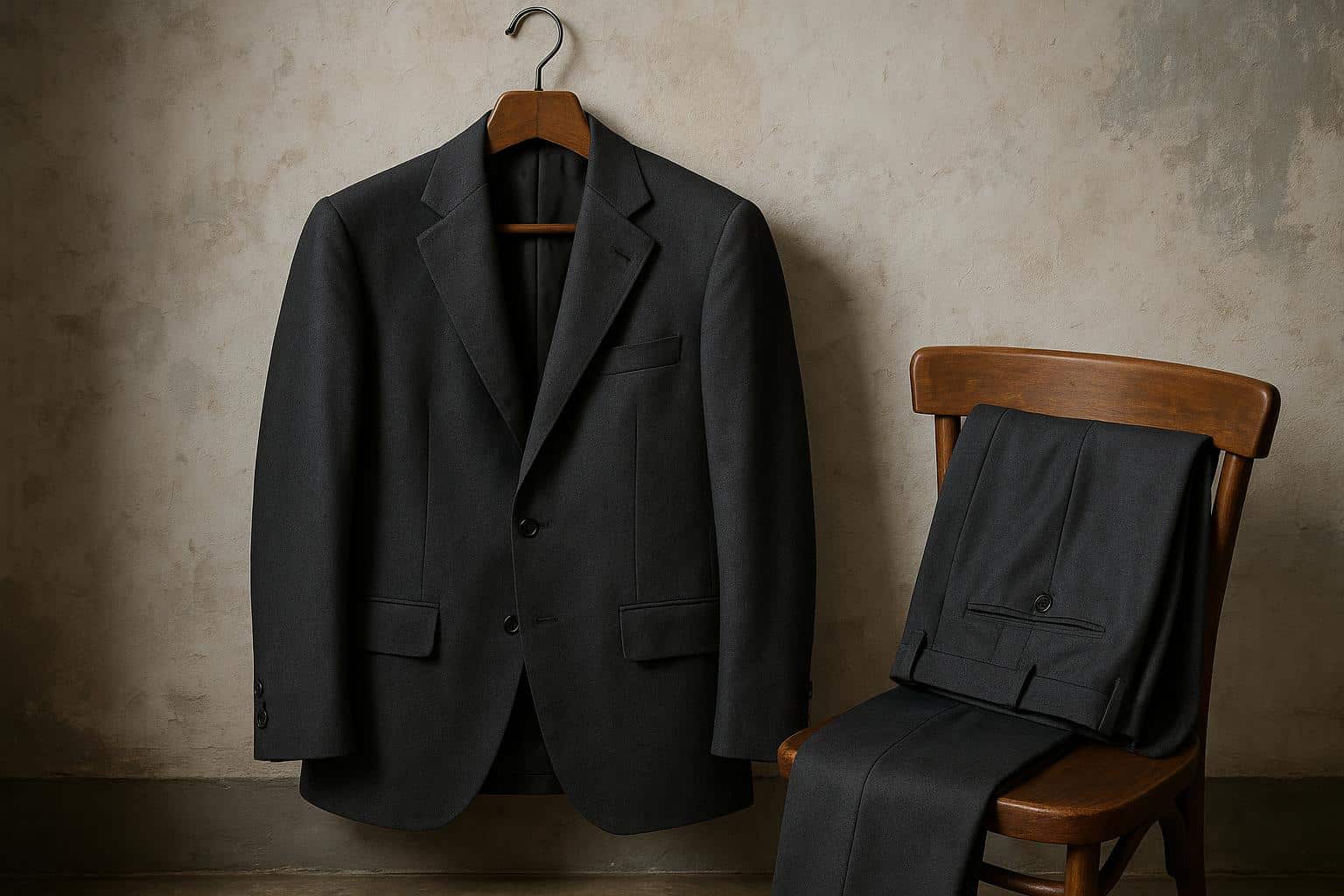
What Staying Power Actually Means
Staying power in a suit is not simply about physical durability, though that is part of it. A suit that lasts is one that was constructed with enough care that it does not lose its essential character through repeated wear. The wool holds its shape after cleaning. The canvas in the chest retains its structure rather than collapsing into something flat over time. The stitching at the seams does not fail after a season.
Beyond physical durability, a well-made suit has a design staying power that equally matters. It was cut in a way that is not bound to a specific trend cycle, that does not read as aggressively of a particular moment, and that therefore remains appropriate and presentable across many contexts over many years.
These two forms of staying power, structural and aesthetic, are what separate a suit worth keeping from one that needs replacing.
The Economics of Longevity
The economics of a well-made suit look different when calculated across the lifespan of the garment rather than at the point of purchase. A suit bought for a modest price that loses its shape after two seasons and needs replacing costs significantly more per year of quality wear than a suit bought for a higher price that remains excellent for a decade.
This is not an argument for spending without limit. It is an argument for thinking about what a suit actually costs across the time it will be in use. Suits for men that are built with genuine quality become, on this calculation, among the most cost-effective items in a wardrobe rather than among the most extravagant.
What to Look For
The signals of a suit built to last are not always visible to the untrained eye, but they can be learned. Natural fibers, particularly wool, hold their shape and breathe in ways that synthetic alternatives do not replicate convincingly over time. A canvassed or half-canvassed chest, rather than a fused one, allows the jacket to mold gently to the body rather than stiffening and separating with wear.
Construction details at the seams, the quality of the lining, and the weight of the cloth all speak to how the garment was made and how it will behave across years of use. These are details worth learning to read, because they determine whether a suit becomes a reliable companion or a recurring expense.
The Satisfaction of Something That Endures
There is a quiet satisfaction in wearing something that has lasted. A suit that has accompanied its wearer through significant moments, that has been cleaned and pressed and worn again across years of life, carries a kind of character that a newer garment simply has not had the time to develop. That character is worth something, and it begins with the decision to buy something built to earn it.

