


There was a time, not all that long ago, when buying shoes for your kids was a purely functional effort. You’d head to the local department store, get your feet measured on one of those cold metal sliding scales, and walk out with a pair of sturdy, stiff leather shoes built to survive the playground. They weren’t meant to be stylish. They were just meant to be durable. Honestly, I think we all have a blurry memory of those heavy boots that felt like wearing bricks.
But if you look at the feet of kids today, it’s a completely different story.
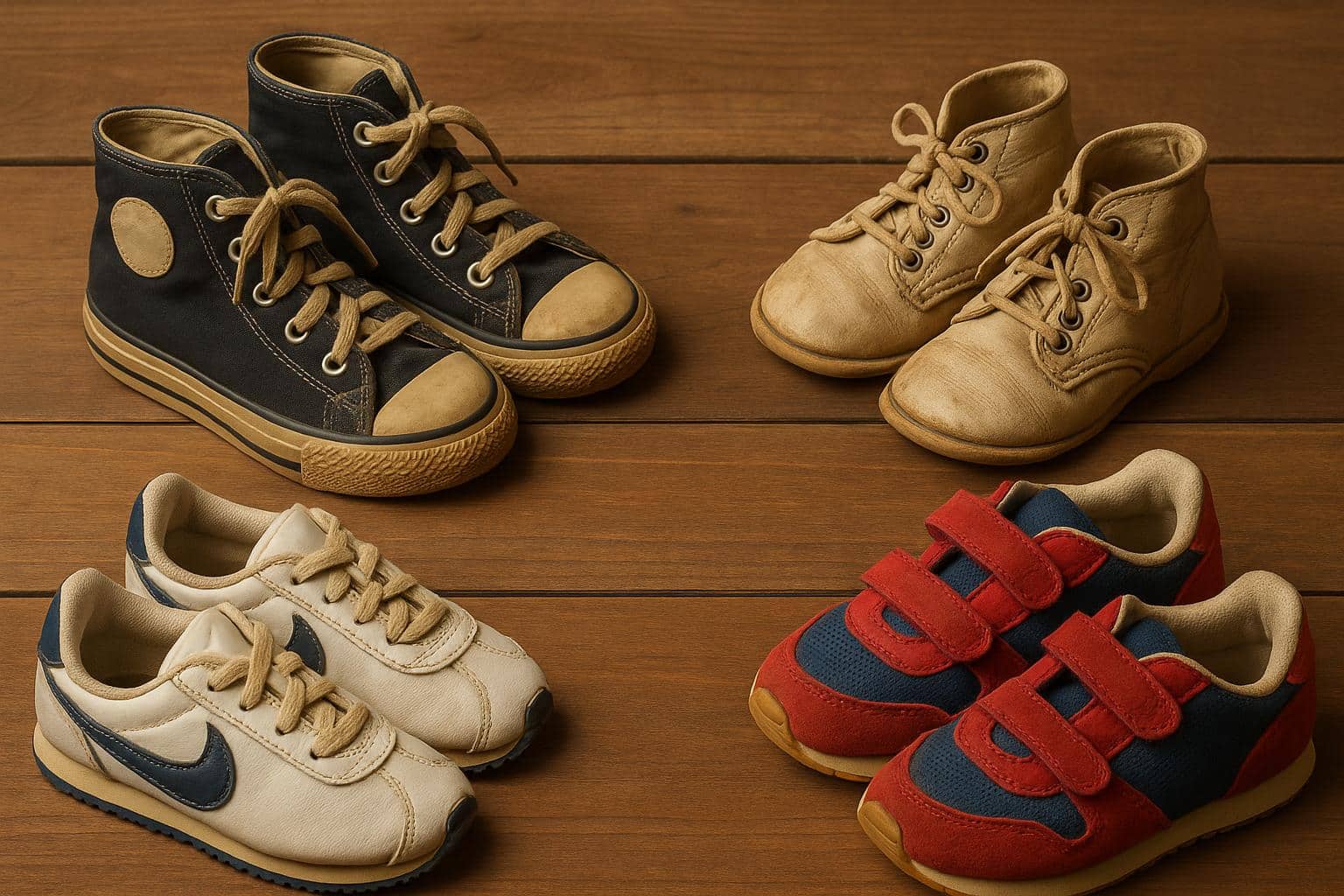
The whole world of children’s footwear has shifted from basic utility to a vibrant culture of self-expression and high-performance tech. But how did we actually get here? The history of the sneaker actually started with simple rubber soles back in the late nineteenth century. Those early versions were pretty primitive and mostly stayed on the sports field. For a long time, children just wore miniature versions of adult formal shoes or basic canvas high-tops.
There wasn’t much science behind the gait of a toddler versus that of a teenager. And honestly, did anyone even think to ask? Probably not. However, as the fitness boom of the twentieth century took hold, the way we thought about movement changed. We finally realized that children’s feet aren’t just small adult feet. They’re developing structures that need specific support. I guess we just grew up a bit in how we saw health.
The real turning point hit in the late 1980s and early 1990s. This was the era when the sneaker moved from the gymnasium to the very center of pop culture. Suddenly, what you had on your feet said something about who you were. For the younger generation, this was fueled by the rise of athletic icons.
It changed everything.
When kids saw their heroes flying across a basketball court, they didn’t just want to play like them. They wanted to look like them, too. You know that feeling of putting on a fresh pair of shoes and suddenly feeling ten feet tall? This demand gave birth to a whole new category. Parents weren’t just looking for “school shoes” anymore. They were looking for something that captured the energy of the times.
This period brought in shoes that used air cushioning and advanced support systems. It was a massive leap forward. Companies started to realize that the youth market was a powerhouse. So, they began scaling down their most popular designs with a lot of care. It wasn’t just about shrinking a pattern. It was about making sure that the same level of comfort and cool factor was accessible to everyone. The introduction of these silhouettes changed the game. They weren’t just for the court. They became a staple of everyday life, blurring the line between athletic gear and daily fashion.
As we moved into the 2000s, the focus shifted again. Technology became the main driver. We saw the rise of breathable mesh, lightweight foams, and those “easy on, easy off” designs. For parents, the struggle of tying laces while rushing out the door is a universal pain point. Have you ever tried to tie a double knot while a toddler is actively trying to run in the opposite direction? It is pure chaos.
The industry responded with Velcro, elastic laces, and eventually, hands-free entry systems. This was a win for both parents and children. It helped kids feel independent and saved parents a lot of time. And that’s the point. Practicality finally met style.
But the evolution wasn’t just about how the shoes were built. It was about the materials, too. We’ve seen a big move toward sustainability and ethical making. The consumer today is more conscious. They want to know that the sneakers their children are wearing, from standard runners to premium kids’ Jordan lifestyle shoes, aren’t harming the world those children will inherit. They really value that blend of legacy and responsibility. It’s about the hum of the sewing machine making something that actually lasts.
Today, the “lifestyle” category is what dominates the market. A child might wear the same pair of sneakers to a birthday party, a classroom, and a park. The versatility is incredible. We see vibrant colors that let children show off their personalities. Maybe that’s the best part. We see collaborations with artists and movies that turn a pair of shoes into a collector’s item.
The sneaker has truly become a canvas.
Looking back, it’s fascinating to see how far we’ve come. We’ve moved from stiff, uniform boots to lightweight, personalized masterpieces. The evolution of children’s sneakers mirrors our own cultural journey. It reflects how we’ve grown to understand physical development, our obsession with celebrity culture, and our collective move toward a more casual, comfortable way of living.
When you see a child today rocking a pair of high-tops or sleek runners, you’re not just looking at footwear. You’re looking at decades of innovation and a fundamental change in how we value the comfort and expression of the next generation. It’s a journey that started with simple rubber and ended up as a global phenomenon.henomenon.
