


Netflix is raising subscription prices across the board, and the increase hits every tier. The standard plan now costs $19.99 per month, up from $17.99, while the ad-supported and premium options are also moving higher. There are no new features attached to the hike, so you’ll pay more for the same limits on streams and resolution.
What You’ll Pay on Each Netflix Plan Today
Netflix’s ad-supported plan jumps by $1 to $7.99 per month in the US. The standard plan rises by $2 to $19.99, and premium increases by $2 as well, bringing it to $24.99. The company has also lifted the price to add people outside your household: it’s now $7.99 per month for an extra member on an ad plan and $9.99 without ads, up from $6.99 and $8.99 respectively.
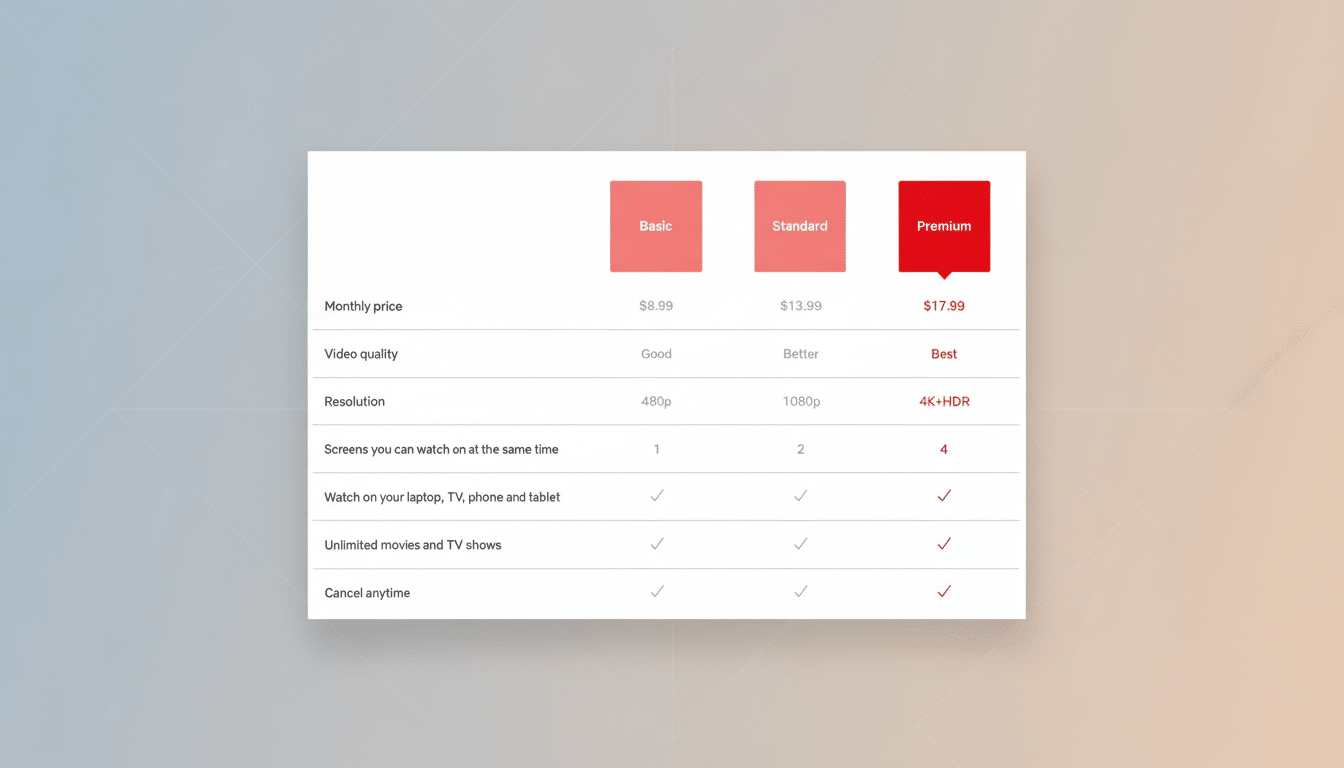
Features remain unchanged. The ad tier continues to include commercial breaks and a smaller catalog due to licensing gaps. Standard retains 1080p with two simultaneous streams. Premium keeps 4K Dolby Vision/Atmos and four streams. Extra member slots still require a standard or premium host account and remain capped at one on standard and two on premium.
If you’re a legacy basic subscriber, expect your bill to reflect Netflix’s updated pricing approach over time, as the company has been phasing out that plan for new signups in major markets. Pricing and timing can vary by region, but the US adjustments are already reflected on Netflix’s support materials.
Why Netflix’s Subscription Prices Keep Rising
Netflix’s calculus is straightforward: its service remains the default streaming destination, and demand has proven resilient to earlier hikes. Investor updates show record revenue and higher average revenue per membership in the US and Canada as paid sharing and the ads business mature, giving Netflix room to nudge prices without spiking cancellations.
Content costs are a major factor. Industry analysts estimate Netflix’s annual content spend in the mid-to-high teens of billions of dollars, including increasingly pricey sports-adjacent and live programming, high-profile films, and long-running series. The company has also signaled a long-term target of expanding operating margins into the mid-20s, a goal supported by premium pricing and growing ad sales.
The advertising tier is central to the strategy. Netflix has touted tens of millions of monthly active users on its ad-supported option, and media buyers report improving ad load and targeting. A $1 bump on the ad plan still keeps it positioned as the on-ramp for price-sensitive viewers while raising the floor on what an entry subscription yields.
How This Fits the Current Streaming Landscape
Rivals have been marching upward too. Disney raised prices for ad-free Disney+ and Hulu, Max’s 4K tier commands a premium, and Amazon introduced an additional fee to remove ads from Prime Video. Kantar and Antenna tracking show that while overall streaming churn in the US hovers in the mid-single digits monthly, Netflix tends to post the lowest churn among major services, giving it more room to maneuver.
Even with higher sticker prices, Netflix’s standard and premium tiers remain competitive against the growing cost of ad-free bundles elsewhere. The bigger risk for Netflix isn’t a single hike—it’s subscription stacking fatigue. Households now rotate services more often, and incremental increases across multiple platforms compound quickly.
What This Price Increase Means for Your Bill
If you watch mostly on a single TV and don’t need 4K, the ad tier at $7.99 is now the clear value play, albeit with interruptions and some missing titles. Households that value 4K, HDR, and four streams will have to absorb the premium’s rise, since Netflix keeps those features locked to the top plan. For families sharing across addresses, the higher extra-member fee erodes the savings of splitting—especially if you’re adding more than one slot.
One practical tactic is rotation. Finish a series, cancel, and return when the next season drops. Antenna’s research has shown rotating behavior becoming more common, and it’s one of the few levers consumers have as streaming inflation continues. Unlike some competitors, Netflix doesn’t offer an annual discount, so there’s no penalty for month-to-month flexibility.
Bottom Line: Netflix Costs More Without New Perks
Netflix is charging more for every plan without adding perks, banking on its deep catalog, cultural hits, and low churn to carry the day. Standard now sits just shy of $20, premium touches the mid-$20s, and the ad tier edges up while staying the budget option. If you’re recalculating, weigh resolution needs, concurrent streams, and whether that extra member still makes financial sense under the new pricing.

