


Ask.com has officially gone dark, ending one of the longest-running brands in search-engine history. Parent company IAC quietly pulled the plug on May 1, 2026, closing the doors on a service that began life as Ask Jeeves in 1996 and at one point counted itself among the most recognizable destinations on the early web. The shutdown closes a 30-year chapter in the story of internet search and removes one of the last meaningful alternatives that had managed to outlive the rise of Google.
From Ask Jeeves to a Quiet Goodbye
Founded by Garrett Gruener and David Warthen in Berkeley, California, the site debuted with a friendly butler mascot and a novel premise: type a question in plain English and Jeeves would find the answer. The format was a hit. By 2000, Ask Jeeves was one of the highest-trafficked sites on the internet, and its initial public offering became one of the dot-com era’s signature stories. Ask was, in many ways, the original conversational search experience — a precursor to the AI chatbots now competing for the same attention.

The site’s fortunes shifted as Google’s algorithmic approach overtook the question-and-answer model. Ask Jeeves rebranded simply as Ask.com in 2006, retired the butler in 2010, and eventually transitioned into more of a Q&A and content portal. IAC, the conglomerate that acquired the company in 2005, said in a statement to Mashable and Search Engine Journal that the closure reflects “a sharpened focus” on its other consumer brands.
Why Ask.com Lost the Search Wars
Industry analysts have long pointed to the same diagnosis: Ask never scaled its index, and it lacked the deep ad infrastructure that powered Google’s runaway growth. By the time the company licensed Google’s results in the late 2010s, the brand had become more of a commodity portal than a search destination. Several attempts to relaunch the natural-language angle — including a brief return of the Jeeves mascot in 2014 — failed to translate nostalgia into traffic.
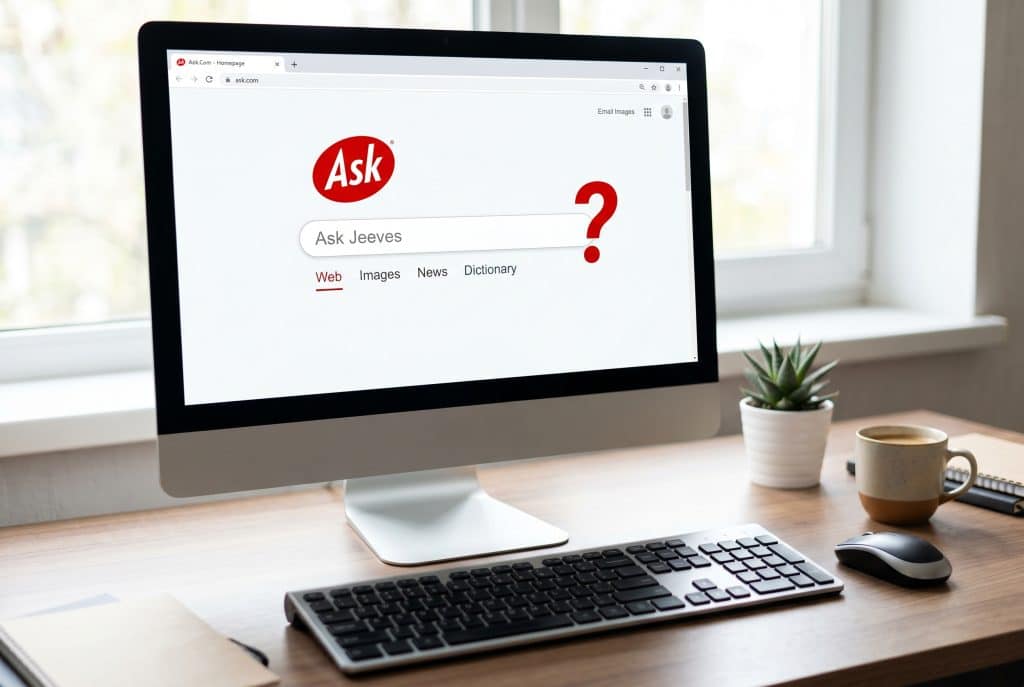
Ironically, the conversational query format Ask helped popularize is now central to the modern search landscape. Tools like ChatGPT, Google’s AI Overviews, and Perplexity have made asking a full question the default behavior again. Yet Ask.com, the brand that pioneered that approach, never managed to ride the AI wave. Reports from Engadget and Quartz noted that IAC briefly explored relaunching Ask as a chatbot, but ultimately decided the brand carried more historical baggage than commercial value.
What Happens to Ask.com Users Now
Visitors to ask.com this week are greeted with a brief farewell message. The company has not committed to preserving its archived Q&A content, though groups like the Internet Archive have already begun snapshotting key pages. Employees affected by the shutdown were notified internally in late April, according to BetaNews and Tech in Asia. IAC has not disclosed how many roles were eliminated.
The closure leaves Bing, DuckDuckGo, Brave, and a handful of newer AI-first engines as the most prominent alternatives to Google for English-speaking users. For an entire generation of internet users, however, the disappearance of Ask Jeeves marks something more sentimental: the quiet exit of one of the friendliest faces of the early web. Jeeves, after nearly three decades of service, has finally hung up his apron — and this time, it appears, for good.

