


An AI tool built specifically for non-fiction authors just took a steep price cut. Youbooks AI, a long-form drafting platform that turns outlines and research into chapter-ready prose, is now available as a lifetime license for about $42, positioning it as one of the most affordable ways to get from concept to cohesive manuscript.
What This Deal Actually Buys You with Lifetime Access
The current promotion brings lifetime access for roughly $41.65 (regularly $359) when using a widely circulated code. The included Fan Plan provides 200,000 monthly credits—typically mapped at about one credit per word—plus storage for style samples and source documents. The platform supports exports to DOCX, EPUB, and Markdown, and it grants commercial rights to your outputs so you retain ownership of what you publish. As with any sale, pricing and terms can change.
How The Tool Works For Long-Form Drafting Projects
Youbooks AI is built for structure first. Feed it a topic, specify tone and organization, and it generates a detailed outline that can expand into chapter drafts. Unlike single-model assistants, it can draw on multiple large language models—including widely used systems such as ChatGPT, Claude, Gemini, and Llama—to reduce single-engine quirks and produce more stable long-form continuity.
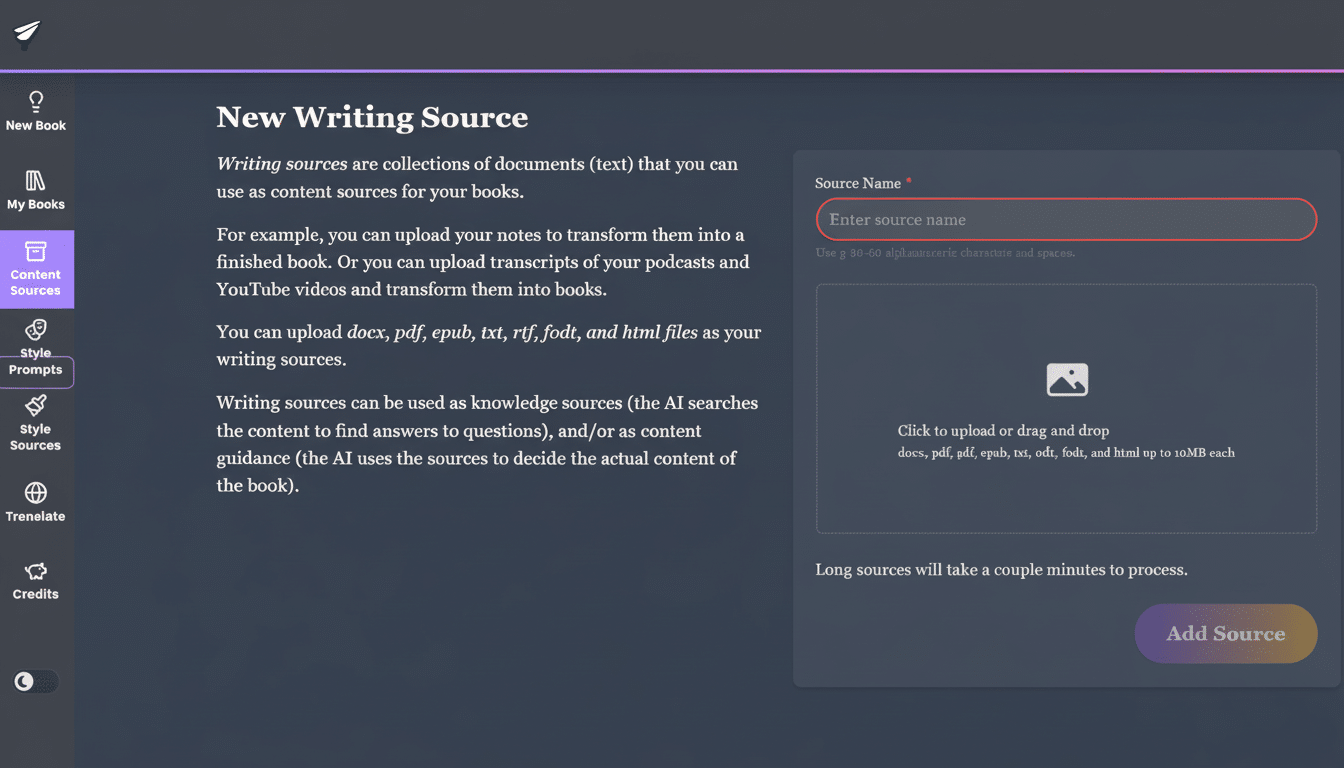
For research-heavy projects, the platform can pull in up-to-date information and lets you upload your own notes, transcripts, or datasets to ground the narrative. That source integration is key for non-fiction, where voice consistency and verifiable claims matter as much as speed. The system can maintain a chosen style across sections, so introductions, case studies, and summaries read like they came from the same authorial hand.
Where It Helps Non-Fiction Authors the Most
The biggest lift is getting past the messy middle: translating a pile of interviews, slide decks, or journal clippings into a clean chapter flow. Consultants can upload client transcripts and spin out first-pass case studies; academics can shape literature overviews before tightening citations; founders can produce how-to playbooks with repeatable section templates. Even if you only use it to create a robust table of contents and 1–2 sample chapters, it can accelerate the phase that commonly stalls projects.
Industry guidance consistently shows that strong outlines slash revision time—platforms like Reedsy emphasize outlining as the highest-ROI step for non-fiction—and tools that keep structure front and center tend to reduce rewrites. Broader market signals also point to accelerating AI adoption in content workflows: Gartner has projected that a substantial share of enterprise outbound messaging will be synthetically generated in the near term, underscoring how quickly AI-assisted drafting is becoming standard practice.

Accuracy, Attribution, And Ethical Use in Non-Fiction
No AI system can replace reporting, critical thinking, or verification. Research from academic labs and standards bodies has repeatedly flagged “hallucinations” in generative models—confident but incorrect statements—especially in long contexts. Non-fiction authors should treat Youbooks as a drafting engine, not a fact oracle. Build a bibliography as you go, verify names, dates, and statistics against primary sources, and align citations to a recognized style guide such as The Chicago Manual of Style.
Rights and disclosures matter, too. The platform indicates you hold commercial rights to what you create, but always review the latest terms. Professional groups like the Authors Guild have urged transparency around AI assistance and strict fact-checking when using these tools in book projects. If you’re adapting proprietary materials or client interviews, secure permissions and anonymize where required.
Pro Tips To Get Quality Results from Youbooks AI
Start with a one-page brief: audience, problem, promise, and three learning objectives. Then generate a detailed outline before any prose. Upload 5–10 pages of your own writing to lock tone, and attach vetted sources—papers, transcripts, and datasets—so claims can be traced. Draft in short passes (section by section), then run a second pass to weave in original analysis, interviews, and graphics notes. Finish with human editing; the Editorial Freelancers Association lists typical rates that make even a light copyedit a smart investment compared to the risks of publishing unvetted AI text.
A final check: pass the manuscript through a plagiarism scanner, confirm every figure and quotation back to source, and add appendices or endnotes where readers expect documentation in your category.
Bottom Line On The $42 Offer And Who Should Buy
At roughly $42 for lifetime access, Youbooks AI is a compelling add to a non-fiction toolkit. It won’t think for you, but it can eliminate the blank page, enforce structure, and turn scattered research into working chapters far faster than starting from scratch. Given that professional ghostwriting can cost thousands and even a developmental edit can run into the high three or low four figures, this pricing is easy to justify if it helps you ship a stronger draft sooner. Treat it as a disciplined collaborator, keep the facts tight, and you’ll get real mileage from the deal.

