


A Survival Guide for New CDL Drivers Hitting the Orlando Roads
Look, if you’re a fresh CDL holder in Central Florida, the first time a dash light flickers or your engine starts sounding like a blender full of marbles, your heart is going to sink. We’ve all been there. Semi engines are beasts, but they aren’t invincible, and the repair bills can make your eyes water—especially if you’re far from home.
The trick isn’t knowing how to fix everything yourself; it’s knowing who to trust when things go sideways. Before you’re stuck on the shoulder of the Florida Turnpike, you should already have a shortlist of reliable truck repair shops Orlando, FL saved in your phone. Having a “go-to” mechanic who knows diesel engines can be the difference between a minor setback and a week of lost hauls.
- A Survival Guide for New CDL Drivers Hitting the Orlando Roads
- 1. Know Your Machine (Without the Tech Jargon)
- 2. The “Must-Fix” List: Don’t Cheap Out Here
- 3. When to Throw in the Towel
- 4. Pro-Tips for the New Guys
- 5. Finding Your “Go-To” Shop in Central Florida
- The Final Word: Knowing When to Hold ‘Em and When to Fold ‘Em
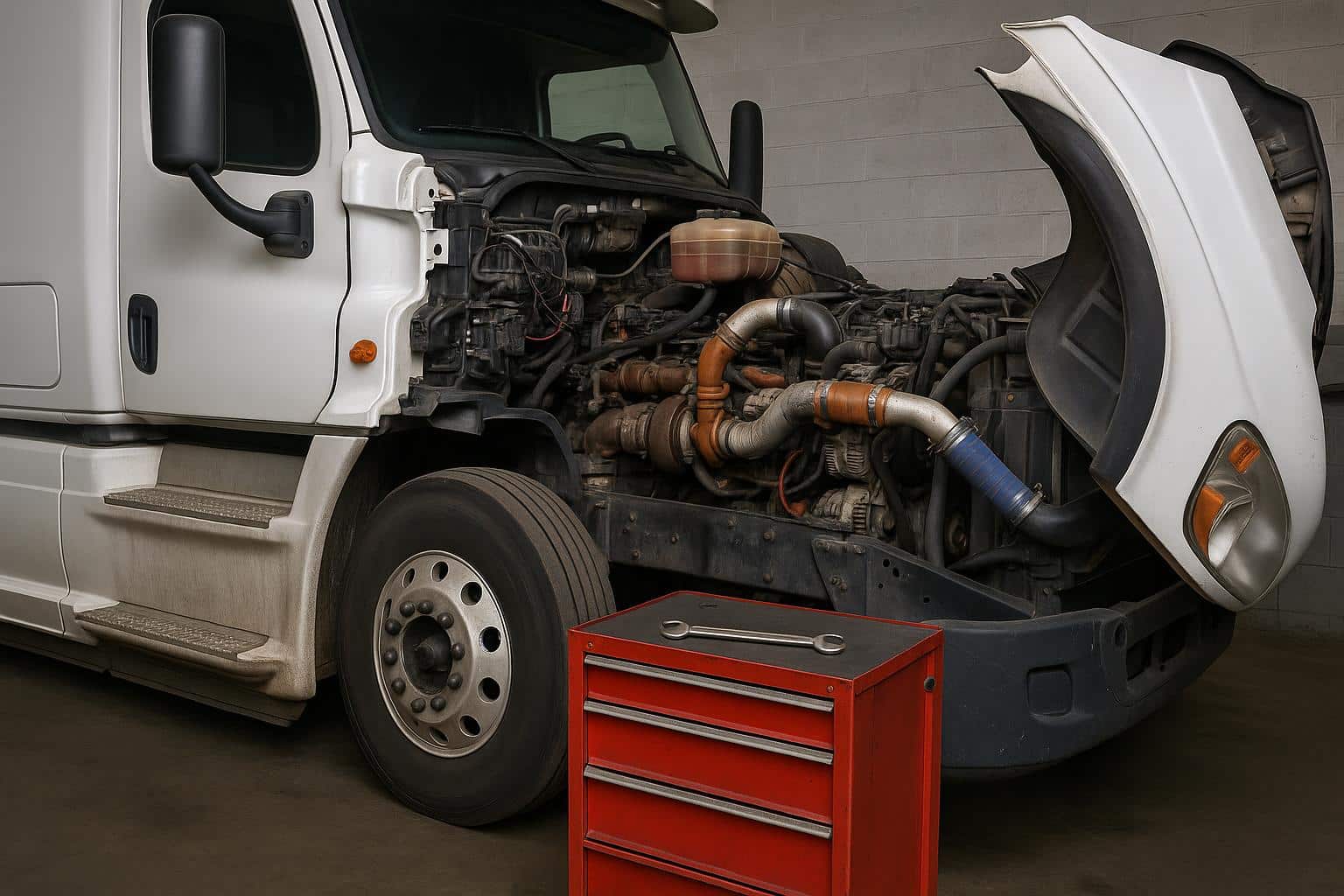
Knowing when to pull out the credit card—and when to walk away before a truck bankrupts you—is the real secret to staying in this business for the long haul.
1. Know Your Machine (Without the Tech Jargon)
Your rig is probably running a Cummins, Detroit, or PACCAR. You don’t need to be a master tech, but you should at least be able to point to the turbo, the radiator, and the DPF system without scratching your head. If you can’t talk the talk, some shops might try to walk all over your wallet.
2. The “Must-Fix” List: Don’t Cheap Out Here
Some issues are annoying; others are “catastrophic-failure-in-the-middle-of-I-4” serious. If these pop up, pay the man:
- The Cooling System: If your water pump is weeping or the radiator is acting up, stop driving. Diesel engines hate heat. A $500 cooling fix today saves you a $30,000 “melted engine” bill tomorrow.
- Fuel Injectors: If she’s idling rough or your MPG is tanking, your injectors are likely shot. It’s a sting upfront, but you’ll make that money back in fuel savings within months.
- The Turbo: If you lose that “whistle” and the truck feels sluggish, your turbo is crying for help. Catch it early, and you might just need a rebuild rather than a full replacement.
3. When to Throw in the Towel
There is a point where a truck stops being a tool and starts being a parasite.
If you’re staring down a cracked engine block or a warped head, you’re looking at “game over” territory for most older rigs. Also, if your truck has 800,000 miles and the “Check Engine” light has become a permanent interior decoration, it might be time to trade her in. Don’t fall in love with a machine that’s trying to go broke.
4. Pro-Tips for the New Guys
- Trust Your Gut (and Your Ears): You’ll learn the “song” your engine sings. If the rhythm changes—a new hiss, a weird vibration, or a puff of blue smoke—don’t ignore it. It won’t “fix itself” on the turnpike.
- Start a Paper Trail: Keep a notebook in the cab. Every oil change, every sensor swap, every weird noise. When you go to sell that truck, a stack of maintenance records is worth its weight in gold.
- Don’t Be Afraid to Look “Green”: If a mechanic explains something and it sounds like Swahili, ask him to show you on the truck. A good Orlando shop will appreciate a driver who actually cares about their equipment.
5. Finding Your “Go-To” Shop in Central Florida
Orlando is a massive freight hub, which means there are plenty of shops—but not all are created equal. You want a place that knows your specific brand (don’t take a specialized PACCAR to a guy who only touches Cats) and, ideally, offers roadside assistance. Because let’s face it: breakdowns never happen in the shop parking lot.
The Final Word: Knowing When to Hold ‘Em and When to Fold ‘Em
At the end of the day, being a successful driver in Orlando—or anywhere else—isn’t just about how well you can back into a tight dock at a Publix distribution center. It’s about asset management. Your truck is a mobile business office, and like any business, it has to turn a profit.
The “Golden Rule” of Repairs
If a repair costs less than three months of truck payments and keeps you on the road for another year, you do it. Every time. But if you find yourself sitting in a repair bay in Kissimmee for the third time in a month, staring at a bill that equals your take-home pay, it’s time for a cold, hard look at the numbers.
Don’t Let “Sunk Cost” Kill Your Career
New drivers often fall into the “Sunk Cost” trap. They think, “I just spent $5,000 on the transmission, so I HAVE to spend $8,000 on the top end of the engine.” Don’t throw good money after bad. Sometimes, the smartest move you can make is trading that rig in before it completely bottoms out.
Your Action Plan
- Prioritize Safety & Cooling: Never, ever compromise on things that can cause a fire, a wreck, or a seized motor.
- Watch the Data: If your fuel mileage drops by even 0.5 MPG, something is wrong. That’s thousands of dollars slipping out of your exhaust pipe every year.
- Find Your People: Build a relationship with a local Orlando shop before you have an emergency. A mechanic who knows your truck’s history is worth ten who don’t.
The Bottom Line: Take care of the iron, and the iron will take care of you. Stay proactive, keep your ears open for those “new” noises, and remember: it’s a lot cheaper to grease a chassis today than it is to repair a diesel engine tomorrow.
Keep the shiny side up and the greasy side down. See you out on I-4.

