


At a candid appearance inside NASA’s Jet Propulsion Laboratory, Ryan Gosling made clear that his latest spacefaring lead in Project Hail Mary is not the marble-jawed movie astronaut of old. He leans into fear, clumsiness, and goofy problem-solving—and he’s happier for it. Flanked by directors Phil Lord and Christopher Miller, screenwriter Drew Goddard, author Andy Weir, and veteran astronaut Kjell N. Lindgren, Gosling sketched a vision of a space hero built for the science-first realities of modern exploration.
A Movie Hero Without Stoic Armor or Space Clichés
Gosling’s turn as Dr. Ryland Grace—a microbiologist and former middle school teacher who wakes up 11.9 light-years from Earth with no memory—marks a pivot from his restrained portrayal of Neil Armstrong in First Man. Here, the performance embraces panic, humor, and vulnerability. Instead of jaw-clenching bravado, Grace fumbles through tasks, learns out loud, and wins not by grit alone but by curiosity and collaboration.
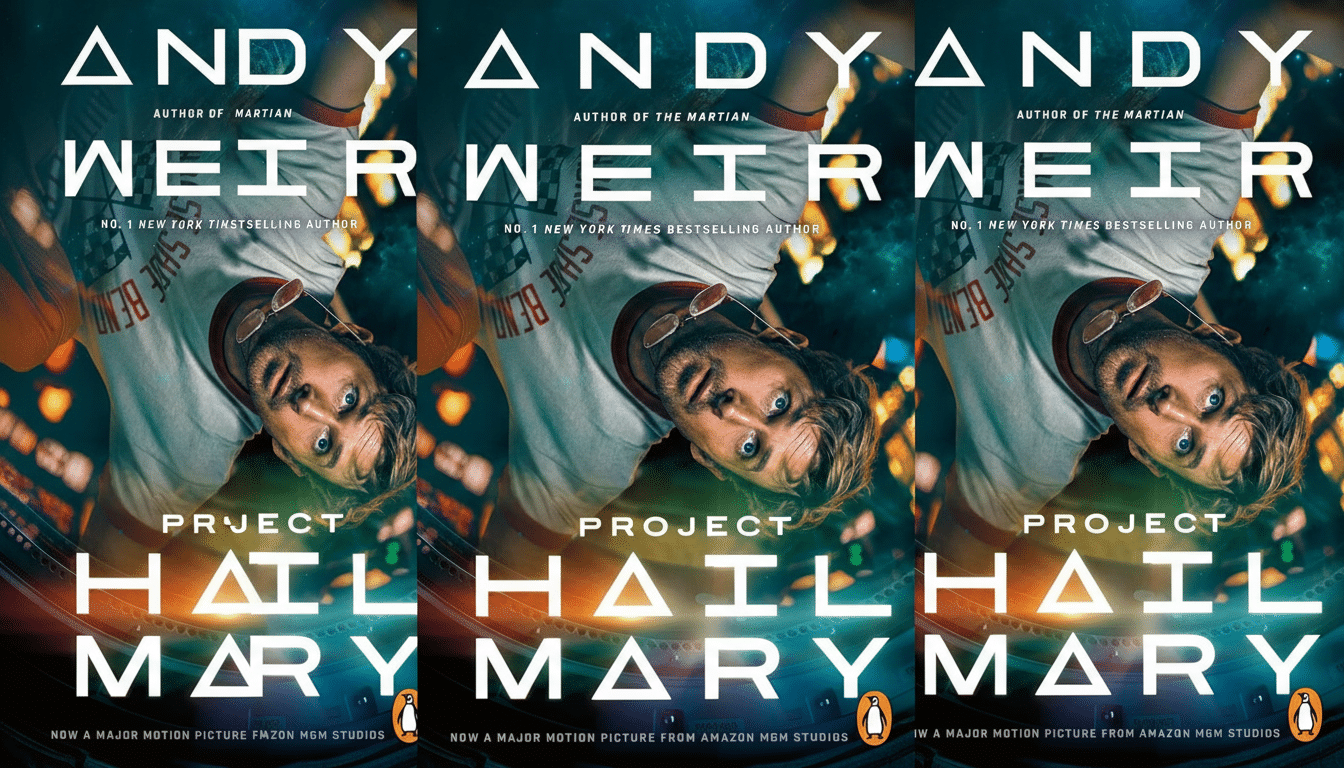
The film’s emotional spine is the alliance between Grace and Rocky, an alien engineer whose skill set complements Grace’s human ingenuity. Rather than a showdown, the pair dive into lab work, jury-rigged fixes, and late-night whiteboard sessions. The stakes—an interstellar organism known as Astrophage threatening a solar dimming event—are apocalyptic, yet the movie foregrounds the everyday mechanics of science: testing hypotheses, scrapping bad ideas, and iterating under pressure.
Making Space Feel Real With NASA’s Messy Truths
Lord and Miller didn’t want sleek fantasy; they wanted the texture of real missions. They tapped multiple NASA consultants, including Lindgren—now a deputy director at NASA’s Johnson Space Center—who has logged 311 days in orbit. His feedback was simple and invaluable: space is messy. In microgravity, tools drift, bodies ricochet, and even pros spend days recalibrating basic movement. Early footage of Gosling bouncing off bulkheads earned a knowing laugh from Lindgren, who called it spot on.
That unruly physicality matters. NASA’s Human Research Program has documented that most astronauts experience space adaptation challenges early on, and roughly 70% encounter motion-related symptoms as the inner ear adjusts. By weaving that awkwardness into action scenes, Project Hail Mary grounds its spectacle in the way spaceflight feels, not just the way it looks.
Andy Weir’s Science-First Playbook for Hail Mary
Weir’s storytelling has long favored plausibility over mystique, and he built Hail Mary’s bones with expert input. Conversations with Dr. James Green, NASA’s former chief scientist, and planetary specialists helped shape Rocky’s home world, Erid, to pass a planetary science sniff test. Even the premise of stars dimming wasn’t left to hand-waving: Weir learned that amateur astronomers—not large observatories pointed at distant galaxies—would likely spot local anomalies first. In other words, a citizen-science alert on a forum could beat an official bulletin.

That attention to process filters into the film’s set pieces. Grace and Rocky don’t win through a single eureka; they tinker. They run experiments, track failure modes, and build on small wins. There are no deus ex machina supercomputers; the heroes override clunky systems and live, at times, on ramen, chips, and stubbornness. It’s science-as-suspense, and it works because the rules feel consistent.
A Story Tuned to the Demands of the Artemis Era
Space cinema spent decades mythologizing test pilots who planted flags and flashed medals. Today’s missions are different. As NASA’s Artemis program gears up for deeper lunar operations and eventually Mars, the emphasis is on radiation mitigation, autonomous navigation, long-haul communications, and the psychology of isolation. Project Hail Mary mirrors that pivot: survival depends on systems engineering, cross-cultural collaboration—taken literally with Rocky—and the humility to course-correct.
Lord and Miller’s production choices echo the ethos inside NASA’s flight operations—discipline wrapped around teamwork. Lindgren’s presence in the creative loop helps the film avoid the trap of sterile perfection. Air bubbles form, cables float into the shot, and a moment’s inattention costs precious time. The small truths stack up, making the big bets—the alien ally, the cosmic threat—feel startlingly credible.
Why Gosling’s Pivot Matters for Modern Space Epics
Audiences have shown an appetite for science-literate adventure when it still delivers awe. Weir’s The Martian proved that with a global box-office run and a cascade of awards attention, buoyed by technical advisors who kept the math honest. Project Hail Mary follows that blueprint while refreshing the lead archetype: instead of ironclad stoicism, we get a human-scale problem solver whose best asset is intellectual flexibility.
That recalibration could ripple across blockbuster storytelling. Vulnerability reads as modern, and it opens space for humor and discovery without puncturing the danger. Gosling’s Grace is not a myth; he’s a capable scientist under duress, a partner who learns to speak across biology and culture. In an era chasing credible optimism, that’s the kind of hero who might actually save the day—and look like he’s having a liberating time doing it.

