


The U.S. Nuclear Regulatory Commission has approved TerraPower’s plan to build its first Natrium advanced nuclear reactor in Wyoming, clearing a pivotal regulatory hurdle for a technology designed to backstop a renewables-heavy grid. It is the NRC’s first such construction green light in nearly a decade and a landmark for nontraditional reactor designs.
Founded by Bill Gates and backed by investors including Nvidia, TerraPower is partnering with GE Hitachi Nuclear Energy on a 345 megawatt electric plant sited alongside a retiring coal facility. The Natrium system uses liquid sodium for cooling and integrates large-scale thermal storage—marking the first NRC approval of a commercial reactor that isn’t water-cooled in more than 40 years.
- What Was Approved and Why It Matters for the Grid
- Inside the Natrium Design and Safety Approach
- The Wyoming Coal-to-Nuclear Pivot at Kemmerer
- Fuel Supply and Timeline Risks for Natrium HALEU
- Capital Flows and the Advanced Nuclear Market Context
- Costs Still Loom Over the Sector Despite Innovation
- What to Watch Next as TerraPower Moves to Construction
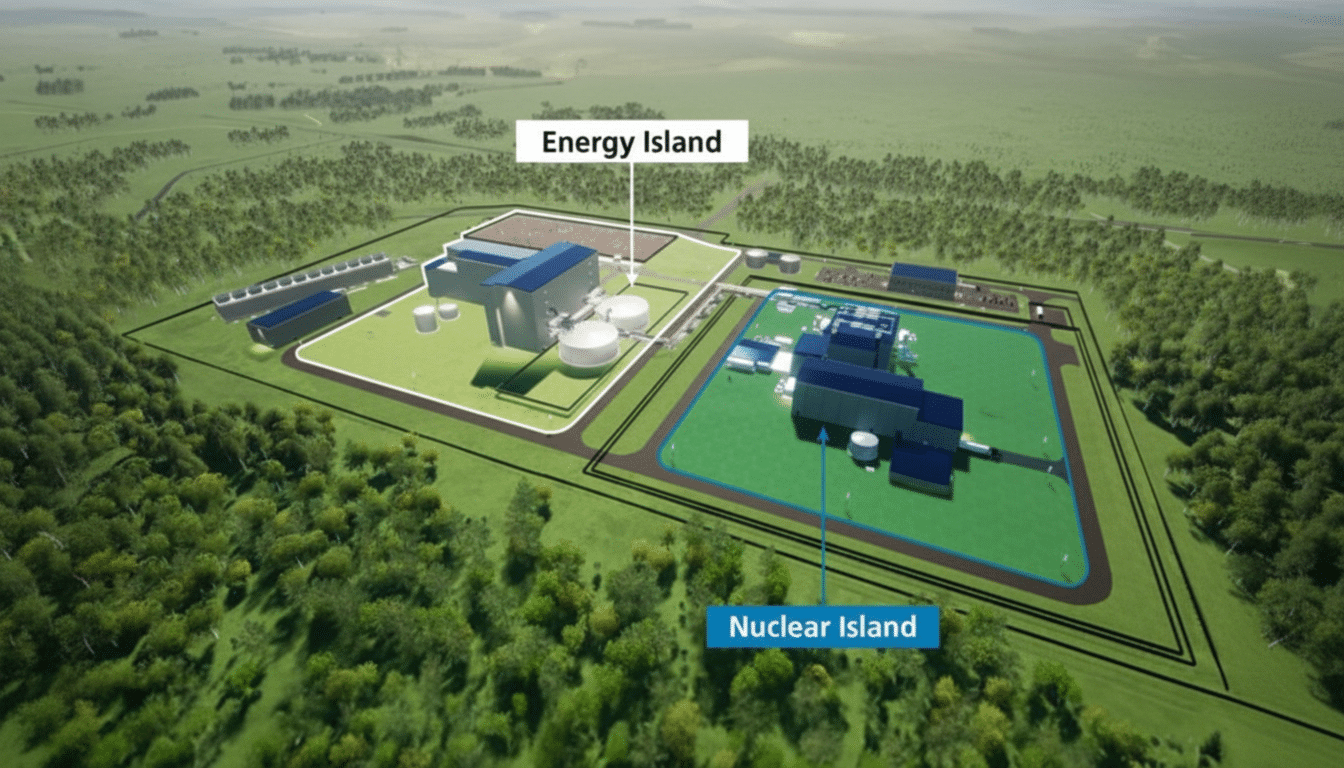
What Was Approved and Why It Matters for the Grid
The NRC’s decision follows its standard, private-land licensing pathway rather than a demonstration carve‑out on federal property. That distinction matters: it signals that advanced reactors can navigate the existing rulebook, setting precedent other developers can follow without relying on special federal-site arrangements.
For utilities and grid operators, approval at a retiring coal site showcases a replicable transition model—reuse interconnections, permitting footprints, and a skilled workforce—while adding firm, carbon-free capacity in regions integrating substantial wind and solar.
Inside the Natrium Design and Safety Approach
Natrium is a sodium-cooled fast reactor that operates at low pressure, enabling efficient heat removal and passive safety characteristics. Because metallic sodium reacts with water and air, the design uses sealed loops and an intermediate heat exchanger to isolate the reactor from the power cycle.
A defining feature is its thermal storage: excess heat is banked in a large molten-salt tank, decoupling steady reactor output from electricity generation. TerraPower says the plant can flex from its 345 MW baseline to roughly 500 MW for several hours, smoothing wind and solar variability and covering data center and evening peaks without firing gas.
The Wyoming Coal-to-Nuclear Pivot at Kemmerer
The project is planned near Kemmerer at PacifiCorp’s Naughton site, leveraging existing transmission and industrial land. Local officials expect significant construction employment—on the order of thousands at peak—and a few hundred long-term operating roles, helping stabilize a community transitioning from coal.
PacifiCorp has explored additional advanced nuclear deployments at other retiring coal facilities in its service territory. If the first unit stays on track, it could anchor a fleet strategy that replaces multiple coal units over the next decade with firm, dispatchable nuclear-plus-storage.
Fuel Supply and Timeline Risks for Natrium HALEU
Natrium will run on high‑assay, low‑enriched uranium (HALEU), enriched to between 5% and 20% U‑235. Russia has dominated global HALEU supply, creating a bottleneck for U.S. projects. The Department of Energy’s HALEU Availability Program and initial output from Centrus Energy’s demonstration cascade in Ohio are steps toward domestic supply, but near‑term volumes remain tight.
TerraPower has previously flagged schedule pressure tied to HALEU and first‑of‑a‑kind components. The company still faces complex milestones—final design maturation, long‑lead equipment procurement, nuclear‑grade construction, and startup testing—all under NRC oversight.
Capital Flows and the Advanced Nuclear Market Context
Advanced nuclear is enjoying a funding tailwind. Investors have committed well over $1 billion to the sector in recent months, and TerraPower has raised $1.7 billion in total, including a $650 million round reported by PitchBook. Peer developers include X‑energy, Oklo, and Kairos Power, each targeting different reactor classes and customer segments.
On the demand side, U.S. nuclear plants post capacity factors above 90%, according to the Energy Information Administration, a premium for grids coping with rising data center load and electrification. Firm, clean capacity capable of fast ramping can monetize capacity, energy, and ancillary services that intermittent resources alone cannot reliably supply.
Costs Still Loom Over the Sector Despite Innovation
New nuclear remains expensive and execution‑sensitive. Georgia’s Vogtle expansion arrived years late and billions over plan, underscoring the stakes. Advanced designs aim to avoid those pitfalls through smaller footprints, factory fabrication, and repeatable construction, but learning curves typically require multiple identical builds over many years, as studies by the Department of Energy and the Electric Power Research Institute have shown.
Natrium’s hybrid approach—steady reactor heat paired with thermal storage—targets lower levelized costs by running the reactor near full power while selling premium peak electricity. Proving that economic thesis at utility scale will be as consequential as any technical milestone.
What to Watch Next as TerraPower Moves to Construction
Key checkpoints include site grading, placement of nuclear‑quality concrete, fabrication of sodium and salt systems, and HALEU contracting. Commercially, an offtake structure with PacifiCorp and potential replications at retiring coal sites will be bellwethers.
If TerraPower delivers on schedule, fuel supply, and cost, the Wyoming build could become the reference case U.S. advanced nuclear has lacked—opening a path to scale just as the grid’s need for clean, round‑the‑clock power accelerates.

