


Netflix is raising monthly rates across key tiers, confirming new prices for U.S. members that push the ad-free Standard plan to $19.99 and the Premium plan to $26.99. The company is also tweaking fees for adding extra viewers outside a household, with add-on pricing now set at $6.99 for the ad-supported tier and $9.99 for ad-free subscriptions. The change was first spotted by industry trackers at Android Authority and acknowledged by Netflix.
What Changes For Each Plan, Including Extra Member Fees
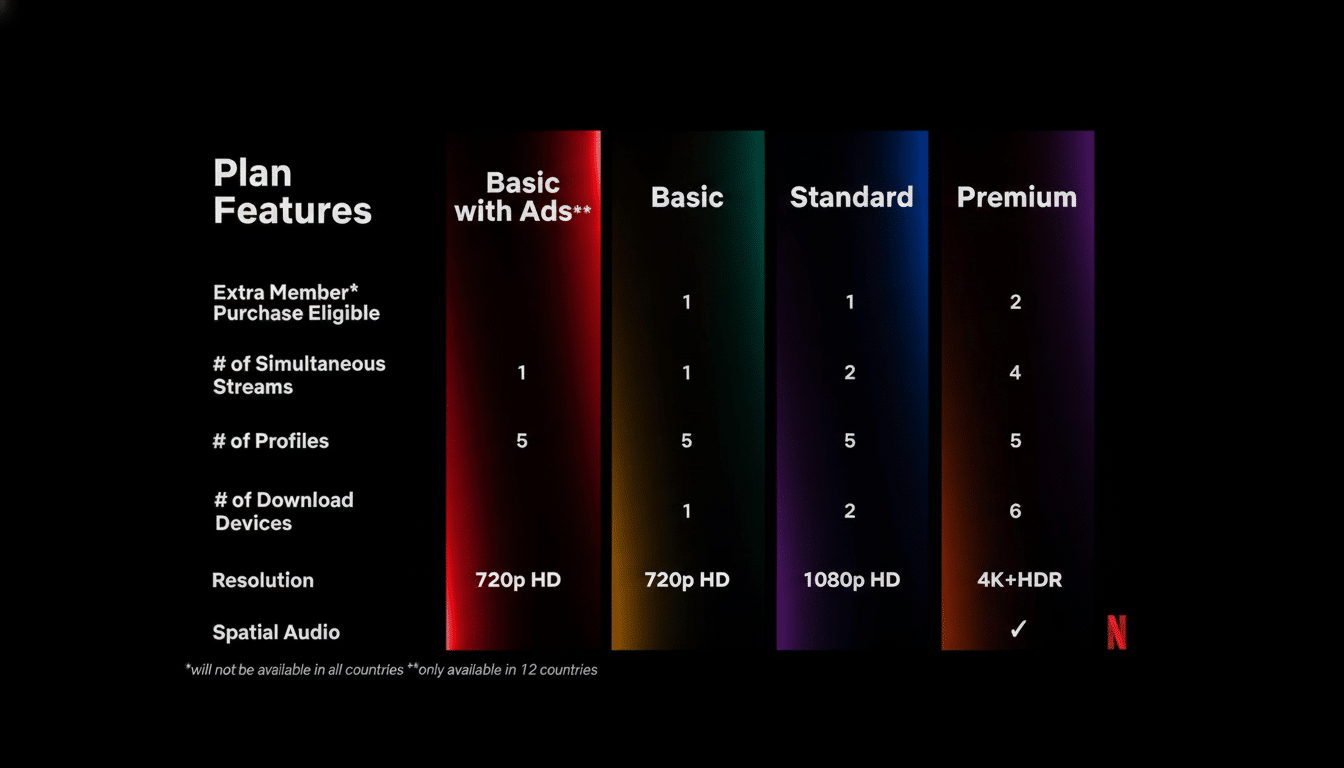
The ad-free Standard plan climbs by $2 to $19.99, marking roughly an 11% rise from the previous $17.99. Premium, which includes 4K streaming and more simultaneous devices, also increases by $2 to $26.99. These two tiers anchor Netflix’s ad-free offering and are the most popular among households that want higher resolution and broader device flexibility.

Extra-member pricing, the fee households pay to add someone outside their primary residence, now diverges by plan. Netflix lists $6.99 for add-ons with the ad-supported tier and $9.99 for add-ons on ad-free plans. Previously, the add-on fee structure was more uniform; the new split underscores Netflix’s push to align household sharing with each tier’s economics and nudge heavier users toward its higher-value, ad-free options.
How The New Rates Roll Out For New And Existing Members
New sign-ups will see the updated prices immediately. Existing subscribers will transition over the coming weeks, with Netflix saying it will notify members by email at least 30 days before the higher rate takes effect. That advance notice has become standard practice as the company staggers billing changes across its large member base.
Why Netflix Is Raising Prices Across Key Subscription Tiers
Two forces are at work: more to watch and more ways to watch. Netflix has broadened beyond traditional on-demand series and films into live events and experiments like video podcasts, while also revamping its mobile app and expanding short-form highlights to keep members engaged between marquee releases. These product and content bets add ongoing costs that price adjustments help fund.
On recent earnings calls, executives have signaled a return to a “normal” pricing cadence after a period of intense product and plan restructuring, including the crackdown on out-of-household sharing and the expansion of Netflix’s ad-supported tier. Analysts at firms like MoffettNathanson and Ampere Analysis have noted that price increases remain the most direct lever for boosting average revenue per membership in mature markets, especially as acquisition growth moderates.
Competition and licensing dynamics also matter. Industry-wide, streamers have been resetting prices to reflect higher content costs and the shift from growth-at-all-costs to profitability. Netflix’s decision to walk away from a high-profile pursuit of Warner Bros. Discovery, after declining to raise its all-cash bid, suggests the company is prioritizing disciplined spending while leaning on pricing and engagement to drive revenue.
What It Means For Subscribers Choosing Among Plans
For households on Standard or Premium, the $2 monthly bump will be felt most by longtime subscribers who have already absorbed multiple rounds of increases. Members who want to trim bills without canceling may consider moving to the ad-supported tier, consolidating profiles under one roof rather than paying for extra members, or pausing between must-watch releases—a pattern measurement firms like Antenna have tracked as “churn-and-return” across the streaming sector.
For power users, Premium’s 4K streams, expanded downloads, and multi-device support still represent Netflix’s richest feature set. If the extra-member fee stacks up, upgrading the core plan rather than adding out-of-household seats may pencil out, particularly for families with multiple 4K screens.
The Bigger Streaming Picture And Market Implications
Netflix, with a global base exceeding 260 million members according to recent company disclosures, remains the scale leader. That reach gives it unusual pricing power, but also outsized expectations: consistent hit-making, reliable app performance, and increasingly, live tentpoles that can galvanize culture. Research from Nielsen and Kantar has shown that when streamers raise prices, some subscribers rotate to ad tiers or cancel temporarily—behavior Netflix has been countering with new formats, more live moments, and a growing slate catering to local tastes worldwide.
Price hikes are never popular, but they are now a predictable fixture of the streaming economy. Netflix’s latest move reinforces a simple trend line: as platforms aim for durable profits and broader content portfolios, the monthly bill inches up. The company’s bet is that its catalog depth, product polish, and steady drumbeat of buzzy releases will convince most subscribers to stay put—even as the competition for attention, and dollars, intensifies.

