


Louis Theroux returns to familiar but newly urgent territory in Netflix’s Inside the Manosphere, a disquieting tour of the online subculture selling young men a cocktail of swagger, grievance, and monetized self-help. It’s an uncomfortable watch by design, and that discomfort is precisely why it works: the film forces viewers to reckon with how quickly provocative talking points become profitable business models.
What Theroux Finds Behind the Alpha Posturing
Theroux embeds with a clutch of influencers who orbit the manosphere’s biggest names, moving from raucous livestreams in Spanish party hubs to high-rise tours in Miami. The itinerary includes a friend of the Tate brothers, Justin Waller; Fresh and Fit host Myron Gaines; content creator Sneako; and British streamer Harrison “HS TikkyTokky” Sullivan. What links them isn’t only ideology but a shared fluency in the attention economy: incendiary clips, brisk calls to action, and a relentless promise that manliness can be reverse-engineered for a fee.
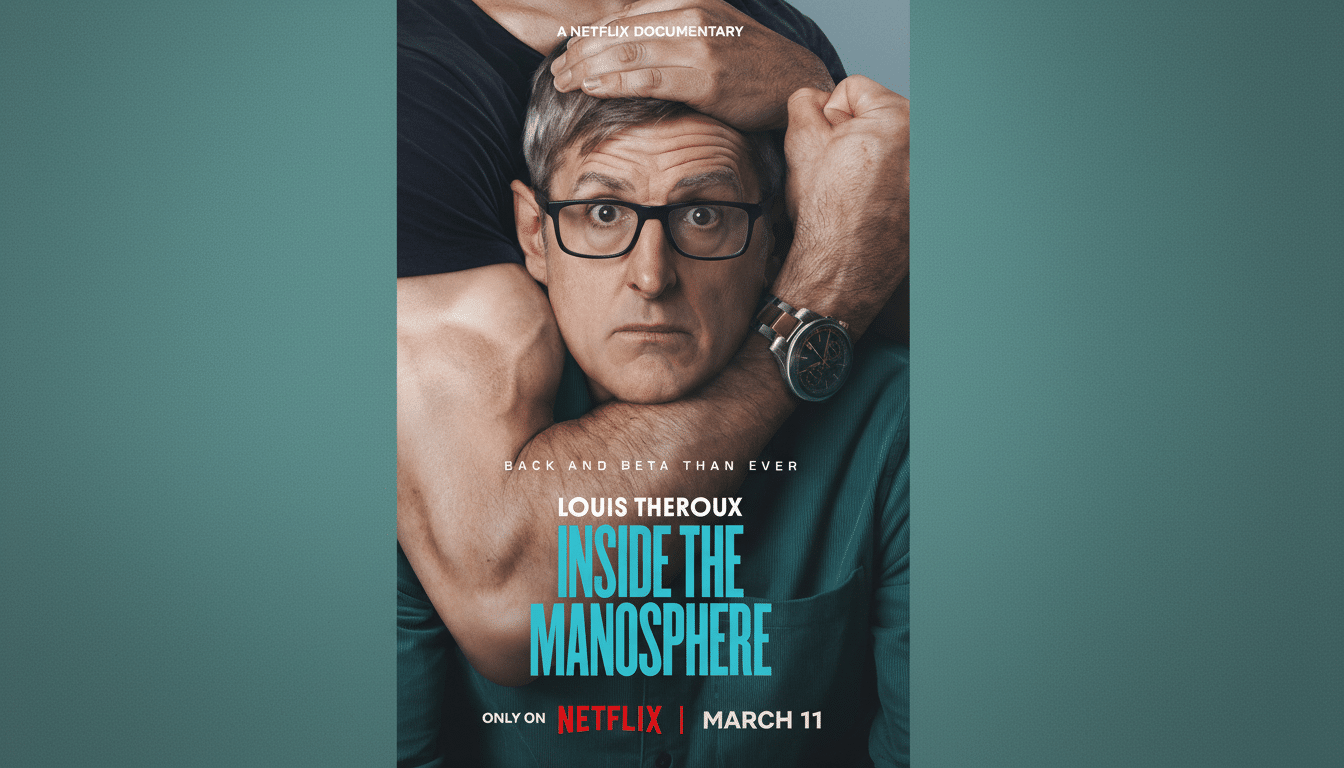
Theroux’s method is classic: disarm with politeness, ask the obvious question others tiptoe around, wait out the awkward silence. The result is revealing rather than explosive. The more these creators talk, the more the rhetorical edifice looks like a storefront—blunt takes as loss leaders for courses, Patreon tiers, affiliate links, and “exclusive” communities.
The Profit Engine Disguised as Self-Help Advice
Money is the documentary’s real throughline. Sullivan, who marshals a Telegram following in the hundreds of thousands, funnels viewers toward financial apps and models’ pages, unapologetically framing moral qualms as the cost of doing business. Gaines books women on his show while deriding them, a friction that reliably generates clips and Super Chats. Waller, meanwhile, touts subscriptions to the Tate-affiliated program The Real World at a recurring monthly rate, a familiar upsell in the creator economy.
The pattern is textbook funnel marketing: aspirational imagery up top, sharp-elbowed gender politics in the middle, and a monetized “solution” at the bottom. OnlyFans, which reports well over 200 million registered users, floats in and out of frame as both a moral punching bag and a revenue lever—evidence of a movement comfortable critiquing systems it simultaneously exploits.
Platforming or Spotlighting: The Ethical Trade-Off
Theroux doesn’t dodge the ethical trapdoor. In one late exchange, a subject’s mother challenges him on whether his film amplifies what it aims to scrutinize. The question lands because it’s the same one many viewers bring to this genre. Theroux’s reply is more structural than self-justifying: these ecosystems already command vast reach; sunlight, at minimum, lets audiences see the machinery instead of the myth.
The film’s editorial choices back that up. There’s no soaring score to glamorize the hustle, and little attempt to sand down contradictions. Viewers sit with the cognitive dissonance of men calling for “traditional values” while championing one-way monogamy, or denigrating sex work while profiting from it. The effect is cumulative rather than didactic.

The Wider Context of Online Influence and Why It Matters
Outside the documentary frame, the audience pipeline is real. Pew Research Center reports that 95% of U.S. teens use YouTube and roughly 67% use TikTok, platforms where short-form, performative certainty thrives. The Anti-Defamation League’s 2023 survey found 52% of Americans experienced online harassment, with women and marginalized groups reporting disproportionate abuse—conditions that make misogynistic narratives both visible and viral.
Researchers at the Institute for Strategic Dialogue and the Center for Countering Digital Hate have mapped how manosphere content hopscotches across platforms, evading moderation through coded language, reaction videos, and affiliate networks. That cross-platform resilience explains why the genre endures despite periodic bans: ideologies that double as income streams are stubbornly adaptive.
Theroux’s Craft and the Gaps Left Unexplored
Theroux’s strength remains his unshowy presence. He gives subjects space to perform themselves into self-exposure, a tactic that yields telling moments—especially when profit motives surface unvarnished. Still, the film might have benefited from more voices outside the influencer bubble: educators, clinicians, or the everyday young men who cycle in and out of these communities. Brief nods to mothers and partners hint at the collateral, but the human cost could bear even closer scrutiny.
Cinematography and pacing are purposeful: neon nightlife and glass-and-steel apartments become recurring motifs, visual shorthand for the aspirational bait. The edit resists viral spectacle, privileging context over clickbait, which feels like a quiet rebuttal to the very economy it depicts.
Verdict: A Chilling, Clear Look at a Profitable Ideology
Inside the Manosphere is not pleasant viewing, and that’s the point. It is a lucid, at times chilling, account of how grievance can be packaged, priced, and shipped at scale. Theroux doesn’t deliver a grand unmasking so much as a ledger: on one side, the rhetoric of rescuing lost boys; on the other, the recurring revenue that keeps the lights on. For parents, educators, and platforms alike, the message is clear—ignore this economy at your peril.

