


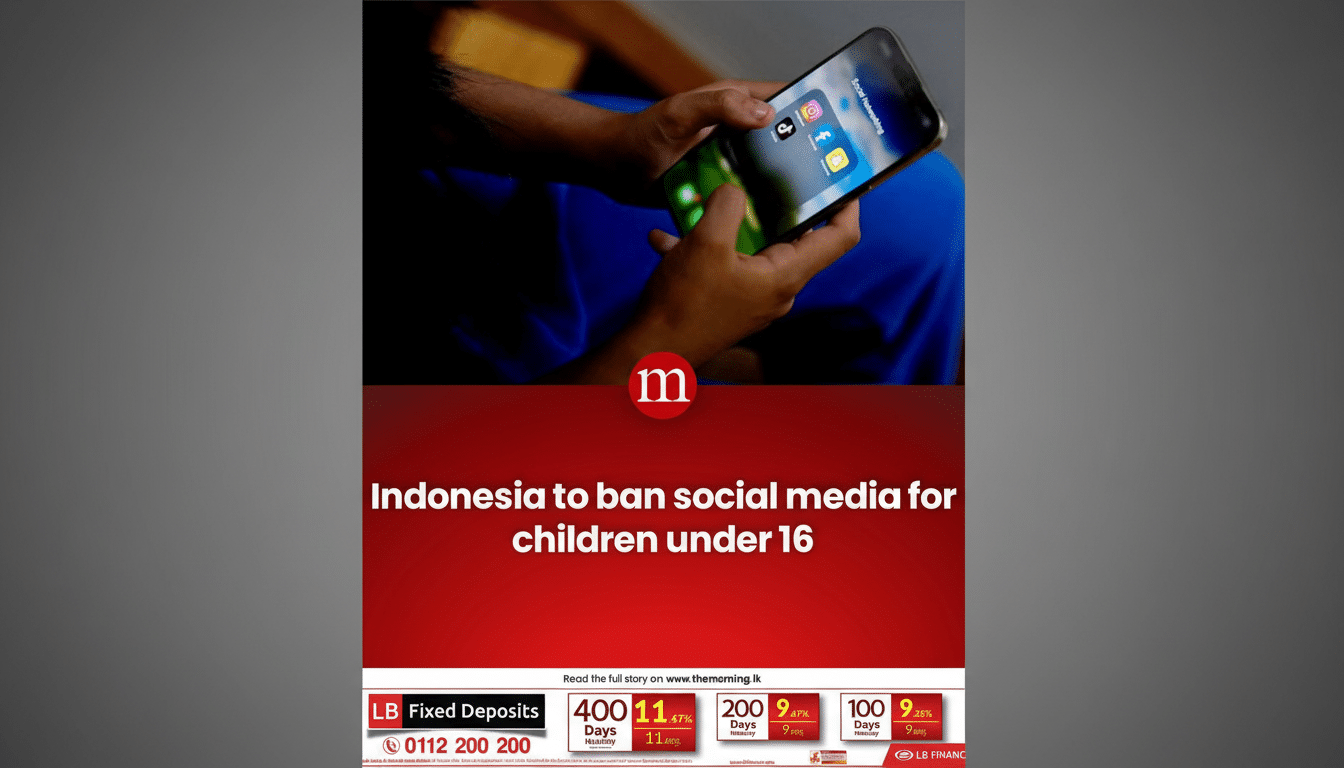
Indonesia has moved to bar anyone under 16 from using social media, a sweeping child-safety measure that will force major platforms to shut down underage accounts and rethink how they verify users. The policy, announced by Minister of Communication and Digital Affairs Meutya Hafid, is framed as a response to escalating risks for minors online, including eXposure to pornography, cyberbullying, scams, and compulsive use.
What The Nationwide Social Media Ban Covers And Why
Officials say the prohibition applies to “high-risk” platforms where minors are most likely to encounter harmful content or predatory behavior. Early examples named by the ministry include X, YouTube, Facebook, Instagram, Threads, Roblox, and livestreaming app Bigo Live. Children’s accounts on these services are slated for deactivation, with new sign-ups barred for users under the age threshold.

The government’s rationale mirrors concerns raised by pediatric and public-health experts worldwide. Indonesia’s child-protection authorities have repeatedly flagged online sexual exploitation, harassment, and fraud targeting teens, while school counselors report a rise in sleep disruption and anxiety linked to endless feeds and algorithmic recommendations. The ministry’s message is blunt: the harms have outpaced existing safeguards.
How Enforcement Could Work Across Major Platforms
Precise implementation details are still emerging. Regulators indicated platforms will be instructed to identify and deactivate underage accounts and to prevent new ones from being created. That typically requires more rigorous age checks, such as document verification or AI-assisted age estimation, and tighter parental controls where teens are allowed.
Indonesia has the regulatory tools to compel compliance. Under its Private Electronic System (PSE) rules, the government can order platforms to register locally, hand over certain data upon lawful request, and comply with takedown orders—authorities have used these powers before, temporarily restricting services that failed to meet requirements. Industry sources expect similar leverage to be applied here, including potential service throttling or fines for noncompliance.
The move also follows fresh assertiveness in the tech sector, such as the recent decision to lift restrictions on an AI chatbot after additional safety checks. Together, these steps signal a broader push to harden guardrails across Indonesia’s digital ecosystem.
The Scale And Risks Behind The Policy Change
The scope is vast. Indonesia is one of the world’s largest internet markets, with the national internet association APJII estimating well over 200 million users. Many are young, mobile-first, and active on gaming and video platforms—precisely the spaces the ban targets.
Research underscores both the need for action and the complexity of getting it right. The US Surgeon General has warned that social media can pose real risks to adolescent mental health, while academics at the Oxford Internet Institute have noted that average, population-level effects on well-being appear small and highly variable. UNICEF has cautioned that blanket restrictions can inadvertently push teens to use covert accounts or unsupervised channels unless paired with digital literacy and strong family support.
Practical hurdles loom. Shared devices, prepaid SIMs, and informal account sharing can frustrate age checks. Overbroad filters may also sweep up legitimate educational or creative content. Local digital rights group SAFEnet has previously warned that aggressive content enforcement can overblock and chill expression if transparency and redress mechanisms are weak.
Global Moves On Youth Social Media And Safety Laws
Indonesia’s decision closely tracks a similar ban announced in Australia and arrives amid a worldwide reset on youth online safety. The UK’s Online Safety Act compels platforms to assess and mitigate risks to minors, while US states have pursued age-verification and parental-consent laws. In the EU, the Digital Services Act requires large platforms to minimize systemic risks, including those affecting children.
Platforms are responding with new teen safety tools—defaulting young users into more private settings, curbing late-night notifications, and restricting algorithmic recommendations. Meta, Google, and other large players have touted expanded parental supervision dashboards. Whether these measures satisfy Indonesia’s stricter threshold remains to be seen.
What Comes Next For Families And Platforms
Expect a rapid phase of technical guidance from regulators, followed by compliance deadlines and audits. Key questions include how platforms will verify age, whether educational or health-related content gets special handling, and what appeals process exists if accounts of older teens are mistakenly removed.
For parents and schools, the policy will likely accelerate conversations about screen time, device access, and alternatives to social media. Child-safety advocates emphasize pairing restrictions with digital literacy programs and clear reporting pathways for abuse. Indonesia’s child protection commission and civil society groups can play a pivotal role in monitoring outcomes and flagging unintended consequences.
The message from Jakarta is unambiguous: platforms must prove they can protect young users—or lose access to them. How effectively industry adapts, and how carefully the policy is calibrated in practice, will determine whether the ban reduces harm without driving teens into darker corners of the internet.

