


Twenty years ago, many Veterans who struggled with alcohol or drug use ran into the same roadblocks: limited access to evidence-based medications, long wait times, stigma around “asking for help,” and a system that often treated addiction separately from PTSD, depression, chronic pain, or sleep problems.
Today, the landscape looks very different. While gaps still exist, Veteran addiction care has shifted toward faster access, more choice, and more evidence-based tools, especially for opioid use disorder.
- From “willpower” to evidence-based medicine
- Treatment is more integrated with mental health and trauma care
- More levels of care, and clearer coverage through TRICARE
- More access outside the VA through Community Care
- Telehealth has moved from “nice-to-have” to core access
- More harm reduction and overdose prevention support
- What this means if you are a Veteran seeking help now
- Ready to use your benefits to take the next step?
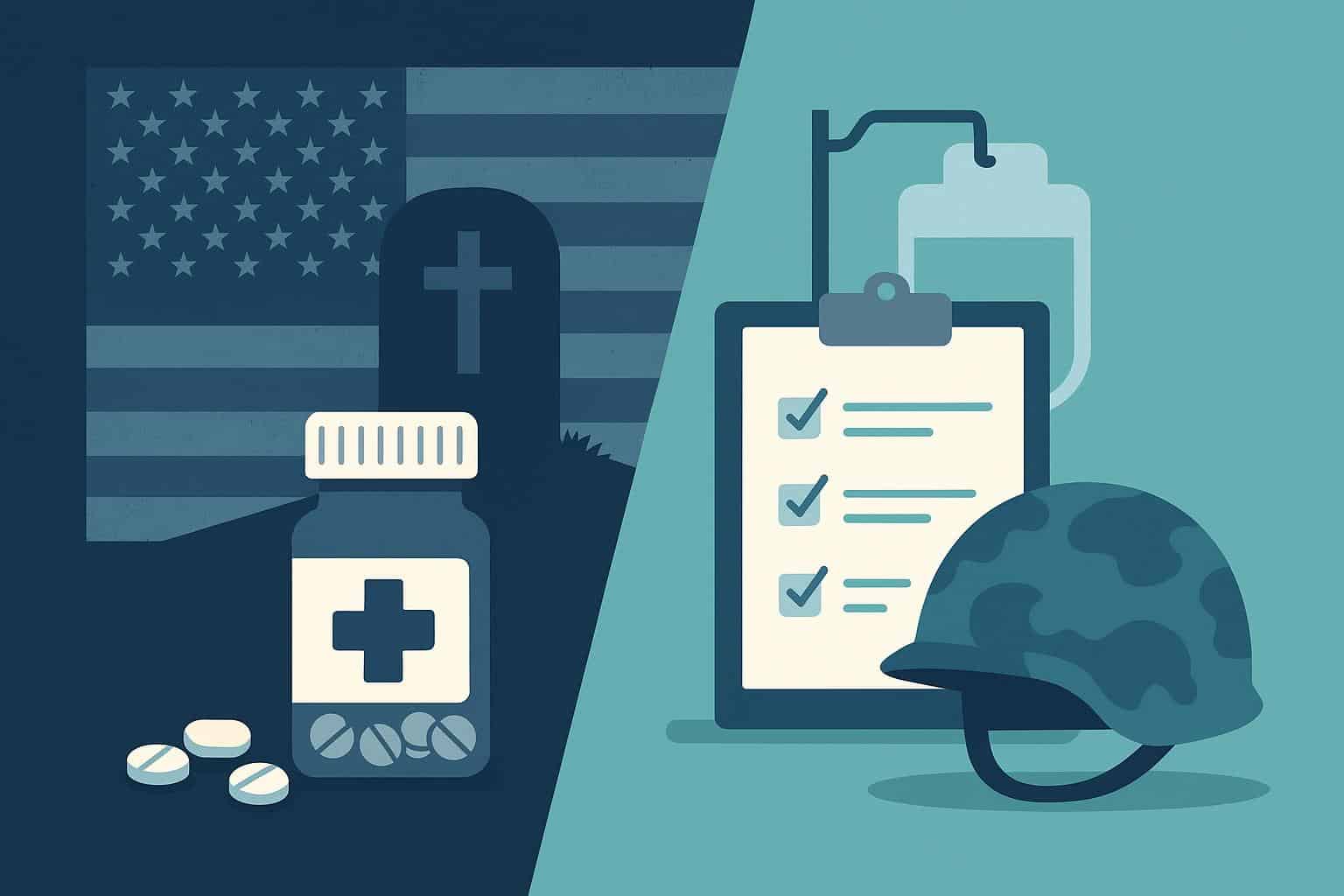
From “willpower” to evidence-based medicine
One of the biggest changes has been the mainstream acceptance of medications for opioid use disorder (MOUD) as a standard of care, not a backup plan. The VA now explicitly emphasizes that it offers life-saving, evidence-based medications for opioid use disorder and makes them available through VA medical centers and clinics.
This reflects a broader shift in clinical thinking: opioid addiction is treated as a medical condition where medications can reduce cravings, stabilize brain chemistry, and lower overdose risk when paired with counseling and recovery supports.
Treatment is more integrated with mental health and trauma care
Veteran treatment has increasingly moved away from siloed care. Over the last two decades, more programs have focused on co-occurring conditions like PTSD, anxiety, depression, and chronic pain because these often fuel relapse and make recovery harder when untreated.
Practically, this has meant more integrated screening, coordinated care plans, and “whole-person” approaches that address both substance use and mental health in the same treatment pathway, rather than bouncing a Veteran between disconnected services.
More levels of care, and clearer coverage through TRICARE
Insurance coverage has also evolved to better support a full continuum of care. TRICARE outlines that it may cover a range of substance use disorder services, including detoxification, inpatient services, intensive outpatient programs (IOP), partial hospitalization programs (PHP), medication-assisted treatment, opioid treatment programs, and office-based opioid treatment, as long as care is medically necessary and proven.
That broader menu matters because Veterans’ needs vary. Some need detox and structured residential care. Others need outpatient treatment that works around jobs, school, or family responsibilities.
If you are looking for a starting point to understand how TRICARE may apply to addiction treatment, this overview is useful: https://riveroakstreatment.com/addiction-recovery-tampa/payment-options/insurance/tricare/.
More access outside the VA through Community Care
A major shift in the last decade has been expanded access to community providers when VA care isn’t available quickly enough or close enough. Under the VA MISSION Act, eligibility rules for community care expanded, with updated criteria effective June 6, 2019.
This change gave many Veterans more practical options to receive care in the community (when authorized), which can be critical for timely admissions, specialized programs, or distance barriers.
Telehealth has moved from “nice-to-have” to core access
Telehealth is another area where Veteran addiction treatment has transformed. The VA began distributing video-enabled tablets to Veterans with access barriers in 2016, and this effort expanded during the COVID-19 pandemic to support home-based care, including substance use disorder services.
VA reporting also highlights how telehealth helped keep Veterans on track in treatment for opioid use disorder during the pandemic.
On the regulatory side, telemedicine prescribing flexibilities for controlled medications were extended through December 31, 2026, supporting continued access to care in situations where telehealth is appropriate.
More harm reduction and overdose prevention support
While abstinence-based recovery remains a goal for many, systems have increasingly recognized that saving lives comes first. The VA encourages Veterans who use opioids to talk with providers about naloxone, the overdose reversal medication.
This reflects a broader emphasis on overdose prevention, education, and safety planning as part of treatment, especially in an era where fentanyl exposure can be unpredictable.
What this means if you are a Veteran seeking help now
Compared to 20 years ago, Veterans today are more likely to find:
- Evidence-based medications as a standard option for opioid addiction
- More covered levels of care under TRICARE (including detox, IOP/PHP, and MAT)
- More care access pathways, including VA Community Care under the MISSION Act
- Telehealth support that reduces travel and access barriers
Ready to use your benefits to take the next step?
If you or someone you love is trying to navigate Veteran addiction treatment today, the fastest move is often to confirm three things: the recommended level of care (detox, inpatient, outpatient), whether prior authorization is needed, and whether a provider is in-network. Want a simple starting point for TRICARE-related questions? Review this TRICARE insurance overview and use it as a benefits checklist.

