


Digital infrastructure is evolving rapidly. A decade ago, Cat5e cabling supported most office needs without difficulty. Today, networks power surveillance cameras, wireless access points, smart lighting, access control systems, and a growing ecosystem of IoT devices. At the same time, Power over Ethernet is no longer optional. It has become central to modern building design.
IT managers often face a crucial decision when choosing a dependable Ethernet cable: should they keep their existing Cat5e infrastructure or upgrade to Cat6a?
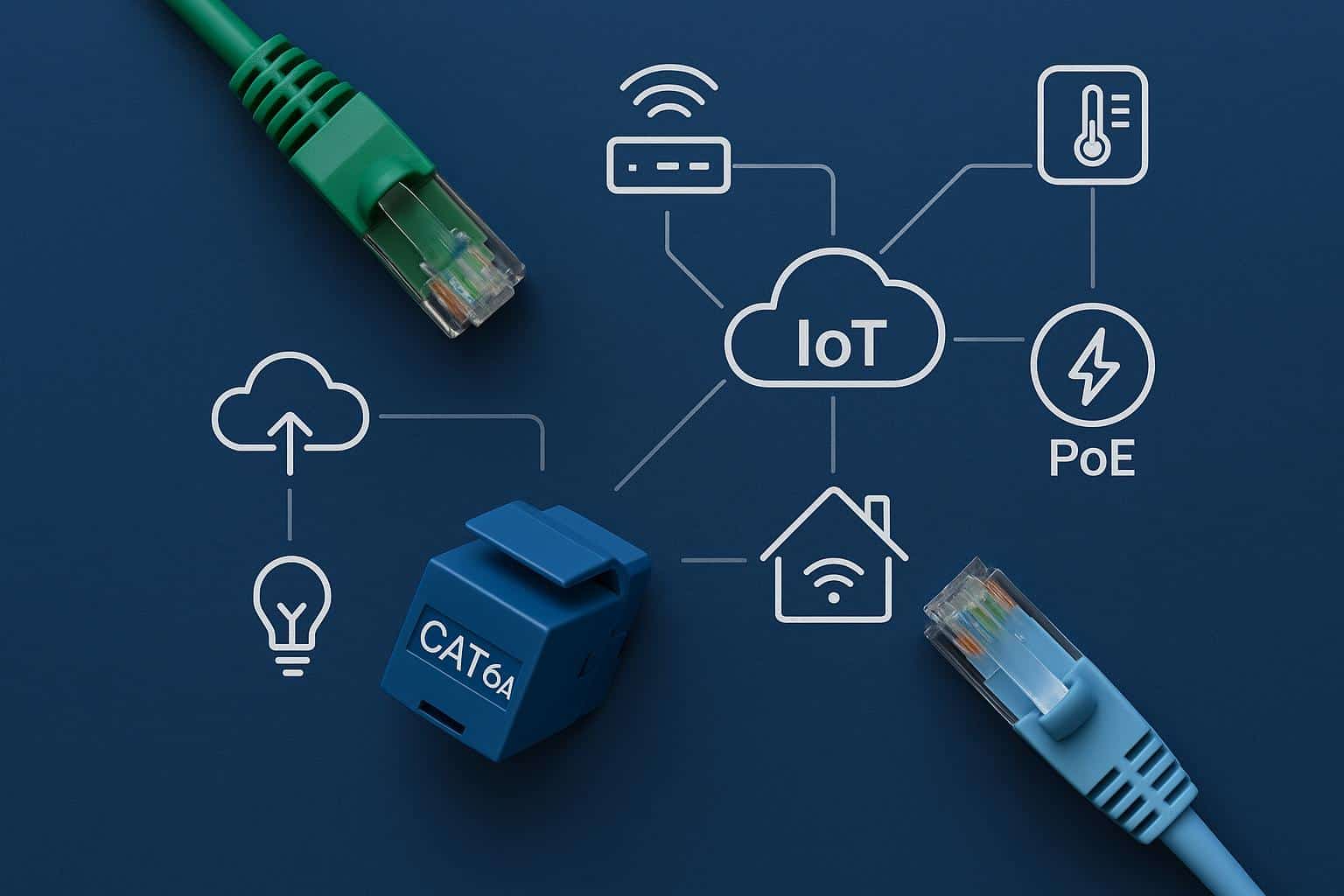
Future-proofing is not about buying the newest product on the market. It is about preparing for higher bandwidth, greater power delivery, and long-term reliability.
The Rise of Bandwidth
Commercial networks carry far more traffic than they did in the past. High-resolution security cameras stream continuous 4K footage. Cloud-managed wireless systems connect dozens of endpoints to each access point. Smart lighting systems respond instantly to occupancy sensors. Environmental monitors send constant data to centralized dashboards.
A single 4K IP camera may require between 15 and 25 Mbps, depending on configuration. Multiply that across multiple floors, and traffic levels increase quickly. Add cloud backups, remote collaboration tools, and server synchronization, and the network rarely rests.
This steady load exposes weaknesses in older cabling. Packet loss, latency spikes, and inconsistent throughput begin to appear when infrastructure operates near its limits.
Understanding Cable Categories
Cable category determines how much data a network can transmit and how well it can resist interference. The differences matter more as traffic density increases.
Cat5e Ethernet Cable
Cat5e supports speeds up to 1 Gbps at 350 MHz over distances up to 50 meters. It was once the standard choice for office environments. For basic browsing and light file sharing, it still performs adequately. However, it was not designed for sustained 10 Gigabit traffic or high-wattage PoE delivery. Under heavy loads, performance margins shrink.
Cat6 Ethernet Cable
Cat6 increases bandwidth to 550 MHz. It can support 10 Gbps, but typically only over shorter distances of 50 meters. Improved internal twisting reduces crosstalk compared to Cat5e. For mid-sized deployments, it offers better headroom. Yet when cable runs approach maximum length and power demands rise, limitations may surface.
Cat6a Ethernet Cable
A Cat6a Ethernet cable supports 10 Gbps up to 100 meters at 750 MHz. It features tighter construction and better shielding against alien crosstalk. Larger conductor sizes help manage heat during high-power transmission. In dense IoT and PoE environments, this extra margin provides measurable stability.
Upgrading is not always about immediate speed gains. It is about maintaining consistent performance as device counts and power requirements increase.
PoE and Thermal Performance
Power over Ethernet allows cables to deliver both data and electrical power. Modern PoE standards can supply up to 90 watts per port. PoE supports devices such as security cameras, advanced wireless access points, and digital signage displays.
Electrical current passing through copper conductors generates heat. When many PoE cables are bundled together in ceilings or conduits, internal temperature can rise. Higher temperatures increase insertion loss and may reduce signal quality.
Lower-grade cables often use thinner conductors or inconsistent copper composition, which increases resistance and heat buildup. Over time, insulation may degrade faster.
Higher category Ethernet Cables typically use thicker conductors and better insulation materials. These characteristics help control temperature rise and preserve signal integrity over the full channel distance.
Thermal management is not theoretical. It directly affects long-term network reliability.
Safety Ratings in Commercial Installations
Performance is only one side of infrastructure planning. Fire safety codes define where certain cable types must be installed. Choosing the wrong rating can lead to compliance issues and costly corrections.
CMR
Riser-rated cables (CMR) are designed for vertical riser spaces between floors. They resist flame spread along the cable path. They are suitable for many structured cabling backbones inside walls or shafts. However, they are not approved for air-handling spaces.
CMP
CMP, also known as plenum-rated cables, are required in areas where air circulates for heating and cooling. These spaces include drop ceilings used for ventilation. CMP cables produce low smoke and reduced toxic emissions during combustion. In commercial buildings, this rating is frequently mandatory.
Understanding where each rating applies protects both occupants and infrastructure. Network upgrades present an opportunity to ensure installations align with current building codes.
The Importance of Certified Materials
Cable appearance does not always reveal internal quality. Some products use copper-clad aluminum instead of solid copper conductors, which helps reduce cost but increases resistance and signal loss over long distances.
For IoT systems and heavy PoE deployments, conductor purity matters. Consistent twisting and verified gauge sizing reduce crosstalk and maintain stable impedance.
Sourcing materials from specialized suppliers who certify copper composition and performance testing helps prevent signal degradation. In large-scale projects with hundreds of cable runs, even minor inconsistencies can multiply into noticeable performance issues.
Future proofing depends on reliability at the physical layer.
Planning for Bulk Upgrades
Network overhauls are rarely small. When organizations modernize, they often replace large sections of infrastructure at once. Planning allows businesses to purchase in bulk, reducing the overall cost per foot.
Labor is usually more expensive than cable itself. Installing a higher category during renovation may prevent another costly replacement cycle in a few years. For growing facilities with expanding IoT ecosystems, Cat6a often provides long-term flexibility.
Evaluating projected device growth, expected PoE loads, and regulatory requirements helps determine whether an upgrade is justified now rather than later.
Conclusion
IoT expansion and high-wattage Power over Ethernet are reshaping network demands. What once functioned adequately under light loads may struggle in modern environments. Bandwidth requirements continue to grow. Power delivery through data cables is becoming standard practice.
Upgrading to Cat6a plenum pure copper cable is not about following a trend. It is about building infrastructure that can reliably handle data over long distances. By assessing cable category, thermal performance, safety ratings, and material quality, organizations can make informed decisions that support long-term stability.
For businesses preparing for expansion, a thoughtful bulk upgrade today may prevent performance limitations tomorrow. When the physical layer is strong, every connected system performs more confidently.

