


Audible quietly rolled out a new Standard plan that undercuts its long-standing Premium Plus tier, and the change made my membership both cheaper and easier to manage. By swapping from credit-based ownership to monthly access, the plan trims the bill without the mental load of hoarding credits and hunting for “forever” picks.
What Actually Changes With the Standard Plan
The Standard plan is priced at $8.99 per month and still lets you choose one audiobook each month. The catch, and for many the feature, is that you don’t permanently own the title. If you cancel, access ends along with your subscription.
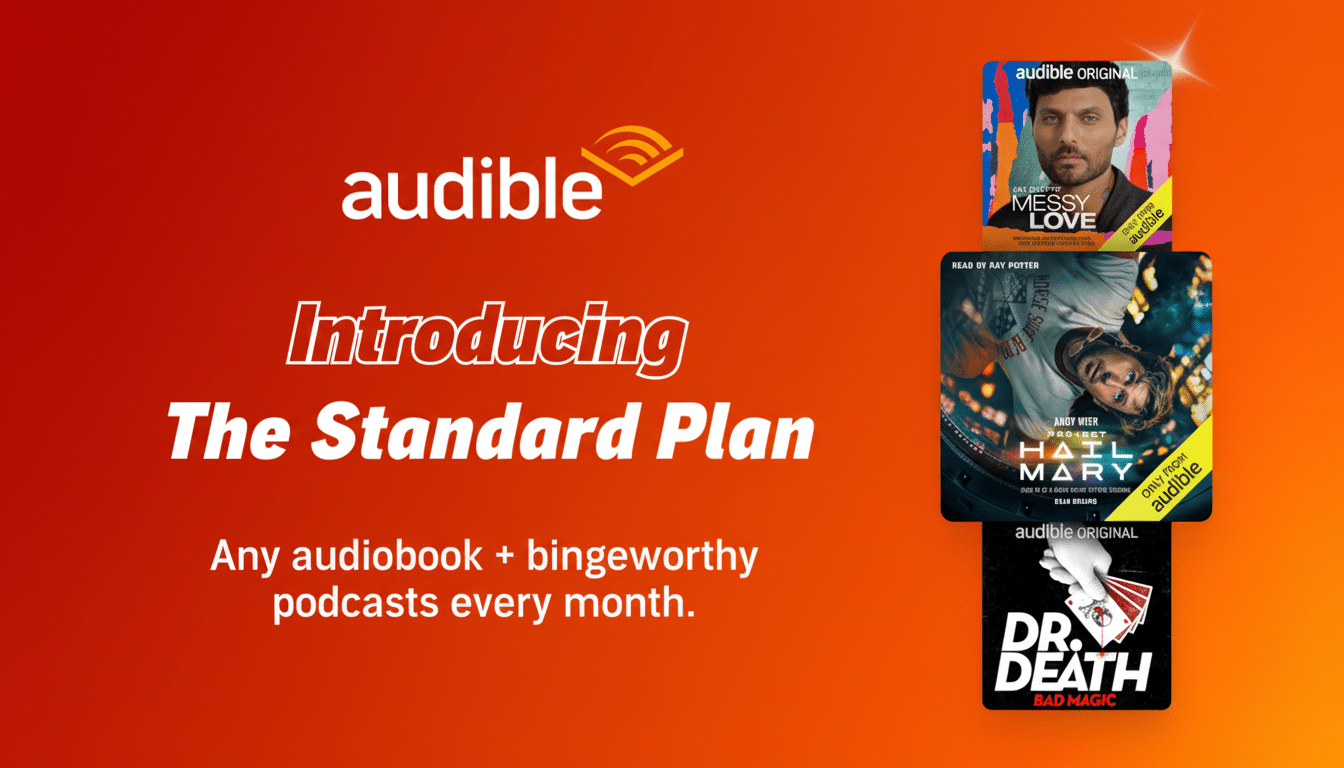
That shift removes the pressure that comes with Premium Plus credits. With credits, it’s easy to let them stack, then panic-purchase multiple books just to clear the queue. Standard resets the clock each month—no rollover, no build-up—nudging you to pick what fits your current mood instead of optimizing for long-term ownership.
The plan also includes unlimited podcast listening, but it doesn’t mirror the full streaming access to the broader Plus Catalog that Premium Plus members enjoy. In short, you’re trading permanent ownership and deeper catalog streaming for a lower monthly bill and simpler decision-making.
Why the Cheaper Tier Fits Real-Life Listening Habits
For many listeners, audiobooks happen in the margins—during commutes, chores, or flights. That reality rarely syncs with a rigid monthly credit cycle. Standard’s one-pick rhythm aligns better with how people actually listen: one book at a time, when they’re ready.
There’s also a psychological perk. When ownership isn’t the goal, you stop overthinking each selection. You can take a risk on a buzzy debut or a timely nonfiction title without asking, “Will I want this in my library forever?” Ironically, the rental-style model encourages more discovery, not less.
The New Math With Spotify and Libraries for Audiobooks
The Standard plan lands in a market where listeners already mix and match services. Spotify Premium now includes 15 hours of audiobook listening each month in many regions, which comfortably covers a short or mid-length title. Libby, powered by public libraries through OverDrive, offers free digital audiobook lending, though popular titles often come with a waitlist.
In practice, that means you can reserve long waits and backlist titles for Libby, use Spotify’s monthly hours for hot new releases, and turn to Audible’s Standard plan for one guaranteed, on-demand pick. OverDrive has reported record-setting digital borrows across ebooks and audiobooks, underscoring that many households already lean on libraries to stretch entertainment budgets.
Who Should Still Keep Premium Plus Membership
If you reliably redeem every credit and value permanent ownership, Premium Plus remains compelling. New releases frequently list at $25 or more, so a $15-ish credit can still deliver strong value when used monthly. Power listeners who want full access to the Plus Catalog of streamable audiobooks will also miss those perks on Standard.
But casual listeners, or anyone already supplementing with Spotify and Libby, may find Premium Plus overkill. The Standard plan trims roughly $70 a year while preserving that one guaranteed pick—often the only feature many users truly need.
The Bigger Trend in Audiobooks and Why It Matters
Consumers are pushing back on subscription fatigue, and media habits are fragmenting across platforms. Deloitte’s Digital Media Trends research has highlighted rising churn and an appetite to simplify. In audiobooks, the Audio Publishers Association and Edison Research have documented steady audience growth and broader listening across genres, meaning flexibility now rivals ownership as a priority.
Audible’s Standard tier reads like a response to that shift: less commitment, fewer decisions, and a lower price. It acknowledges that for many people the right book right now beats the perfect book forever.
How to Maximize the Cheaper Plan for Listening
- Set a monthly reminder a few days before your billing date so your pick never goes to waste.
- Sample multiple narrations—voice performance can make or break a choice.
- Keep a rolling wishlist to avoid last-minute scrambling.
- Pair Standard with library holds for slower-burn reads.
- Save your Audible pick for trips, book club deadlines, or must-hear releases.
After switching, I stopped stockpiling credits I felt guilty about and started finishing more books I actually wanted to hear. Cheaper is good. Easier is better. Standard, unexpectedly, delivers both.

